India Groundwater Depletion & Timber Import Reliance
By ThePip Desk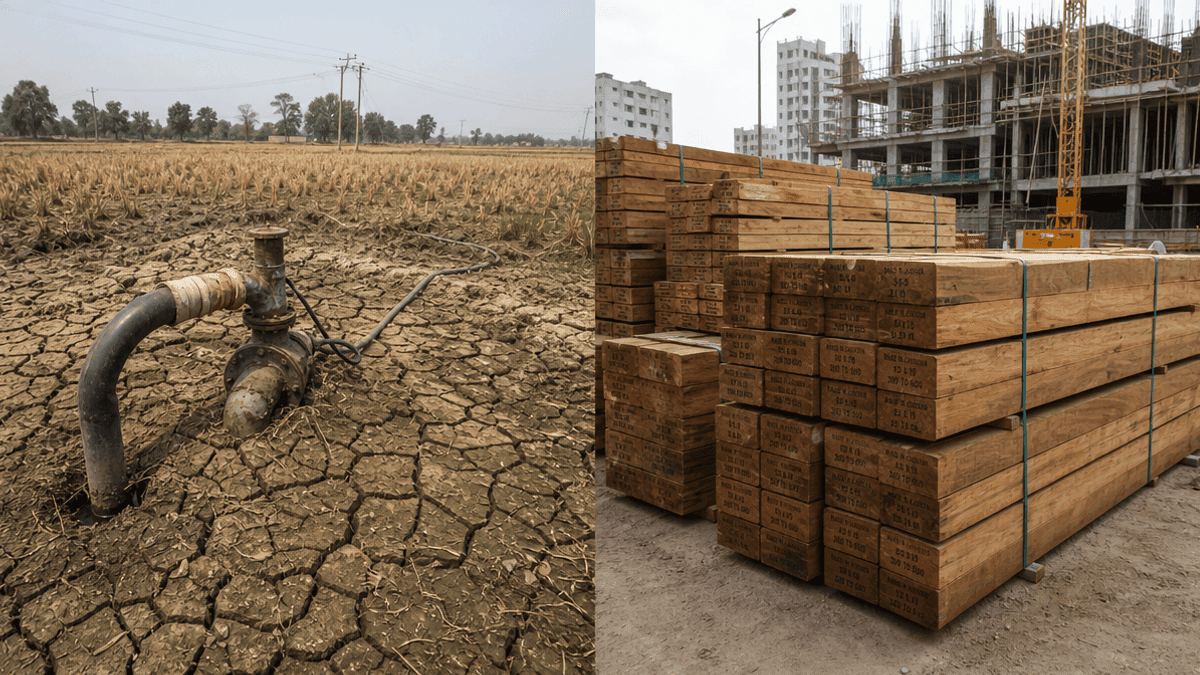
Explore how unsustainable agricultural irrigation drains India’s groundwater, threatening food security and driving massive teak timber imports.
India faces alarming depletion of its groundwater resources driven largely by unsustainable irrigation methods used in agriculture. This over-extraction of water for water-intensive crops directly threatens long-term food security and environmental stability across the nation.
The Mechanics of Agricultural Water Stress
The agricultural sector relies heavily on intensive irrigation practices that continuously draw down underground reserves. When water is extracted faster than natural replenishment can occur, the resulting scarcity introduces critical vulnerabilities into the ecosystem.
Key factors impacting the water supply include the following elements:
Over-extraction of water for water-intensive crops.
Unsustainable irrigation methods utilized in farming.
Growing risks to long-term food security.
Increasing threats to overall environmental stability.
Shifting Demands in the Timber Industry
Beyond agricultural water challenges, India has transformed into a major importer of wood, specifically focusing on teak. Domestic supply constraints and environmental regulations have severely limited local production capacities.
Market drivers for timber imports involve several distinct pressures:
Rising domestic demand for high-quality timber in construction.
Increased need for durable materials in the furniture sector.
Strict environmental regulations limiting domestic logging.
Persistent domestic supply constraints that local production cannot satisfy.
These converging pressures on both water and forestry resources highlight significant structural challenges within India’s natural resource management frameworks.