Next-Gen GST Reforms Boost India’s Economic Growth
By Business Desk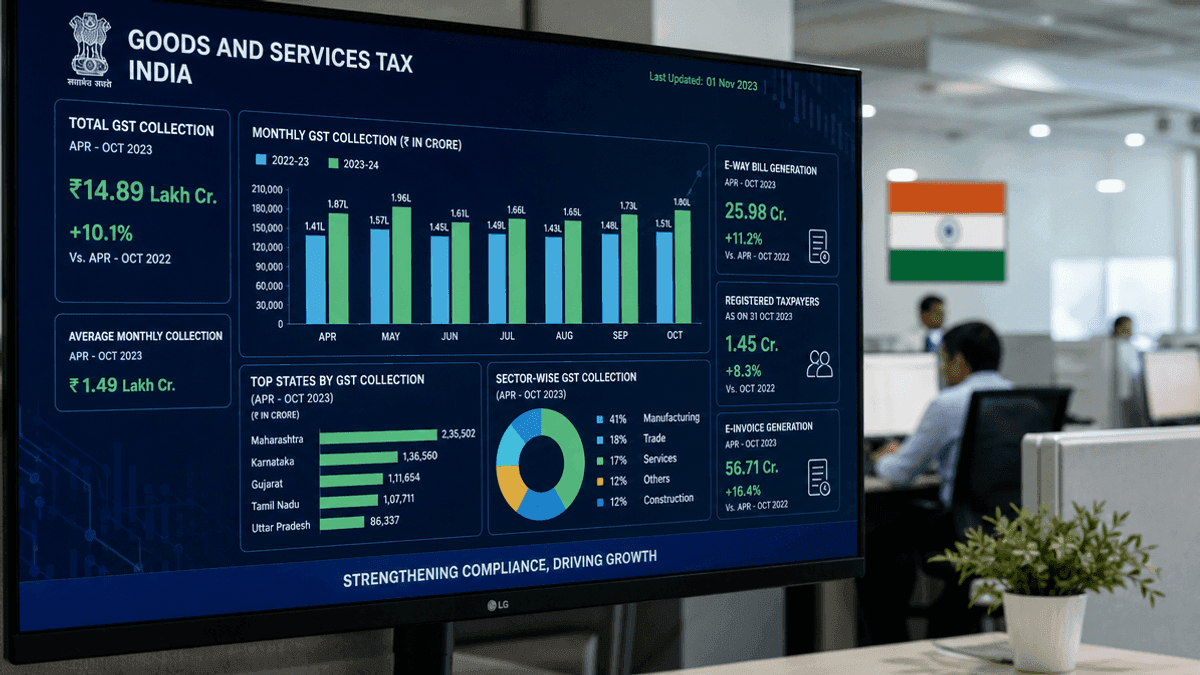
Discover how India’s next-gen GST reforms are driving economic growth, rationalizing rates, and simplifying tax compliance for businesses.
Union Finance Minister Nirmala Sitharaman has outlined the progress of the Next-generation Goods and Services Tax framework, pointing to rationalized rates and simplified compliance as key drivers of economic growth. The initiative aims to foster an environment where businesses of all sizes can thrive across the country.
Key Performance Metrics
Official figures released following the implementation of rate changes demonstrate significant upward momentum across multiple sectors.
Here are the core performance indicators recorded under the framework:
- Reported taxable supplies grew by 25.8% between October 2025 and July 2026.
- Gross GST collections for the first half of the 2026 fiscal year reached Rs 12.46 lakh crore.
- Total collections reflect an 11.6% increase compared to the previous year.
Administrative and Operational Enhancements
The reforms have introduced critical improvements in administrative efficiency, supporting business working capital and market confidence.
Operational improvements include the following developments:
- On-time filing of GSTR-3B returns rose during the reporting period.
- Approximately Rs 1.8 lakh crore was refunded in the first half of the year.
- Enhanced input tax credit utilization has strengthened overall liquidity for enterprises.
Looking ahead, the government continues to collaborate with states to further reduce compliance costs. Upcoming proposals will focus on refining registration, returns, and dispute resolution to maintain the tax system as a catalyst for long-term development.