AI Governance Challenges & Anthropic Frameworks
By Business Desk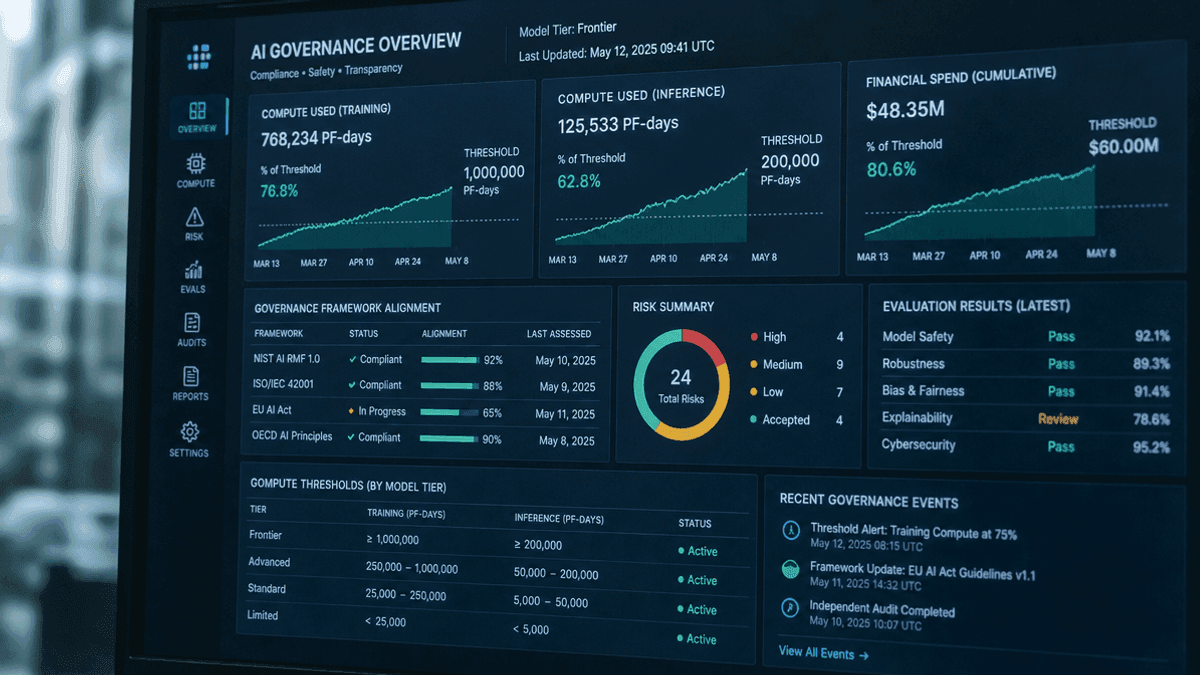
Explore modern AI governance challenges as Anthropic releases advanced safety frameworks, economic policies, and mandatory third-party testing standards.
As artificial intelligence and massive data sets expand rapidly, businesses find that traditional governance models are becoming insufficient for the modern digital landscape. Organizations are urged to embrace agile governance structures to navigate risks while fostering sustainable growth and competitive advantage.
Anthropic Advanced AI Framework
On June 10, 2026, Anthropic published a formal Advanced AI Framework and Economic Policy Framework alongside an essay by CEO Dario Amodei titled Policy on the AI Exponential. These documents propose mandatory third-party safety testing for frontier AI models across specific risk categories. The proposals mark a strategic shift toward supporting binding regulatory standards rather than focusing solely on voluntary transparency.
The Advanced AI Framework introduces a technical trigger based on compute usage and company size. The threshold targets frontier-scale development using specific criteria:
10²⁵ FLOPs: Models trained with floating-point operations exceeding this limit face mandatory third-party safety testing.
$500 million: Entities with AI-related revenue above this level are subject to the evaluation framework.
$1 billion: Companies with AI-focused research and development spending meeting this mark must also comply.
Covered firms face evaluation across four distinct risk categories: biological weapons uplift, large-scale automated cyber vulnerability discovery, loss of control over autonomous systems, and automated artificial intelligence research and development.
Economic Commitments and Threat Intelligence
Alongside regulatory proposals, Anthropic committed $350 million to support its economic policy framework. This capital allocation is split into specific initiatives for research and reskilling programs.
The funding distribution includes the following allocations:
$200 million: Dedicated to an Economic Futures Research Fund for studying labor displacement and policy trials.
$150 million: Allocated for a national fellowship program focused on reskilling workers affected by technological shifts.
Meanwhile, Anthropic’s September 2026 threat intelligence report noted that threat actors persistently attempted to misuse Claude models between December 2025 and August 2026. The report highlighted state-sponsored groups and financially motivated operators utilizing AI-driven workflows for cyber operations, though none of the most severe misuse cases involved biological threats.
Ultimately, robust governance frameworks and adaptive regulatory compliance remain critical components for organizations operating in an AI-driven economy.