Moody’s Raises India FY27 GDP Growth Forecast to 7%
By ThePip Desk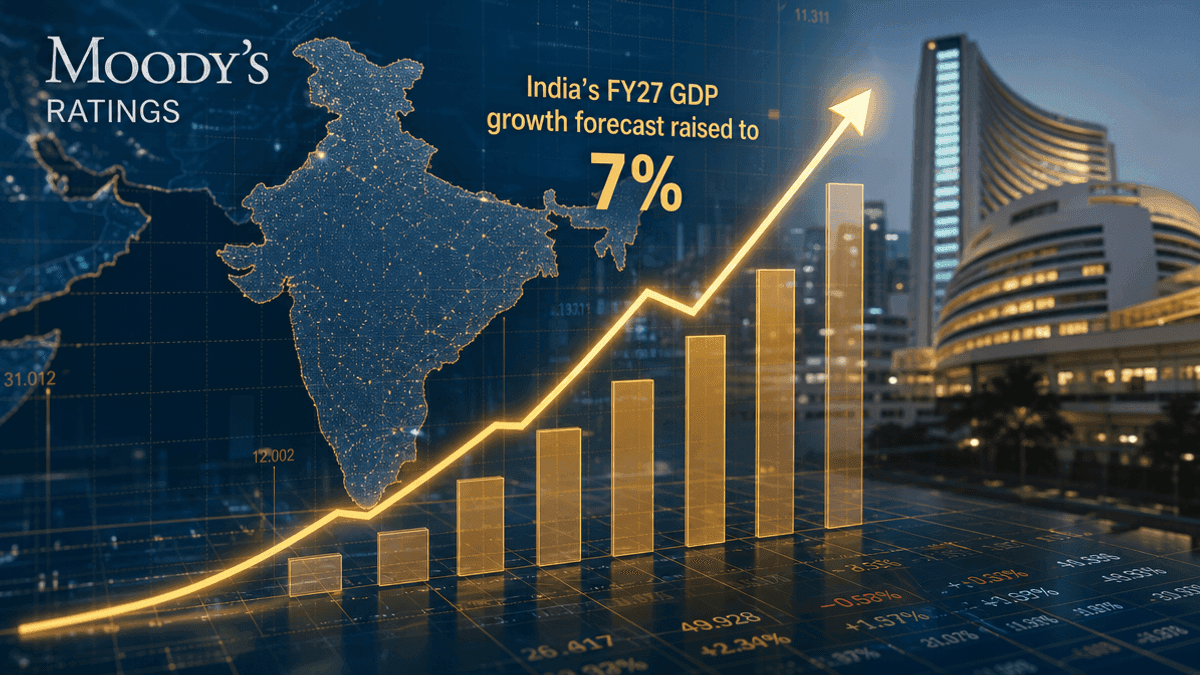
Moody’s Ratings upgrades India’s FY27 GDP growth forecast to 7 percent, driven by strong private consumption, public infrastructure, and services.
Moody’s Ratings has sharply raised India’s Gross Domestic Product growth forecast for the current fiscal (FY27) to 7 per cent from its earlier estimate of 6 per cent. The agency cited the country’s resilience to global shocks arising from the conflict in the Middle East.
Growth Drivers and Economic Expansion
Moody’s stated that India’s economy expanded to 8.2 per cent year on year in the first six months of calendar year 2026. This is up from 7.3 per cent for the full year in calendar year 2025.
The growth was supported by specific economic factors detailed by the rating agency.
- Stronger private consumption across the board
- Robust gross fixed capital formation reflecting continued public infrastructure spending
- A likely revival of private sector investment
- Sustained strength in the services sector
The agency expects India to continue growing faster than other G20 economies and similarly rated emerging-market sovereigns. However, it also flagged several risks to the outlook.
Fiscal Realities and Sovereign Rating
In its periodic review of India’s ‘Baa3’ sovereign rating, Moody’s addressed debt metrics and structural costs.
The agency expects debt reduction to remain gradual and debt affordability to stay weaker. This reflects India’s high debt burden and elevated interest cost structure.
Inflation Pressures and External Risks
Moody’s warned that high energy prices and El Nino-related food price pressures pose risks to inflation, consumption, and growth.
Looking ahead, the agency outlined specific macroeconomic projections and vulnerabilities.
- Annual average inflation projected at 4.8 per cent for fiscal 2026-27
- Previous fiscal 2025-26 inflation outturn recorded at 2.4 per cent
- Elevated energy prices could push annual average inflation beyond projections in the absence of an enduring resolution to the Middle East conflict
- El Nino-related disruptions could increase food price pressures and weigh on private consumption and economic activity
The agency noted that increased diversification of India’s crude import sources, sizeable foreign exchange reserves, and strong domestic demand provide important buffers. Conversely, higher energy and fertilizer import costs, softer external demand, and weaker remittance inflows from the Middle East could widen the current account deficit and weigh on growth momentum more broadly.