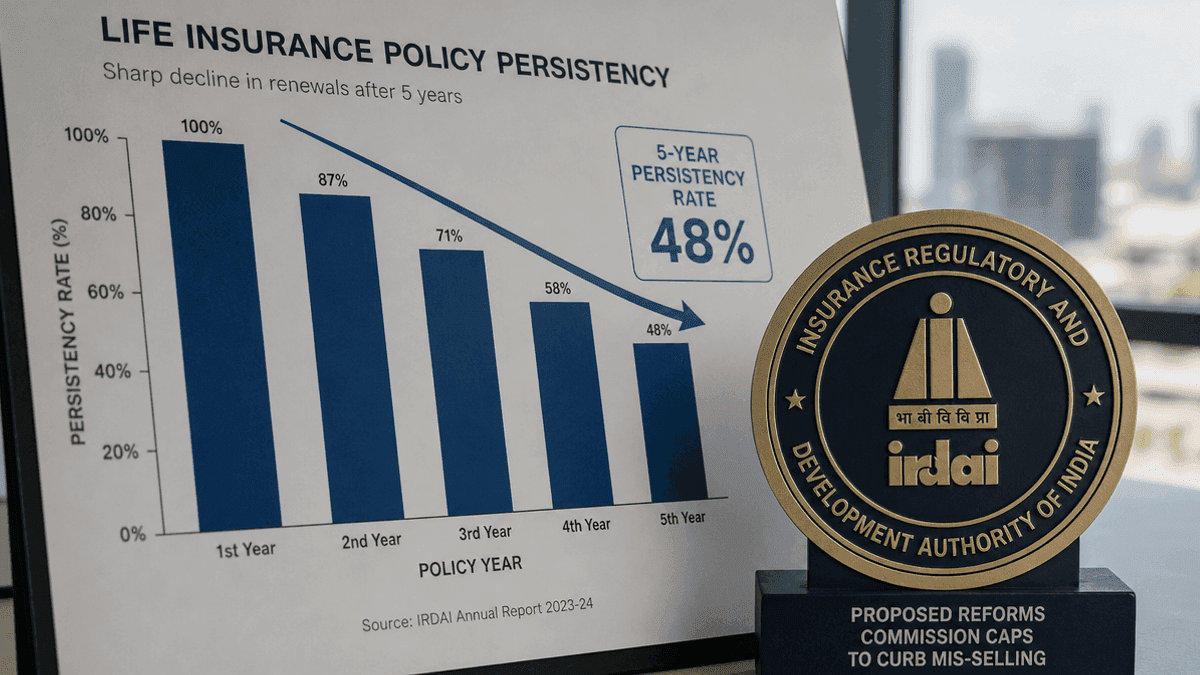
Discover why only 48% of life insurance policies survive past five years. Learn how IRDAI reforms and commission caps aim to fix mis-selling in India.
The Insurance Regulatory and Development Authority of India is tackling widespread mis-selling and low retention through sweeping structural overhauls. Ajay Seth highlighted a critical industry benchmark during recent discussions.
Data shared by the regulator underscores a major leak in customer retention across the market.
- 48% of life insurance policies are renewed beyond the 61st month.
High upfront commissions have historically incentivized agents to prioritize short-term sales over long-term customer suitability. To fix this misalignment, the regulator has introduced proposed reforms aimed at restructuring the distribution model.
Proposed Restructuring of Expenses and Commissions
The regulatory blueprint targets the core economics driving aggressive and often unsuitable sales tactics. Hard commission caps and management expense limits form the backbone of the new compliance framework.
These measures aim to squeeze out bloated operational costs that ultimately offer little consumer value. Insurance brokers and intermediaries have pushed back against the speed of these mandates.
Industry Pushback and Regulatory Stance
Industry stakeholders warn that abrupt remuneration cuts could destabilize operations and impact employment across the distribution network. Consumer advocates and the regulator maintain that current practices undermine public trust and policyholder interests.
Chairman Seth emphasized that the status quo is unsustainable for a healthy market.
- Commission clawbacks will be enforced when proven mis-selling is identified.
- Public Insurance Registry integration will increase overall transparency in sales conduct.
- Mandatory unbundling will end the compulsory bundling of insurance products with loans.
These measures collectively aim to pivot the sector toward ethical conduct and affordable accessibility.
Success will depend on whether these enforced structural adjustments can effectively align distributor incentives with long-term consumer retention.