India Economic Strategy: Trade, SEBI & Foreign Investment
By Business Desk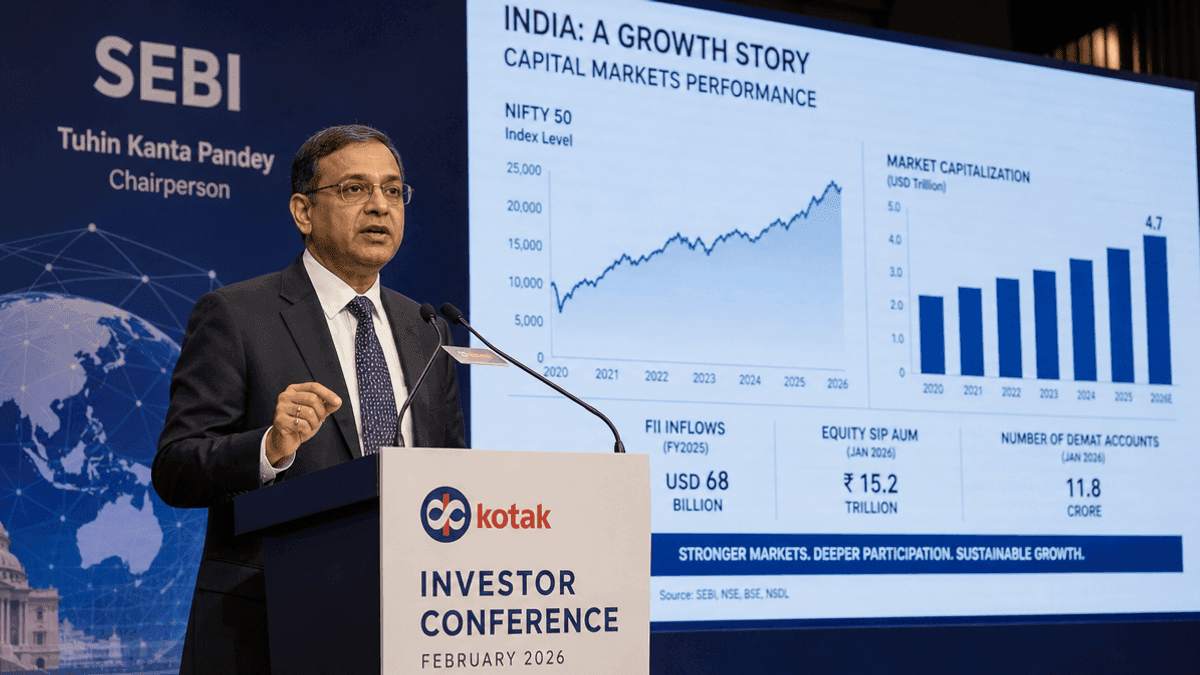
Discover India’s latest economic strategy tackling global trade distortions, excess manufacturing, and boosting foreign investment via SEBI’s SWAGAT-FIs framework.
Union Minister for Commerce and Industry Piyush Goyal reported that G20 trade ministers engaged in critical discussions concerning the global economic repercussions of government-supported excess manufacturing capacities. The dialogue focused on how state-subsidized production leads to market distortions, negatively impacting fair competition and the stability of global supply chains.
SEBI Chairperson Tuhin Kanta Pandey stated that Foreign Portfolio Investor flows are fundamentally influenced by global liquidity, currency movements, relative valuations, and the policy stances of major central banks. To enhance the investment climate, the regulatory body has implemented the SWAGAT–FIs framework to provide single-window access and simplified compliance for trusted foreign investors.
Capital Markets Growth Metrics
Chairman Pandey presented key figures regarding the expansion of the Indian capital markets during an address at the Kotak Investor Conference titled Chasing Growth 2026 on February 25, 2026. The reported growth highlights the scale and resilience of domestic financial structures amidst complex global economic shifts.
The growth metrics include the following key figures:
- Fundraising between FY16 and January of FY26 reached roughly ₹105 trillion through debt and equity.
- During FY26 from April to January, 329 initial public offerings raised approximately ₹1.8 trillion, an increase over the ₹1.7 trillion raised via 320 IPOs in FY25.
- Corporate bonds grew at a compound annual growth rate of about 12% since FY15, reaching ₹58.2 trillion by the end of January 2026.
- Mutual Funds Assets Under Management expanded from about ₹12 trillion in FY16 to nearly ₹81 trillion by February 2026.
- Equity assets under custody for Foreign Portfolio Investors grew from ₹19 trillion at the end of FY16 to ₹71 trillion by the end of January 2026.
- Total FPI assets, including debt, stand at roughly ₹78 trillion while the total investor base exceeds 140 million unique investors.
Goyal emphasized the need for collective action to address these trade imbalances, ensuring that trade practices remain transparent and equitable for all nations. The ministers explored strategies to mitigate the adverse effects of such industrial policies, aiming to foster a more balanced and sustainable international trading environment.