India’s Climate Crisis: Why Local Climate Budgets Matter
By ThePip Desk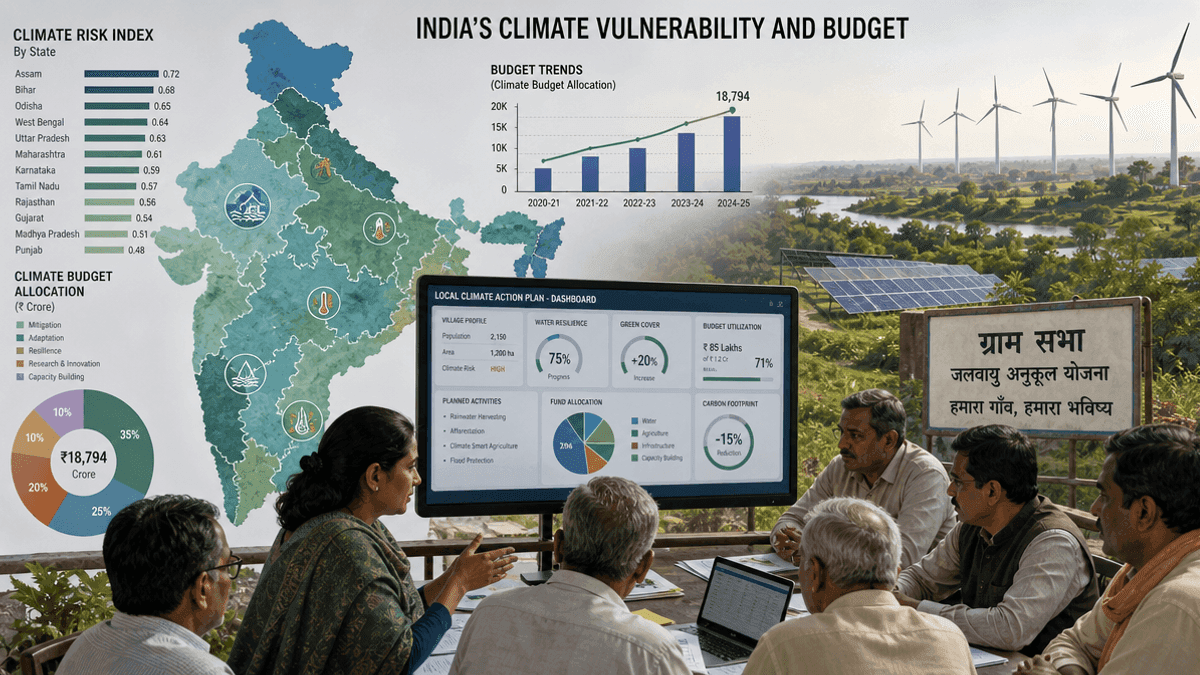
Discover how the 16th Finance Commission can drive local climate budgeting in India to tackle severe sub-national climate risks effectively.
India faces a critical gap in its climate action strategy due to the absence of localized fiscal mechanisms designed to combat climate change. While national and state-level policies exist, climate impacts are felt most acutely on the ground, creating an urgent need for a bottom-up approach to climate budgeting.
Bridging the Gap Through Fiscal Devolution
The 16th Finance Commission has a unique opportunity to bridge this institutional divide. By incorporating climate-resilience criteria directly into the devolution of funds, the Commission can incentivize sub-national governments to integrate climate considerations into their planning and expenditure processes.
Key proposals put forward by policy analysts include several foundational shifts:
- Establishing a dedicated Climate Adaptation and Resilience Fund to target the distinct needs of vulnerable communities.
- Creating standardized frameworks for local climate risk assessments across regions.
- Building the capacity of Panchayati Raj Institutions and Urban Local Bodies to manage climate-responsive budgets effectively.
- Devolving funds to state governments based on data-driven metrics such as a Climate Vulnerability Mapping Atlas.
Empowering local governments with both the clear mandate and the necessary financial resources is essential for building long-term climate resilience across the country. As fiscal frameworks evolve, aligning fund transfers with local ecological realities will determine how effectively India mitigates systemic climate risks.