India Direct Tax Collections Soar & New Property TDS Rules
By ThePip Desk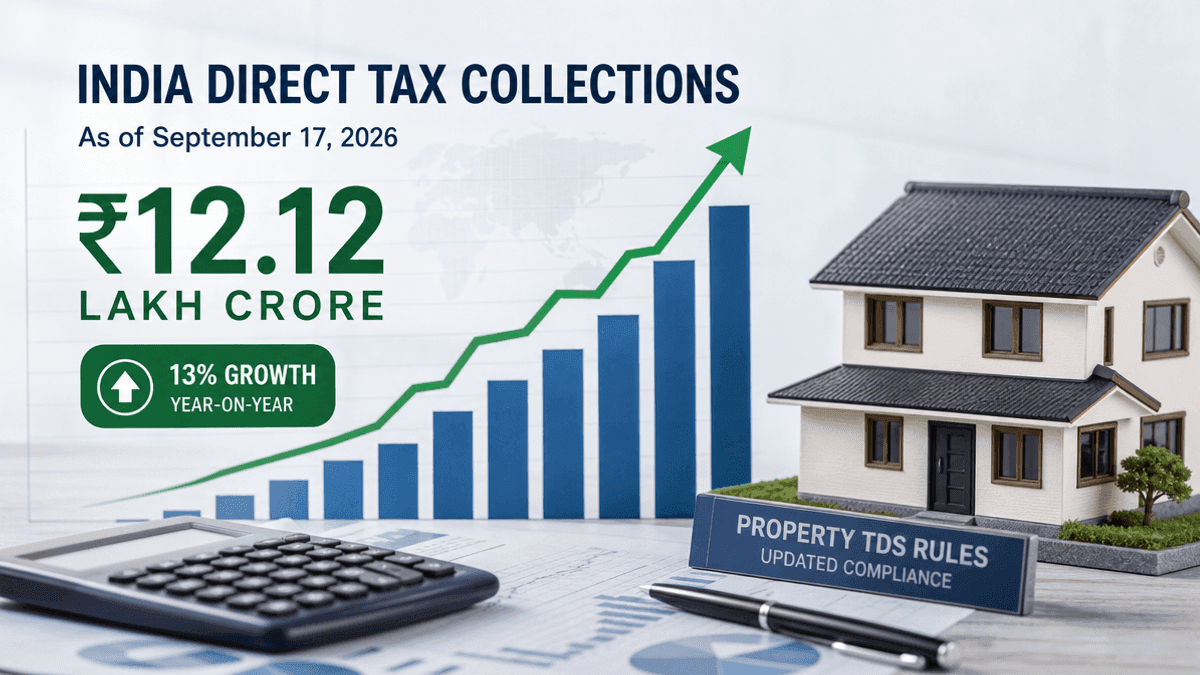
Explore India’s 13% direct tax collection growth reaching ₹12.12 lakh crore, alongside new PAN-based property TDS rules effective October 2026.
Net direct tax collection in India grew by 13% to reach over ₹12.12 lakh crore by September 17, 2026. This positive trend reflects strong economic activity, higher corporate profitability, and strict tax administration.
Direct Tax Breakdown
Official data released by the Central Board of Direct Taxes outlines the specific performance of various tax segments during the fiscal period. Corporate tax collections expanded at a faster pace than individual tax contributions.
Here are the key figures reported by the Central Board of Direct Taxes as of September 17, 2026:
- Corporate Tax: ₹5.56 lakh crore, marking a 19.48% increase.
- Non-Corporate Tax: More than ₹6.16 lakh crore, showing a 6% growth.
- Securities Transactions Tax: ₹40,214 crore, registering a notable 53% rise.
- Gross Direct Tax: Over ₹14.32 lakh crore, representing a 15% growth.
Advance tax collections also contributed to the overall fiscal strength, rising by 16.18% to hit about ₹5.22 lakh crore. Within this advance tax total, corporate payments grew by 18% to exceed ₹4.16 lakh crore while non-corporate payments rose 9.24% to total ₹1.06 lakh crore. Government refunds during the same period reached over ₹2.20 lakh crore, marking a 29.19% jump.
New Property TDS Compliance Rules
In a separate regulatory update, the tax framework for property transactions involving non-resident sellers has been simplified. Effective October 1, 2026, resident individuals and Hindu Undivided Families can use their PAN instead of a TAN for these transactions.
The procedural steps and deadlines for this updated compliance framework include:
- PAN Usage: Resident individuals and Hindu Undivided Families buying property from non-residents no longer need a TAN to deduct and deposit TDS.
- Form 141: Tax payment and reporting must be executed through the PAN-based challan-cum-statement containing Schedule E.
- Payment Deadline: The tax must be deposited within 30 days from the end of the month in which the deduction happens.
- Seller Certificate: Buyers must issue Form No. 132 to the seller within 15 days of the due date for Form No. 141.
These parallel developments in direct tax collections and streamlined compliance mechanisms provide the government with greater fiscal flexibility while easing procedural burdens for resident property buyers.