Ganga Floodplain Redefined: Construction-Free Zone Dropped
By ThePip Desk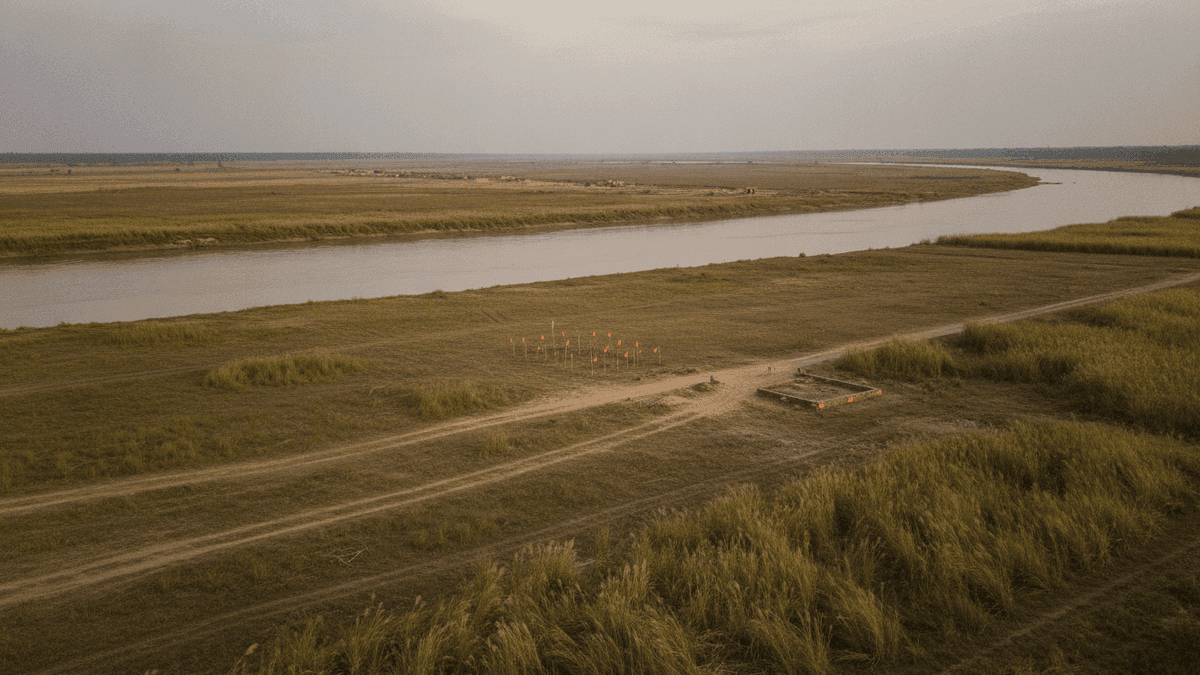
India’s Jal Shakti Ministry redefines Ganga’s active floodplain, removing the ‘construction-free zone’ provision. New rules focus on pollution control and groundwater recharge.
The Indian government, through the Jal Shakti Ministry, has formally redefined the “active floodplain” of the Ganga river and its tributaries. This significant change, enacted via an amendment to the River Ganga (Rejuvenation, Protection and Management) Authorities Order, 2016, notably removes the previous “construction free zone” provision.
The amendment, published in the Gazette on August 10, 2026, shifts the regulatory approach for these crucial ecological areas. Instead of an outright ban, the revised order now emphasizes maintaining river banks and floodplains to reduce pollution and safeguard their natural groundwater recharge capabilities.
New Floodplain Delineations
The “active floodplain” is now specifically defined as an area inundated by floods occurring once every five years. This forms the innermost category of the broader “flood plain” concept.
Beyond the active floodplain, a regulatory zone has been introduced for areas experiencing floods between a one-in-five-year and one-in-25-year return period. Furthermore, a warning zone covers areas affected by floods between a one-in-25-year and one-in-100-year return period, creating a tiered system for flood management.
Under the original 2016 order, permanent or temporary construction was explicitly prohibited within the active floodplain. While the 2026 amendment redefines this specific area, it does not explicitly detail new construction permissions or prohibitions for the newly introduced regulatory and warning zones.
This redefinition underscores a policy pivot towards active management rather than absolute prohibition in specific zones. The Jal Shakti Ministry’s updated mandate continues to highlight the critical importance of preserving these floodplains for environmental integrity and hydrological function.