Bill Gates Proposes Robot Tax to Offset Automation
By Business Desk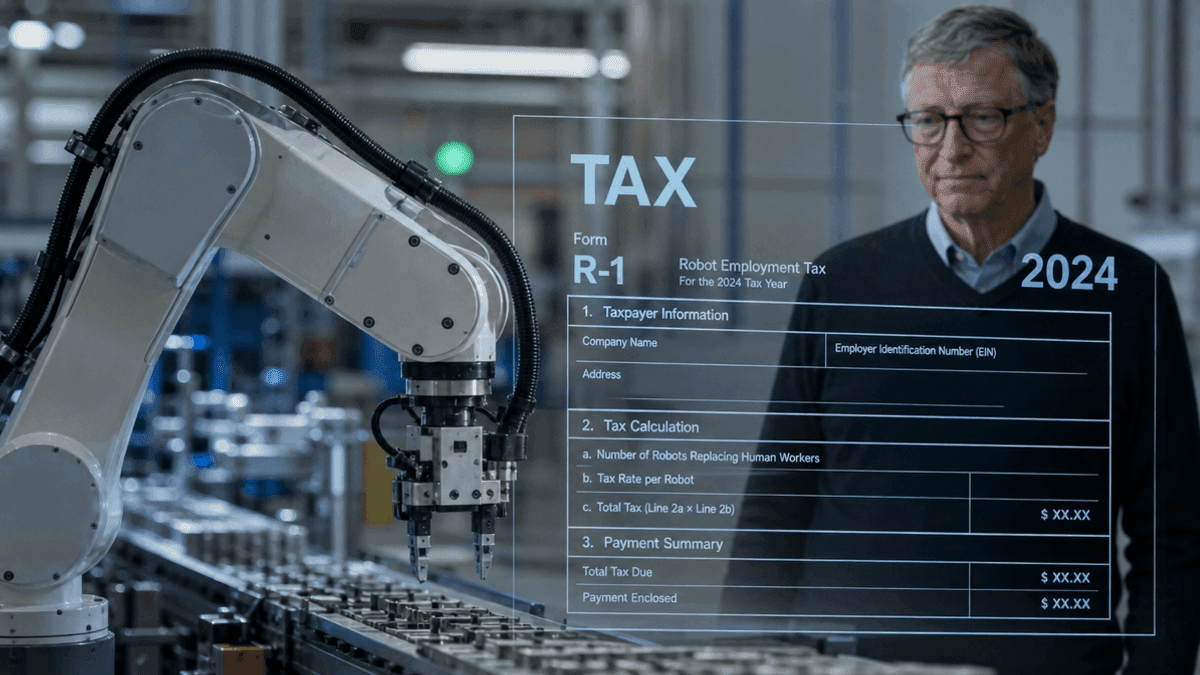
Discover Bill Gates’ proposal to apply FICA payroll taxes on companies replacing human workers with robots to fund social services and slow automation.
Microsoft co-founder Bill Gates has proposed that companies utilizing robots to replace human workers should be subject to a tax equivalent to the social security and income taxes those employees would have paid. Gates argues that as automation increasingly displaces human labor, governments will face a significant shortfall in tax revenue needed to fund social services.
The Proposed Robot Tax Mechanism
By implementing a robot tax, society can slow the pace of automation to a manageable level while generating necessary funds to support displaced workers and invest in other human-centric sectors. This proposal aims to ensure that the economic benefits of increased productivity through robotics are shared and that the transition to an automated workforce does not disproportionately harm the social safety net.
Key aspects of the tax and automation proposal include:
- FICA equivalent taxes applied to companies utilizing robots to replace human workers.
- Tax revenue generation to fund essential social services and support displaced workers.
- Automation pace slowed to a manageable level through financial mechanisms.
- Productivity benefits shared fairly across society during the transition.
Economic Goals and Workforce Impact
The core objective of this policy is addressing the significant shortfall in tax revenue that governments will face as automation displaces human labor. Implementing this tax helps protect the broader social safety net while ensuring human-centric sectors receive necessary investments.