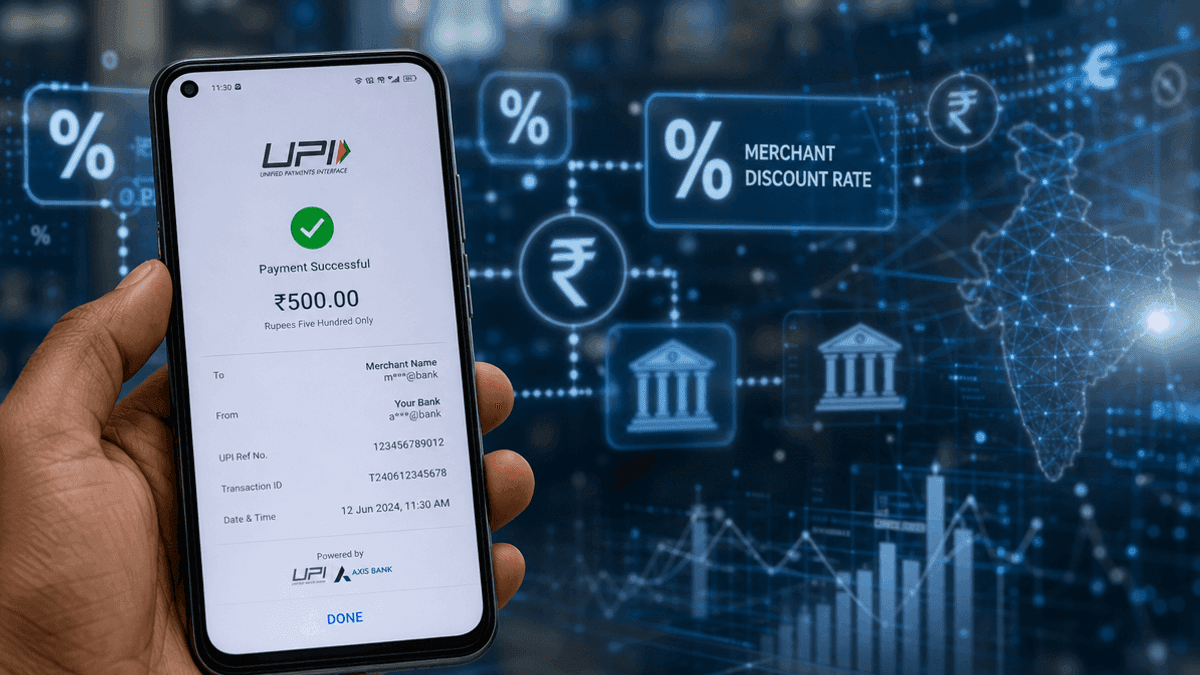
Explore the ongoing UPI MDR policy debate in India, comparing the NPCI merchant fee framework with IIT-Bombay’s public digital infrastructure model.
A contentious debate is shaping up around the Merchant Discount Rate for India’s Unified Payments Interface transactions. At the center of the discussion are two conflicting approaches to funding the digital payments architecture.
Frameworks and Proposed Rates
The National Payments Corporation of India framework establishes fee structures across merchant categories. Alternative proposals suggest shifting the funding weight away from merchants entirely.
Key details of the ongoing policy proposals include:
The NPCI framework proposes a 0.4% MDR on specific merchant transactions over Rs 2,000.
IIT-Bombay researchers proposed reducing the MDR for UPI transactions.
Systemic Sustainability and Bank Margins
A report by IIT-Bombay professor Ashish Das and former official Pragya Das challenges the commercial fee model. The researchers argue that UPI should function as essential public digital infrastructure rather than a standard commercial product.
The counter-proposal suggests that banks, which benefit significantly from low-interest Current Account and Savings Account deposits, should utilize a portion of those margins to fund the ecosystem. This approach aims to avoid placing the entire financial burden on merchants and transaction fees.
Sectors and Prohibitions
The policy framework outlines clear distinctions regarding who bears the transaction costs across different merchant segments. Large-scale merchants and e-commerce platforms face targeted charges while smaller users maintain affordability.
Additional operational rules governing these transactions include:
Researchers recommend focusing charges on large-scale merchants and e-commerce platforms.
The core dispute centers on determining a sustainable funding model that preserves UPI’s role as a foundational, low-cost digital payment system for the Indian economy.