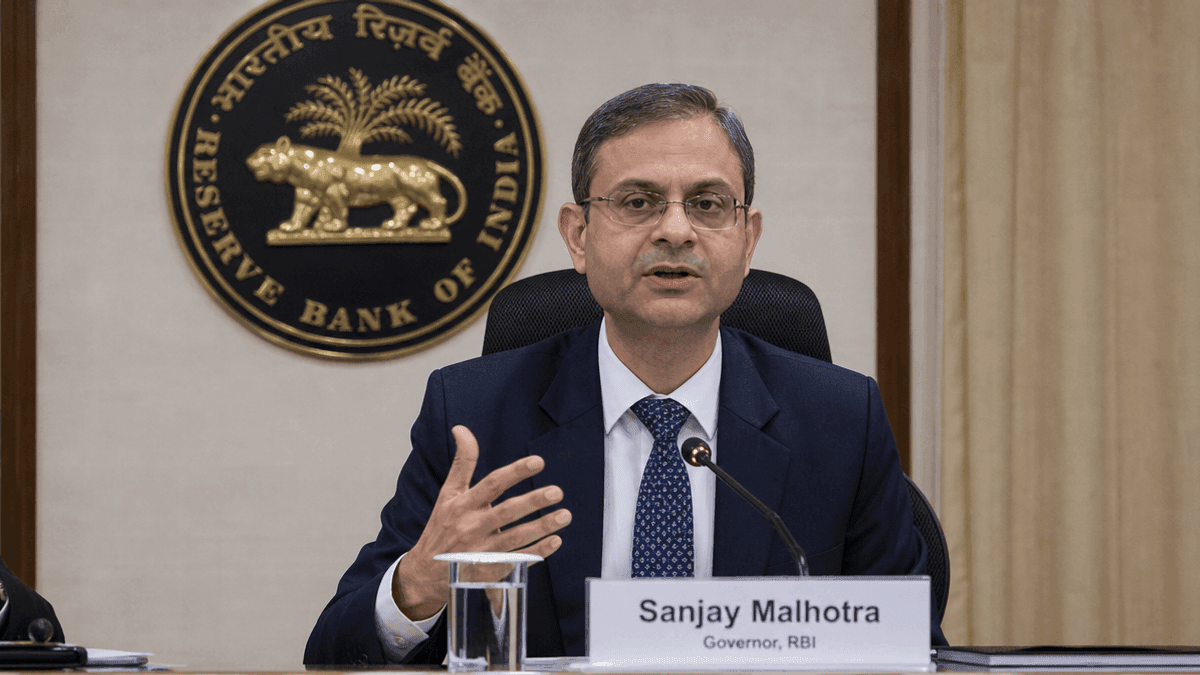
RBI Governor Sanjay Malhotra states India’s massive banking liquidity surplus will be absorbed within FY27 through currency leakage and monetary operations.
Reserve Bank of India Governor Sanjay Malhotra has stated that the massive surplus liquidity in India’s banking system will be absorbed within the current financial year itself (FY27). He said factors such as currency leakage, the Reserve Bank’s liquidity operations and banks’ reserve requirements would gradually absorb a substantial part of the surplus.
Tracking the Surge in System Liquidity
The governor noted that there is a leakage of over Rs 3 lakh crore from the currency in circulation front every year, and added that reductions will also happen via forex sell-buy swaps, the Reserve Bank of India’s open market operations, VRRs operations and also spot interventions done to support the rupee.
Key liquidity figures include:
System liquidity, as measured by the net position under the liquidity adjustment facility, stood at an average daily surplus of Rs 5.9 lakh crore since the last MPC meeting in August 2026.
The average daily net absorption under the liquidity adjustment facility increased to Rs 5.8 lakh crore in August.
Net absorption increased further to Rs 7.8 lakh crore in September, from Rs 1.2 lakh crore in July 2026.
Mechanisms to Absorb Excess Funds
The measures taken to absorb liquidity combined with quarterly advance tax outflows moderated the surplus liquidity in September. He said the Reserve Bank conducted 55 variable rate reverse repo auctions, including 2 term VRRR auctions and OMO sales amounting to Rs 1 lakh crore since the August 2026 policy.
Primary absorption channels comprise:
A natural currency leakage of over Rs 3 lakh crore from the currency in circulation front every year.
Open market operations and spot interventions conducted by the central bank to support the rupee.
Forex sell-buy swaps and variable reverse repo operations.
Reserve requirements and spot interventions done to support the rupee.
Managing Inflows and Credit Deployment
On the large inflows under the FCNR(B) deposit scheme, he said banks should not rush to deploy the funds and should undertake proper due diligence before lending. He stated that the strong growth in credit deployment was already showing that banks had started using the FCNR(B) funds, but given the size of the inflows, their deployment should be prudent.