Analyze Q2 2026 earnings for India’s top public and private banks. Discover key insights on credit growth, margins, and asset quality for SBI, HDFC & more.
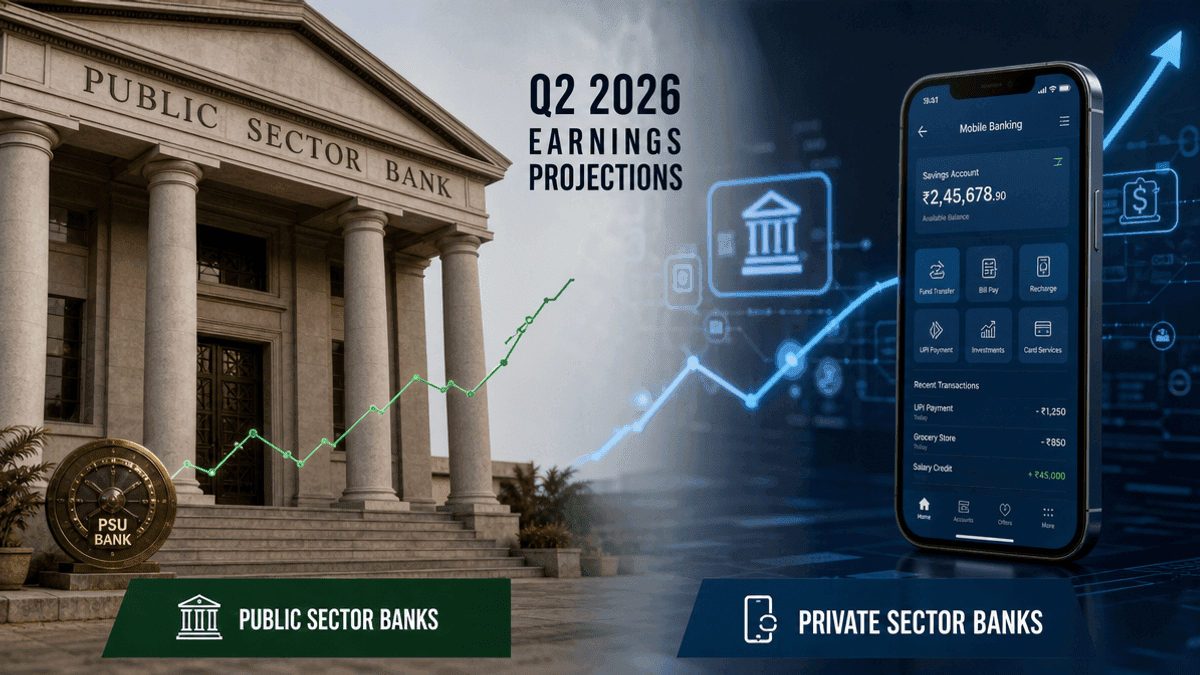
The Q2 2026 earnings season sets up a compelling performance divergence between India Public Sector Undertaking banks and private sector giants. Analysts are weighing key metrics such as Net Interest Margins, credit growth, and asset quality across institutions like State Bank of India, Punjab National Bank, Union Bank of India, HDFC Bank, ICICI Bank, Axis Bank, and AU Small Finance Bank.
Projected Growth and Margins
Market forecasts indicate distinct trajectories for operational performance and income drivers across both banking categories. While public lenders benefit from operational efficiencies and stable credit demand, private peers lean heavily on diversified loan books and digital infrastructure.
Key performance factors include:
- Public Sector Banks: Expected to see continued balance sheet improvements and stable margins.
- Private Banks: Anticipated to show more resilience in margin management despite rising funding costs.
Individual Bank Performance Outlooks
Specific institutional forecasts point to varying pressures on funding costs and credit quality as regulatory pressures influence liquidity dynamics. Different banks face unique operational catalysts heading into their financial reporting.
Individual institutional expectations include:
- AU Small Finance Bank: Positioned alongside major private lenders to leverage diversified loan books.
- HDFC Bank: Utilizing digital infrastructure to maintain profitability amidst cost of funds pressures.
- ICICI Bank: Leveraging diversified loan portfolios to sustain operational performance.
- Axis Bank: Navigating regulatory pressures alongside peer private institutions.
- State Bank of India: Expected to benefit from improved operational efficiencies and stable credit demand.
Ultimately, while private lenders maintain an edge in digital infrastructure and loan diversification, public sector peers demonstrate robust balance sheet improvements. These contrasting results will test how effectively each banking segment navigates regulatory pressures and shifting cost of funds.