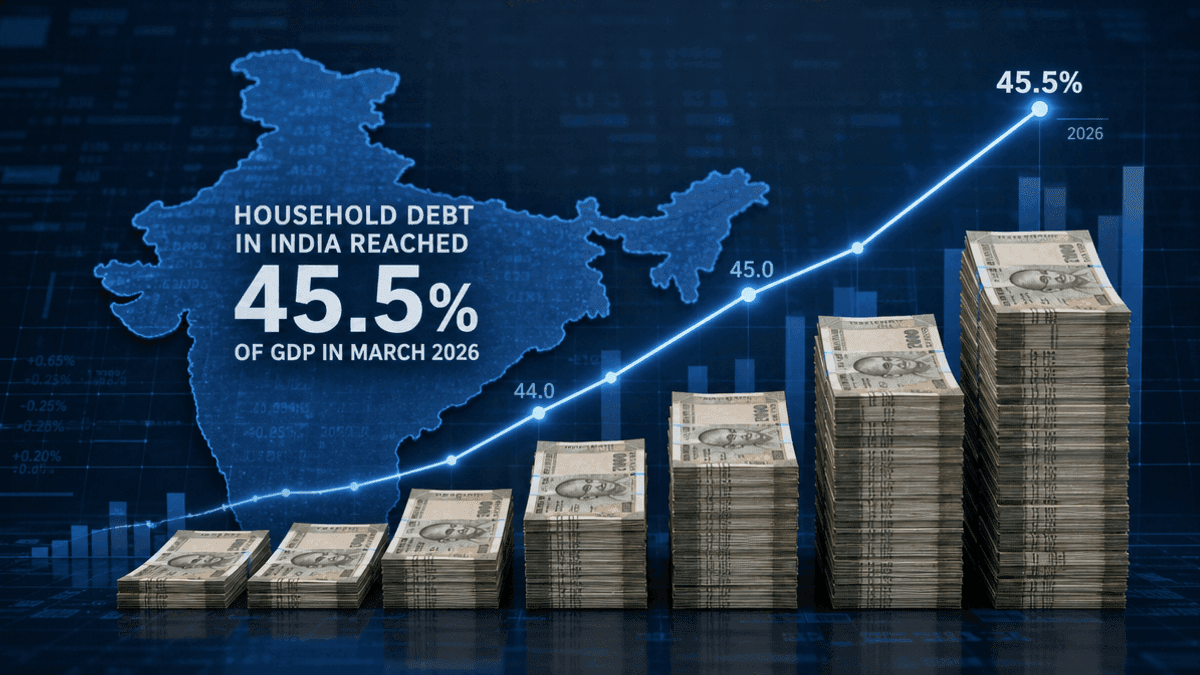
India’s household debt has surged to 46% of GDP, driven by unsecured personal loans. Discover how rising consumer borrowing impacts the economy.
India’s household debt reached 46% of the nation’s GDP, according to reporting on the significant increase in consumer borrowing. This upward trajectory is largely attributed to a surge in consumer borrowing, particularly in the form of unsecured personal loans.
The Core Factors Behind Household Borrowing Trends
Financial experts and regulators are expressing caution regarding the sustainability of this debt and its impact on the broader financial stability of the economy. While credit growth can stimulate consumption, the rapid accumulation of debt relative to income levels may threaten long-term financial stability.
- India’s household debt has climbed to 46% of the nation’s GDP.
- The upward trajectory is driven by a surge in consumer borrowing and unsecured personal loans.
- Experts and regulators express caution about the sustainability of this debt.
- Rapid debt accumulation relative to income levels may threaten long-term financial stability.
The piece emphasizes the need for closer monitoring of lending practices and household leverage to prevent potential defaults and economic distress. Regulators and experts continue to watch these credit trajectories closely as household borrowing evolves.