India’s Forex Reserves Hit $716.91 Billion: RBI Action Drives Surge
By Market Desk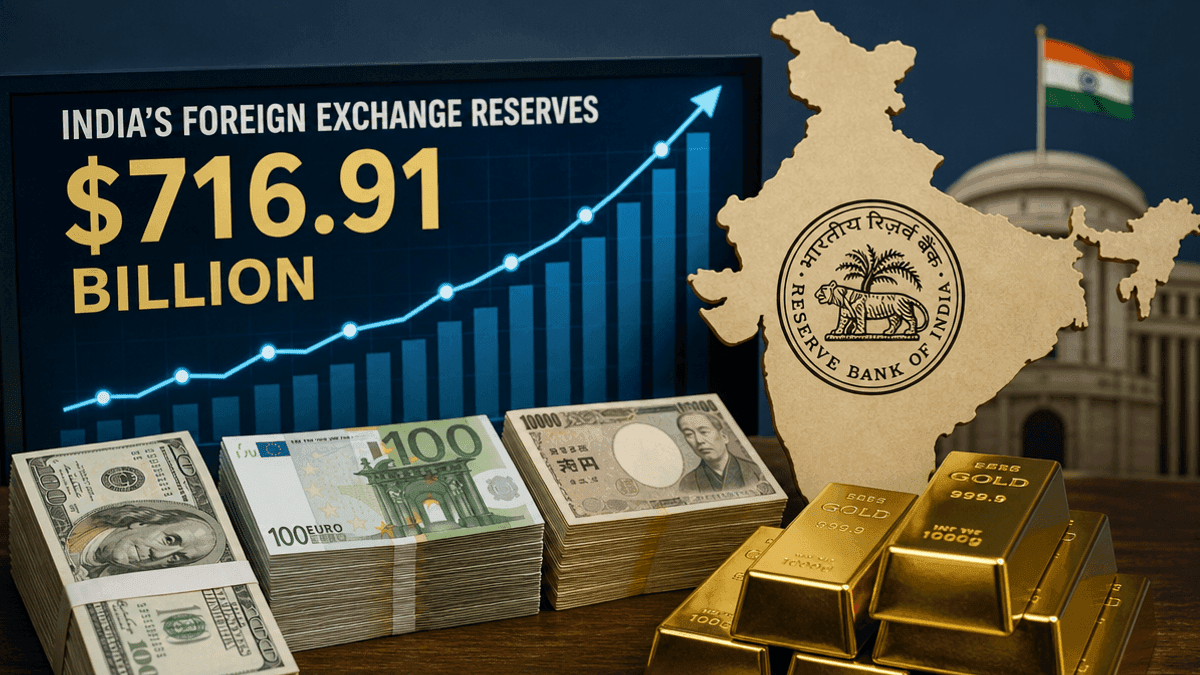
India’s foreign exchange reserves jumped by $9.9 billion to $716.91 billion by August 14, 2026, boosted by strong foreign currency assets and gold gains, according to RBI data.
India’s foreign exchange reserves recorded a substantial increase, rising by $9.9 billion to reach $716.907 billion for the week ending August 14, 2026. This latest surge contributes to a cumulative gain of nearly $50 billion since the last week of June, according to data from the Reserve Bank of India.
Key Reserve Movements
Total Foreign Exchange Reserves reached $716.907 billion, marking an increase of $9.9 billion.
Foreign Currency Assets (FCA) rose by $7.225 billion, totaling $581.851 billion.
Gold Reserves experienced a gain of $2.679 billion, reaching $111.417 billion.
Special Drawing Rights (SDRs) saw a marginal decline of $5 million, settling at $18.74 billion.
India’s Reserve Position with the IMF increased by $5 million, now at $4.90 billion.
Foreign Currency Assets (FCAs) form the largest component of India’s reserves, and their increase largely propelled the overall growth. These assets, denominated in dollar terms, reflect changes in the value of non-US currencies like the euro, pound, and yen held within the reserves. Their appreciation against the dollar contributes to revaluation gains.
A significant portion of the foreign currency asset increase stemmed from active dollar purchases by the Reserve Bank of India. Gaura Sen Gupta, chief economist at IDFC First Bank, confirmed that the RBI acquired approximately $5.6 billion, with the remaining gain attributed to revaluation effects, primarily in gold. This strategic intervention helps manage market liquidity.
The consistent build-up of reserves indicates the RBI’s ongoing strategy to strengthen its buffer against external shocks. A dealer from a state-owned bank noted that the central bank is leveraging strong inflows to bolster its financial resilience. The RBI also continues to intervene periodically to smooth out excessive rupee volatility.
This sustained accumulation of foreign exchange reserves underscores India’s robust external sector management. By reinforcing its reserve position, the central bank enhances its capacity to navigate potential global economic uncertainties and maintain financial stability.