Sensex, Nifty Extend Losses Amid Crude Oil & Geopolitics
By ThePip Desk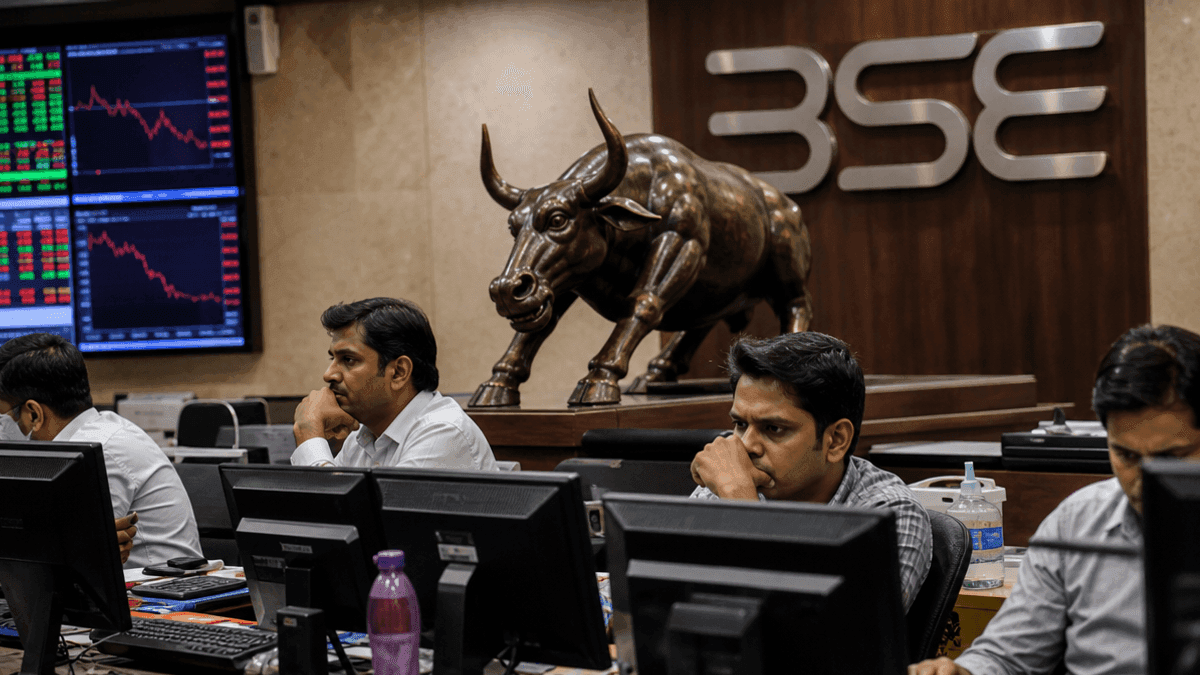
Indian benchmarks Sensex and Nifty fell for the third straight session as rising crude oil prices and geopolitical tensions weighed on investor sentiment.
Market Performance Overview
Indian equity benchmarks recorded a third consecutive day of losses on Wednesday, pressured by a combination of rising crude oil prices, a weaker rupee, and persistent foreign fund outflows. Escalating tensions between the US and Iran in the Persian Gulf region continued to drive investor caution regarding global energy supplies.
- BSE Sensex fell 813.35 points, or 1.08%, to close at 74,764.23.
- CNX Nifty declined 203.60 points, or 0.86%, to end at 23,431.50.
Sectoral Trends and Market Drivers
Broad-based selling hit heavyweight stocks, with IT, TECK, and Realty sectors facing significant downward pressure. Conversely, Metal and Utilities stocks bucked the broader market trend, showing relative resilience.
- Crude oil prices surged to over $100 per barrel, impacting market sentiment across the Nifty 50.
- Crisil Ratings reported a Rainfall Distortion Index deficiency score of 14.4 as of September 4, 2026, marking the most spatially distorted monsoon in a decade.
- ICRA forecast that green power capacity in the cement sector will reach 5.8-6.0 GW by March 2028, up from 4.0 GW as of March 2026.
Industry and Global Outlook
The broader economic landscape shows varied developments across sectors, from automotive shifts to trade policy. Rajesh Agarwal, Commerce Secretary, noted that the Indian industry must diversify services exports beyond IT/ITeS and professional services for sustainable growth.
- Electric Vehicle retail sales rose 52.9% year-on-year to 298,448 units in August 2026, according to the Federation of Automobile Dealers Associations.
- EV market penetration reached 12.3% in August 2026, compared to 9.5% in August 2025.
- European markets traded lower as investors awaited the European Central Bank monetary policy announcement scheduled for Thursday.
Global sentiment remains fragile as Asian markets ended mixed, reflecting ongoing uncertainty stemming from the conflict in West Asia. Investors are expected to maintain a cautious stance while monitoring energy supply disruptions and central bank policy signals.