Tata Leadership: Natural Evolution, Not Crisis
By Business Desk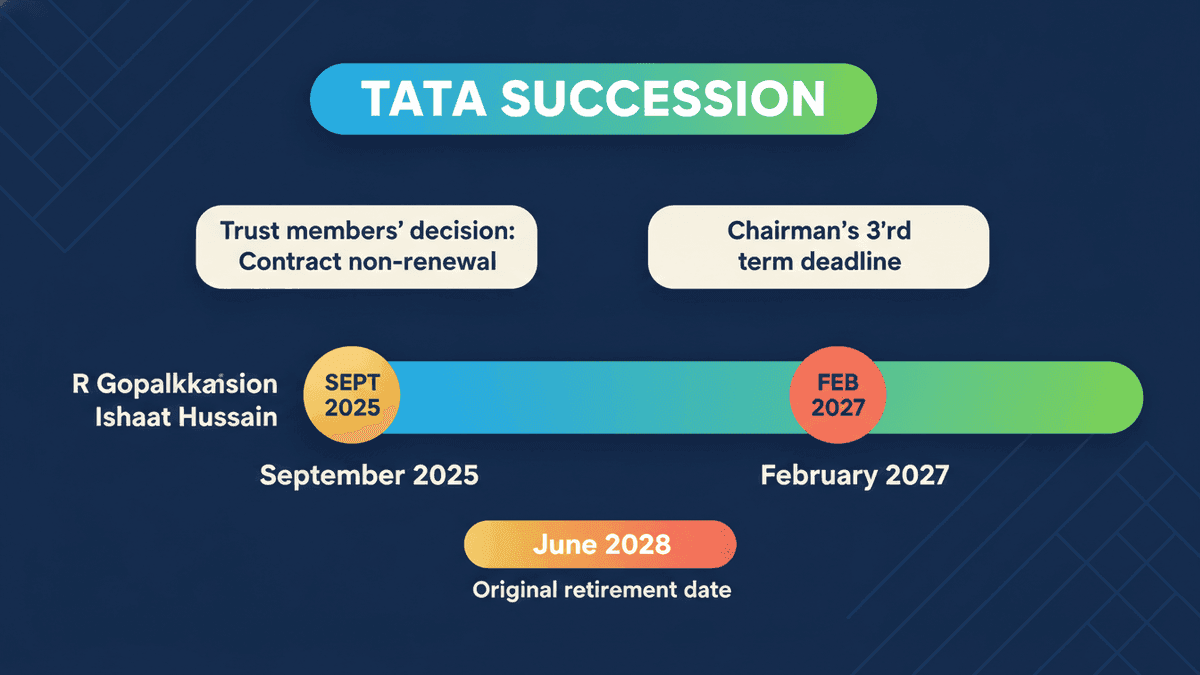
Former Tata Sons directors R Gopalakrishnan & Ishaat Hussain discuss professional differences in Tata leadership, emphasizing resolution for institutional integrity.
Recent media scrutiny surrounding Tata has focused on professional differences between the heads of Tata Sons and Tata Trusts. R Gopalakrishnan and Ishaat Hussain, both former directors of Tata Sons, assert that such divergences are inherent in corporate leadership, with their resolution being paramount to prevent adverse impacts on the institution.
Intense speculation has emerged regarding governance, transparency, and trust within the Tata group. This stems from discussions around succession and the Tata Sons chairman’s decision not to seek a third term by February 2027.
Navigating Corporate Disagreements
The authors highlight that conflicts are a normal part of any relationship, including professional ones. They can be effectively resolved through open conversation, mutual compromise, and steadfast commitment.
Historical examples, such as Julius Caesar and Pompey the Great, or cousins Kaiser Wilhelm II, King George V, and Tsar Nicholas II, illustrate how unresolved personal differences can escalate into significant conflicts. In the Tata context, leaders gracefully adjusted their stances to safeguard the institutions when direct resolution through dialogue proved insufficient.
Various conspiracy theories circulating in the media, including those pitting Tata Trusts against Tata Sons, Parsi versus non-Parsi, or promoter versus professional, are dismissed as unproductive speculation. The focus remains on strategic resolution.
Key Facts on Succession
The Tata Sons chairman was originally scheduled to retire in June 2028, based on age requirements.
A unanimous decision by Trust members in September 2025 led to the non-renewal of his contract for a third term. This pivotal decision consequently altered the timeline for succession planning within the conglomerate.
Notably, a director expressed reservations concerning specific economic and business issues during this period. The chairman’s ultimate decision not to seek re-election was made to protect the interests of employees, ongoing investments, and the broader business operations.
Tata remains a highly respected national asset, and its ongoing succession planning is crucial. The group’s continued mission to foster employment, advance families, and contribute to national prosperity hinges on a smooth transition.