NCLT Needs Dedicated Insolvency Benches: Parliamentary Panel
By Business Desk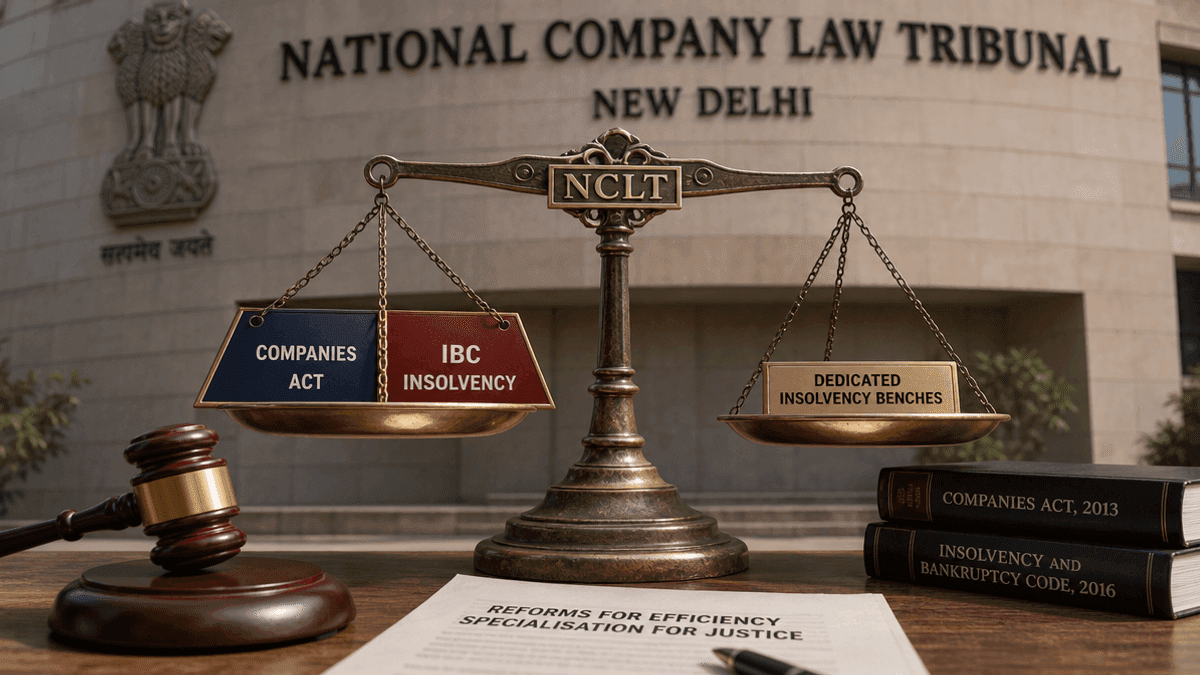
Parliamentary panel recommends dedicated NCLT benches for insolvency cases to speed up resolutions and balance Companies Act duties. Read more.
A parliamentary panel has recommended establishing dedicated benches or verticals within the National Company Law Tribunal (NCLT) specifically for insolvency cases. This move aims to accelerate the resolution of such matters while ensuring the tribunal can also adequately address its responsibilities under the Companies Act, 2013.
Why Dedicated Benches Are Needed
The Department-Related Parliamentary Standing Committee on Personnel, Public Grievances, Law and Justice presented its report, ‘Review of Functioning of Tribunal System in the Country,’ to Parliament earlier this month. The committee observed that insolvency matters now constitute more than half of the NCLT’s entire caseload.
These cases demand specialized and time-bound adjudication due to their complex nature. Establishing dedicated Insolvency and Bankruptcy Code (IBC) benches would require adequate judicial and technical members, along with necessary registry support and infrastructure.
This specialization would facilitate the swift disposal of insolvency matters. Simultaneously, it would ensure that the NCLT’s equally crucial company law jurisdiction, covering mergers and amalgamations, corporate governance, and stakeholder protection, receives proper attention.
NCLT’s Capacity Constraints
Despite a substantial expansion of its jurisdiction following the enactment of the Insolvency and Bankruptcy Code, 2016, the NCLT’s sanctioned strength of 62 members has remained unchanged since its inception. The tribunal informed the committee that its existing judicial strength is no longer commensurate with the volume and complexity of cases.
This mismatch creates considerable pressure on both its judicial and administrative capacity. As of July 13, the NCLT was operating with a President, 26 Judicial Members, and 25 Technical Members, indicating several vacant positions.
Staffing and Operational Recommendations
The panel urged the corporate affairs ministry to examine the feasibility of implementing these dedicated benches. Furthermore, the committee recommended a reassessment of the tribunal’s staffing requirements.
The goal is to create adequate permanent posts, reducing reliance on contractual and deputation-based personnel. Over 95% of the tribunal’s workforce is currently engaged on a contractual basis, which poses challenges.
Frequent transfers of deputationists and high attrition among contractual staff negatively impact administrative continuity, institutional memory, and the development of domain expertise. The report also suggested periodically reviewing the need for additional benches and members in light of the growing caseload.
Recent Resolution Performance
In a related development, the NCLT reported a strong performance in the June quarter, approving 78 resolution plans. These plans collectively amounted to Rs 5,517.66 crore.
This marks the tribunal’s highest-ever first-quarter performance in terms of resolution plan approvals since the IBC’s enactment in 2016. This demonstrates the NCLT’s ongoing efforts despite its operational challenges.