NTA Reforms Needed: Ex-UGC Chief on Strengthening Exam Security
By Business Desk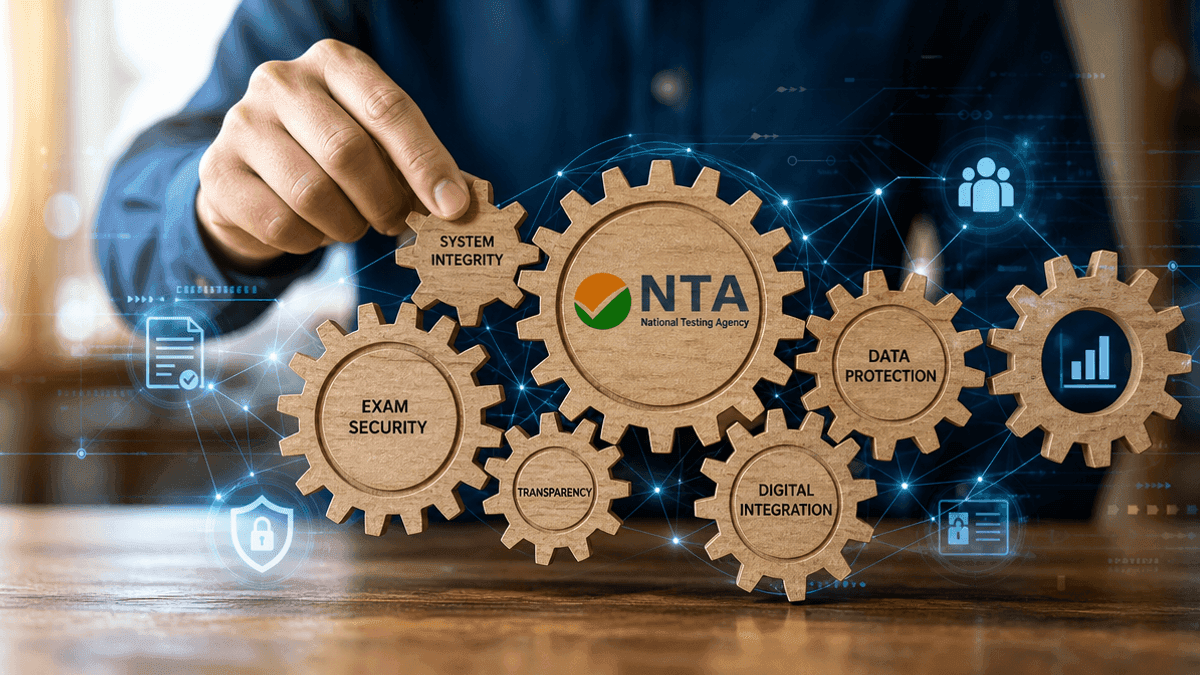
Former UGC Chairman Mamidala Jagadesh Kumar stresses deep structural reforms for the National Testing Agency (NTA) to resolve exam security issues, rather than replacement.
Former UGC Chairman Mamidala Jagadesh Kumar argues that the National Testing Agency (NTA) requires “deep structural strengthening” to effectively address persistent examination security concerns. He emphasizes that a complete replacement of the agency is not the solution.
Kumar views recurring paper leak incidents as an “end-to-end examination-security challenge,” acknowledging the immense scale and complexity of the exams. The NTA manages tests for over one crore candidates annually, highlighting the vast operational scope.
Addressing Systemic Vulnerabilities
The Centre has initiated measures to reinforce the NTA and the broader examination system in response to recent incidents. These include the NEET-UG paper leak and errors in the UGC-NET examination.
- A high-level committee has been established, led by technocrat Nandan Nilekani.
- A new law has been enacted specifically to deter unfair practices in public examinations.
Examination security on such a large scale depends on a complex interplay of various factors. These encompass subject experts, digital systems, printing, transport, storage, and the conduct at examination centers.
Implementing Past Recommendations
The Radhakrishnan Committee previously reviewed the testing process and made key recommendations. These focused on enhanced standard operating procedures, improved data security, clear accountability, and closer collaboration with states.
Many of these recommendations have since been adopted by the government and the NTA. By July, 35 out of 46 major action points were reported as implemented.
Rethinking NTA’s Operational Model
Kumar suggests a long-term solution involving continuous risk assessment and minimizing individuals handling confidential materials. Implementing digital traceability and independent checks at every stage are also crucial to prevent breaches and safeguard student trust.
While acknowledging the NTA’s “very large” workload, Kumar clarifies that the number of examinations alone does not prove it is overburdened. The complexity inherent in each examination is the more significant factor.
Holistic Review and Specialized Expertise
The Radhakrishnan Committee proposed a partnership model for examination conduct. Under this model, ministries, regulators, or institutions requesting an examination would handle the syllabus, subject experts, question quality, and academic validation.
Conversely, the NTA would be responsible for providing the secure platform, center network, candidate verification, examination delivery, and result processing. Kumar advises against dividing examinations among multiple agencies, arguing that a single national testing body ensures consistent security standards and candidate services.
He stressed the necessity of a comprehensive review of the entire examination system, from question setting to invigilation, with strict access control and traceability at every handover point. Developing permanent expertise in areas like test design, cybersecurity, languages, quality analysis, and logistics is also paramount.