Multiple Insurance Policies: Claims Explained
By ThePip Desk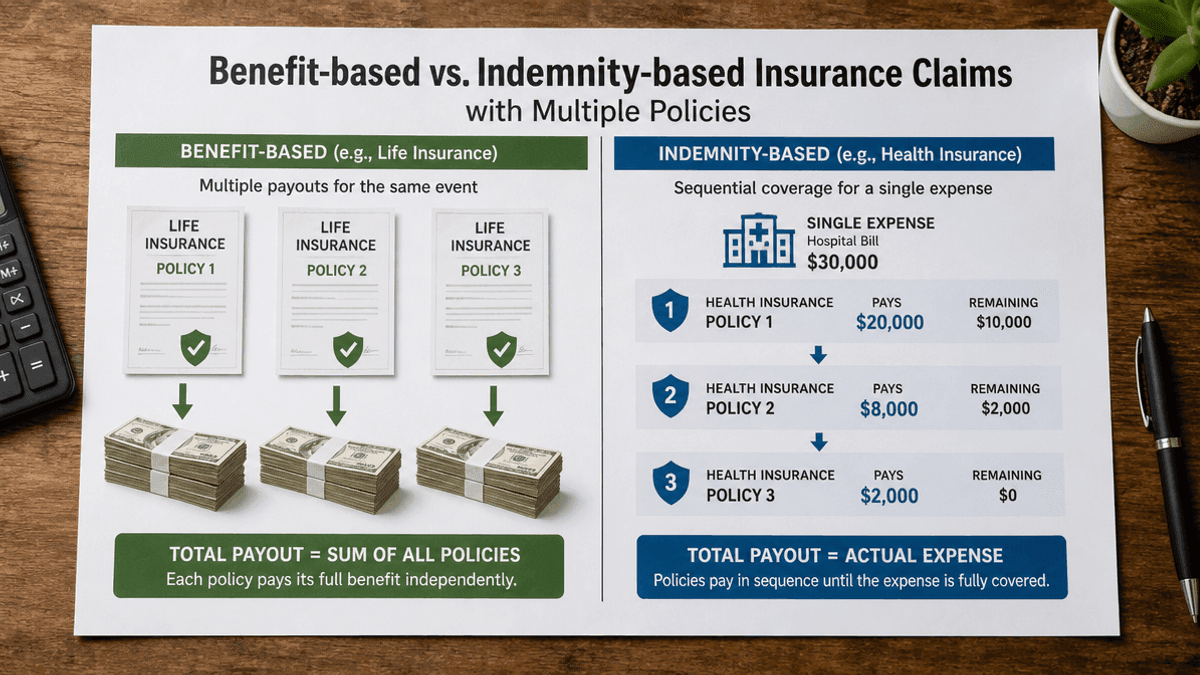
Navigating multiple insurance policies? Understand how benefit-based vs. indemnity plans affect your claims and payouts. Crucial for young professionals.
If you’re like many young professionals, you might find yourself with multiple insurance policies. But it’s important to know that having more policies doesn’t automatically mean more payouts for the same event.
The key difference lies in whether your insurance is benefit-based or indemnity-based. This distinction shapes how your claims are processed and what you can expect to receive.
Understanding Benefit-Based Policies
Life insurance is a prime example of a benefit-based policy. If you hold several valid life insurance policies, your nominee can typically claim the death benefit from each one.
Each policy represents a separate contract, meaning if both are active and claims are admissible, you could see payouts from all of them.
- For instance, two life policies of Rs 50 lakh each could lead to a total payout of Rs 1 crore.
How Indemnity-Based Health Insurance Works
Health insurance, on the other hand, is indemnity-based. This means it reimburses your actual, eligible medical expenses rather than paying a fixed sum.
If you have two health insurance policies and incur a hospital bill, you cannot claim the full amount from each insurer. Instead, you’ll start a claim with one policy, and if that doesn’t cover the entire admissible expense due to limits or deductibles, you can claim the remaining balance from your second policy.
- If you have a Rs 5 lakh hospital bill, you claim up to the limit from your first insurer, then the rest from the second.
Reasons Life Insurance Claims Get Denied
Even with multiple life policies, claims can be denied under specific circumstances. These usually involve issues with the policy’s validity or how it was obtained.
- Policies not validly issued can lead to denial.
- Unpaid premiums will invalidate your coverage.
- Material fraud, misrepresentation, or non-disclosure also grounds for denial, as per Section 45 of the Insurance Act, 1938.
Common Mistakes You Should Avoid
Many policyholders make common errors that can complicate claims or reduce coverage effectiveness. Being aware of these can save you a lot of trouble.
- Not disclosing all existing policies to your insurers.
- Assuming you’ll get double benefits from overlapping health policies.
- Ignoring crucial waiting periods and exclusions in your policy documents.
- Buying additional cover without understanding how it interacts with existing plans, like employer-provided or super top-up policies.
- Failing to maintain organized documents for all your policies.
Remember, it’s not just about the sum insured; factors like exclusions, deductibles, co-payments, and room-rent limits significantly impact your actual protection. More policies only mean better insurance if they genuinely fill gaps, complement each other, and you’ve made complete disclosures.