Jindal Stainless Expands Coin Blank Capacity by 20% to Meet Global Demand
By Business Desk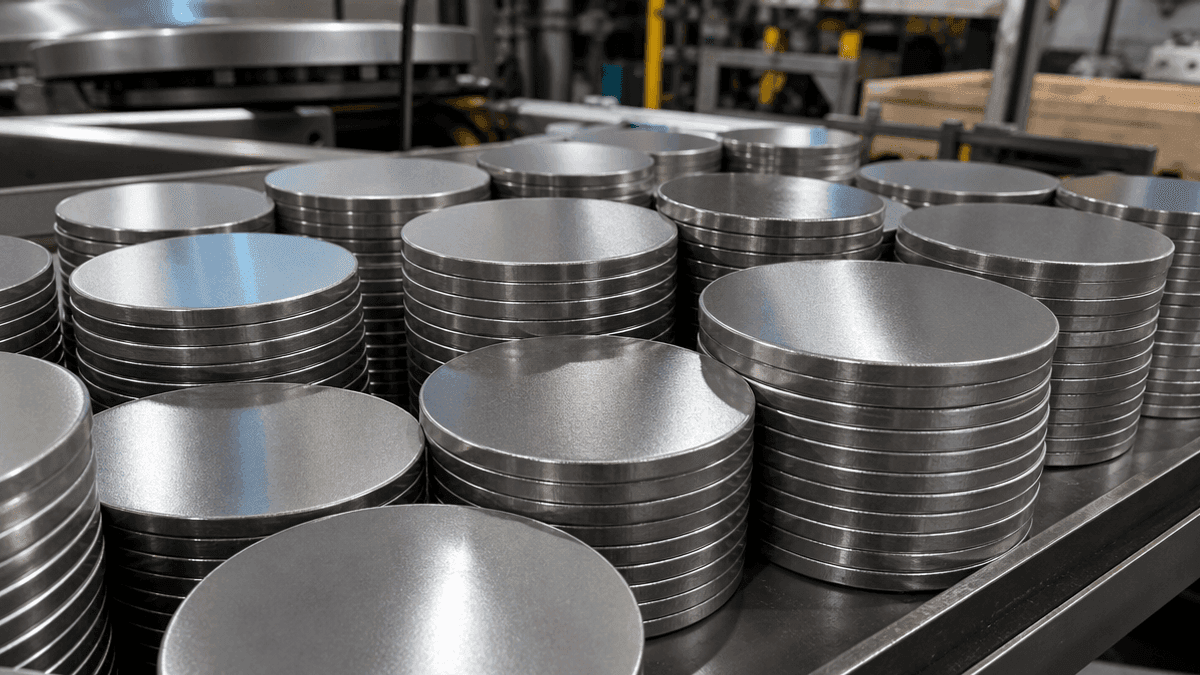
Jindal Stainless increases annual coin blank production by 20% to 12,000 tonnes, responding to surging global demand for non-paper currency from international mints.
Jindal Stainless is significantly increasing its annual coin blank production capacity by 20 percent, elevating it to 12,000 tonnes. This expansion targets a growing global demand for non-paper based currency across diverse international markets.
Vijay Bindlish, Unit Head of the Jindal Stainless Hisar facility, confirmed that the company manufactures these coin blanks for both the Indian Mint and various international mints. Production occurs at the Special Products Division (SPD) in Hisar, a high-security area also responsible for high-end finished goods like razor blades and precision strips.
The company customizes unstamped coin supplies to exact specifications for mints in several nations. These include India, France, Finland, Poland, the Netherlands, the UK’s Royal Mint, Malaysia, and Slovakia, based on specific size, diameter, thickness, shape, and alloy composition requirements.
Capacity Expansion Drivers
Jindal Stainless aims to secure additional international orders, leveraging the increasing demand for stainless steel due to its lower carbon footprint in manufacturing processes. This strategic move underpins the capacity increase.
The coin blank making capacity is being raised from the current 10,000 tonnes to 12,000 tonnes. The company is also actively exploring entry into new global markets.
Broader SPD Operations
Saurabh Kumar, Head of the SPD, highlighted the division’s substantial market presence in razor blades. The SPD holds a 60-70 percent share in the global razor blade market.
Annual razor blade production stands at 19,500 tonnes, following a recent capacity increase from 13,200 tonnes. These blades are supplied to countries including India, Poland, Vietnam, China, and South Korea, as the company seeks to maintain its market leadership.
Hisar Facility & Sustainability
The Hisar facility, a longstanding industrial setup in Haryana with a capacity of 0.8 million tonnes (MT), began carbon steel production in 1970 before transitioning to stainless steel in 1978. This shift aimed to reduce India’s import dependence.
Sushil Jain, Head of the cold rolling division, emphasized the facility’s commitment to environmental stewardship. It operates a zero liquid discharge system, ensuring all processed water and acids are recovered, treated, and internally reused with no industrial effluent.
Furthermore, the plant is increasing its green energy usage from 70 percent to 80 percent this year. This initiative is supported by two captive hydrogen projects and a floating solar project, underscoring its sustainability efforts.
Jindal Stainless positions itself to capitalize on sustained demand for non-paper currency and high-end stainless steel products by strategically enhancing capacity and focusing on eco-friendly operations.