India’s Manufacturing: Why 25% GDP Target Is Elusive
By Business Desk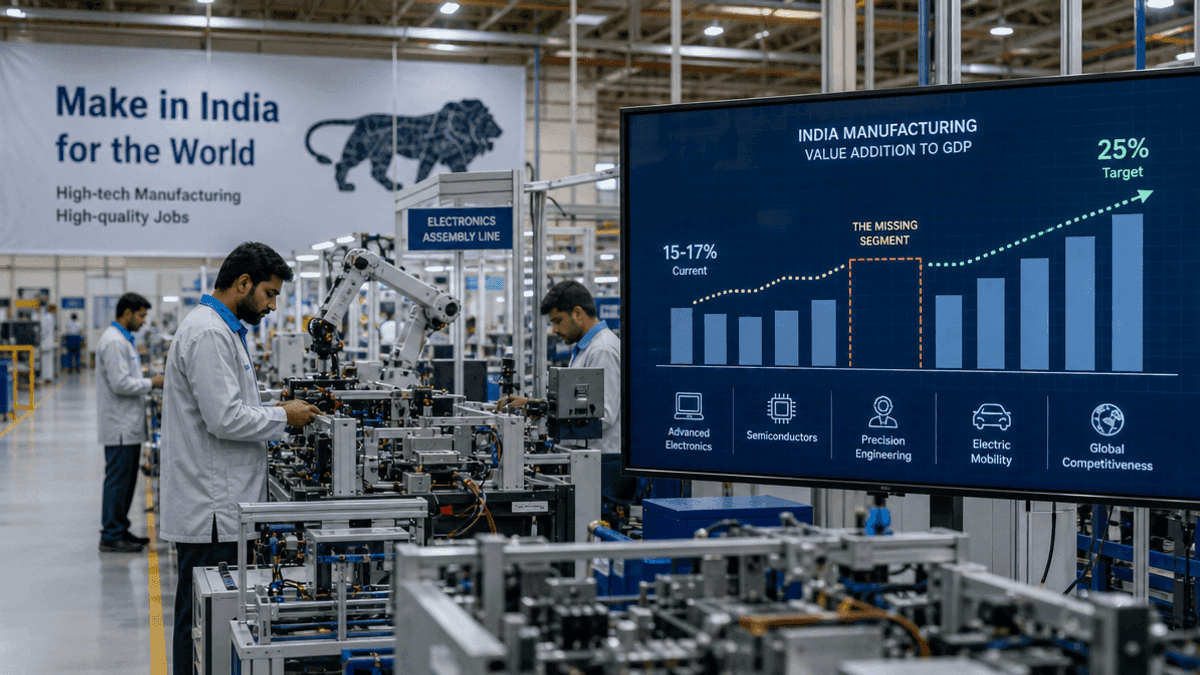
Sanjay Kathuria analyzes why India’s manufacturing sector struggles to reach 25% GDP contribution, highlighting land, labor, and regulatory challenges, yet sees promise in high-tech growth.
India’s manufacturing sector has not achieved its ambitious target of contributing 25% to the nation’s Gross Domestic Product, according to Sanjay Kathuria, Visiting Senior Fellow at the Centre for Social and Economic Progress.
Kathuria, also Co-Founder of Trade Sentinel, attributes this shortfall to persistent issues that hinder the sector’s growth and scalability.
Core Challenges Hindering Manufacturing Growth
- Difficulties related to land acquisition and usage.
- Complexities surrounding labor regulations and mobility.
- Overall regulatory hurdles and skill development gaps.
Despite these challenges, Kathuria maintains an optimistic outlook for India’s potential to emerge as a significant hub for high-tech manufacturing.
Emerging High-Tech Manufacturing Successes
- Strong performance in the pharmaceuticals sector.
- Growth in auto components manufacturing.
- Significant strides in mobile phone production, supported by the Production Linked Incentive (PLI) scheme.
He highlights the crucial role of scale in manufacturing and identifies a structural problem: the prevalence of a large informal sector alongside a “Missing Middle” of medium-sized enterprises in India.
Addressing Structural Gaps and Global Trade
- Unlike competitors such as Bangladesh, India lacks a robust segment of medium-sized firms.
- Kathuria advocates for deeper trade relationships with Asian economies like Japan, South Korea, and ASEAN, mirroring existing ties with the UK and EU.
- Emphasizing research and innovation is key for effective technology absorption.
Kathuria firmly asserts that manufacturing will be the primary source of “decent jobs” in India over the next two decades. He believes the country has not missed its opportunity to become a global manufacturing hub, especially considering the current trade dynamics between the United States and China.
Doubling merchandise exports, he suggests, could significantly increase India’s share in global goods exports to 4%, thereby generating quality employment opportunities across the nation.