India’s LPG Import Bill Jumps 29% Post-Iran Strikes
By ThePip Desk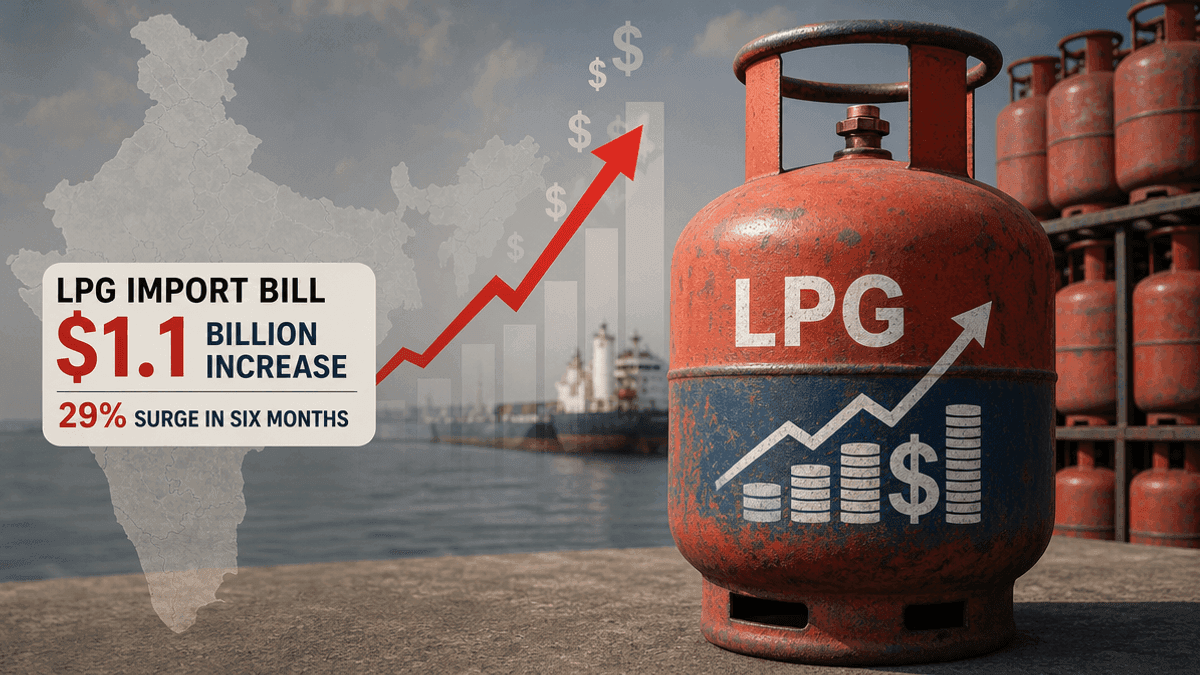
India’s LPG import costs soared 29%, adding $1.1 billion to its bill following US-Israel strikes on Iran, impacting global energy markets.
India experienced a significant surge in its cooking gas import costs, paying 29% more per tonne for imported liquefied petroleum gas (LPG) than anticipated in the six months following the US-Israel strikes on Iran. This price shock resulted in an estimated additional $1.1 billion to India’s LPG import bill, according to a report by the Centre for Research on Energy and Clean Air (CREA).
As the world’s largest LPG importer, India’s reliance on the fuel for cooking made it particularly susceptible to these rising global costs. The primary driver behind this price escalation was a sharp increase in Saudi Aramco’s monthly contract prices.
Key Price Metrics and Market Impact
- LPG import cost increase: 29% per tonne.
- Additional import bill estimate: $1.1 billion over six months.
- Saudi Aramco LPG contract price jump (February to April): 38%, from $545 per tonne to $750 per tonne.
- Saudi Aramco butane contract price increase: 48%, reaching $800 per tonne.
- India’s LPG import volumes decrease: 26% during the period.
- March import volume drop: 49%.
- US share of India’s LPG imports: Rose from 8% to 32%.
- Additional cost per 14.2-kg domestic LPG cylinder: Approximately $1.80 at import parity, peaking at $2.90 in May.
Import Volume Dynamics and Supply Shifts
The surge in Saudi Aramco’s contract prices directly impacted India’s procurement, with LPG prices jumping 38% from $545 per tonne in February to $750 per tonne in April. Butane prices saw an even sharper increase of 48%, reaching $800 per tonne.
Concurrently, India’s LPG import volumes decreased by 26% during this period, with a notable 49% drop recorded specifically in March. This shift in market dynamics also altered the country’s supply mix.
The United States’ share of India’s LPG imports significantly rose from 8% to 32%. This increase partially compensated for the volumes that were lost from the Gulf region.
Household Cost Implications
The CREA report indicated that the additional cost for a standard 14.2-kg domestic LPG cylinder was approximately $1.80 at import parity. This figure peaked at about $2.90 in May, reflecting the direct impact of the elevated import costs.
It is important to note that these figures represent import-parity costs, which do not encompass subsidies, taxes, or distribution margins that ultimately influence the final price consumers pay. The $1.1 billion estimate exclusively covers purchased LPG, excluding the broader economic cost of cooking gas that households might have forgone due to affordability constraints.