India’s FTA Usage Soars: Certificates of Origin Double
By ThePip Desk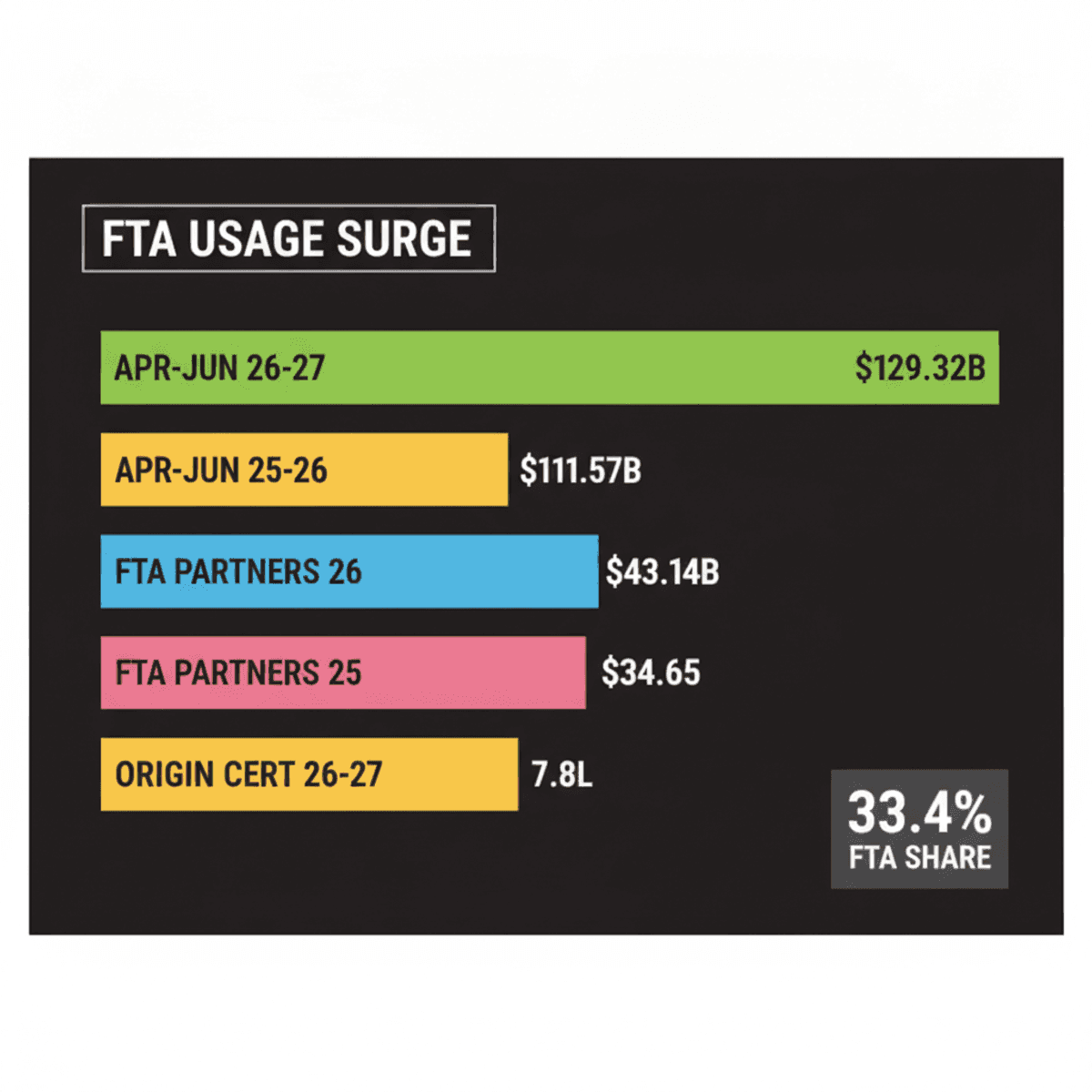
India’s Free Trade Agreement utilization surges as Certificates of Origin issuance more than doubles in FY27, boosting market access for exporters.
Minister of State for Commerce and Industry Jitin Prasada announced a significant increase in the issuance of Certificates of Origin (CoO), a crucial document for exporters. These certificates, essential for claiming duty benefits under free trade agreements (FTAs), have more than doubled to over 7.8 lakh in 2026-27 so far, up from 3.6 lakh in 2021-22.
Understanding Certificates of Origin’s Role
This surge indicates a growing utilization of India’s trade agreements and expanded market access for Indian exporters. Certificates of Origin are fundamental in international trade, serving a specific purpose for businesses.
- An exporter must submit the Certificate of Origin at the importing country’s landing port.
- This document is vital for claiming duty concessions under various free trade agreements.
- It serves as proof of where the goods originated, ensuring compliance with trade pacts.
India’s Export Performance and FTA Impact
The increase in CoO issuances aligns with robust growth in India’s merchandise exports, particularly benefiting from existing trade agreements. These figures highlight the growing role of such agreements in boosting exports.
- Total merchandise exports (April-June 2026-27): $129.32 billion, marking a 16% rise from $111.57 billion in the corresponding period of 2025-26.
- Merchandise exports to FTA partner countries (April-June 2026): $43.14 billion, representing a 25% increase compared to $34.65 billion last year.
- The share of FTA partner countries in India’s total merchandise exports in April-June FY27 increased to 33.4%, up from 31.1% in the same quarter of the previous fiscal.
Expanding Network of Trade Agreements
India has actively implemented several trade agreements, expanding its global economic partnerships to facilitate smoother international commerce. These pacts are key enablers for broader market access.
- United Arab Emirates (UAE)
- Australia
- European Free Trade Association (EFTA) bloc
- Oman
- United Kingdom (UK)