India’s AI Ambition: Global Race & Indigenous Models
By Technology Desk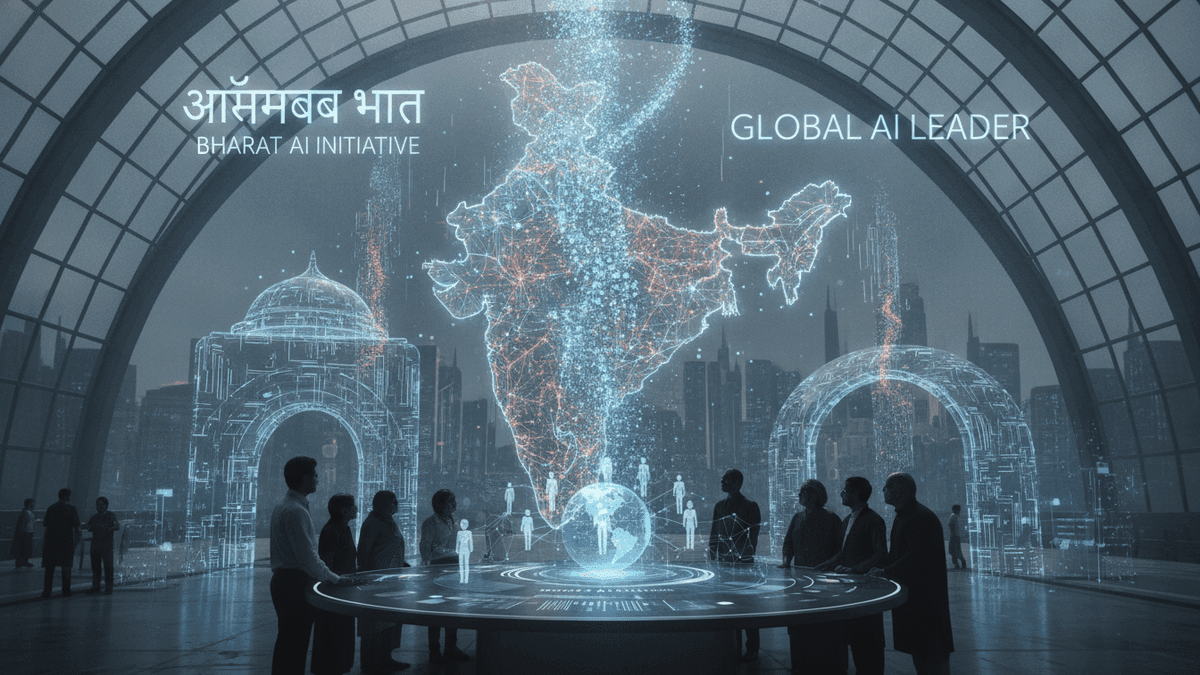
India invests heavily in AI, developing indigenous models amidst a global race. Experts predict a decade for full impact, highlighting Voice AI and major capital expenditures.
India is aggressively positioning itself in the global Artificial Intelligence race, backed by significant investments and the emergence of indigenous models. Experts Pratyush Kumar and Rajan Anandan assert that while the true impact will take years to manifest, the nation’s unique approach to AI development is already taking shape.
India’s Aggressive AI Stance
India is a significant participant in the global AI landscape, according to Rajan Anandan, Managing Director at PeakXV Partners. He highlights substantial capital expenditure announcements and a burgeoning application innovation sector.
Companies like Reliance, Adani, Tata, Google, and Amazon have collectively announced over $400 billion in AI capital expenditure. This financial commitment underpins India’s infrastructure development in the sector.
The nation has seen the launch of homegrown AI models such as Sarvam and BharatGen. Voice AI is also emerging as a potential billion-dollar revenue stream, alongside widespread innovation at the application level across various consumer and enterprise segments.
Anandan forecasts that the full impact of India’s AI initiatives will become evident over the next 8 to 10 years, drawing parallels to the rapid evolution observed in India’s digital payments ecosystem.
Developing Cost-Effective, Localized AI
Pratyush Kumar, co-founder of Sarvam AI, maintains that India is destined for success in AI due to its inherent horizontal nature. This holds true despite the current dominance of nations like China and America in capital, expertise, and chip manufacturing.
India possesses the distinct potential to develop highly cost-effective AI solutions. Sarvam models, for instance, are noted for being significantly cheaper than global counterparts such as GPT mini and Gemini Flash.
This strategic focus involves optimizing AI for specific Indian use cases and diverse languages. It moves away from a universal global model towards tailored, localized applications.
The Imperative of Sovereign AI
The concept of “sovereign AI” is critical for India’s long-term play in the sector, as defined by Pratyush Kumar. It involves an intensified commitment to research and development aimed at building homegrown models and cultivating local talent.
This approach is designed to prevent data leakage and ensure India’s self-reliance in advanced AI capabilities. Government support, including a Rs 10,000-crore fund from the India AI Mission, is acknowledged, though experts suggest further investment may be necessary.
Navigating AI’s Impact on Employment
Rajan Anandan anticipates a significant transition to an AI-based economy, akin to historical shifts from agricultural to industrial societies. While AI leverage might reduce direct hiring in IT services, the industry is poised to thrive by assisting enterprises with AI transformation.
A critical challenge lies in upskilling and reskilling India’s vast youth population. The goal is to generate 100 million jobs over the next eight years, a necessity to avert potential social unrest.
Pratyush Kumar adds that Large Language Models (LLMs) are humanizing technology, making complex tasks like financial management accessible through natural language. He believes India’s unique contribution could further humanize AI by integrating understanding of human emotions and sustainable pleasure.
This strategic push, combining substantial investment with a focus on localized and cost-effective solutions, positions India to carve out a unique space in the global AI narrative. The true measure of this ambition, however, remains a decade away, mirroring past digital transformations.