India’s US Trade Strategy: Navigating Trump’s Tariff Volatility
By Business Desk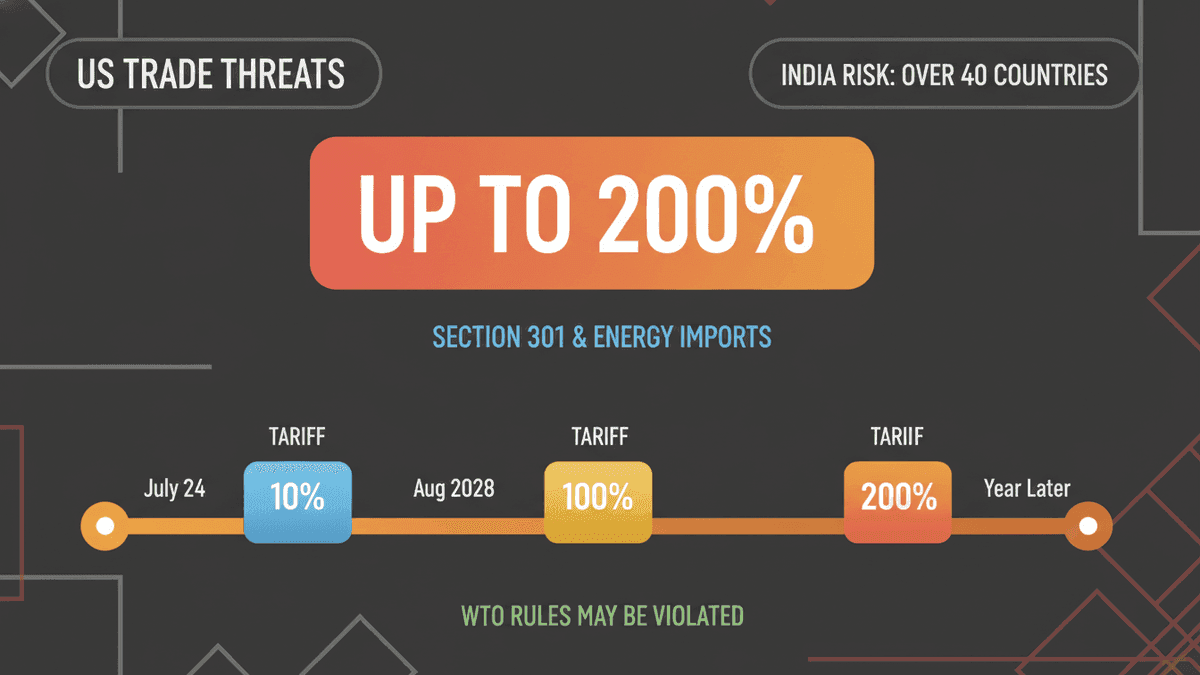
India must reassess its trade strategy with the US due to unpredictable tariffs and trade remedies under the Trump administration, especially concerning transshipment risks.
India must re-evaluate its bilateral trade strategy with the United States, driven by increasing unpredictability within the US trade regime under President Donald Trump. This necessity arises from a series of tariff impositions and new trade enforcement mechanisms that challenge established norms.
Rising Transshipment Scrutiny
A recent White House report, titled “The Great Transshipment Scam,” identifies a significant challenge for the US concerning illegal transshipment of goods. This practice involves rerouting products through third countries to evade applicable tariffs and other trade remedies.
- The report lists India among over 40 countries associated with “elevated illegal transshipment risk.”
- This risk is particularly noted for nations integrated into China-linked production and supply networks.
- Proposed solutions include an AI-enabled “Detective Border,” immediate interdiction, penalty tariffs, sanctions, and potential market access loss.
Arbitrary Tariffs and Enforcement
Given President Trump’s past actions, countries could face arbitrary declarations of involvement in illegal trans-shipment, leading to high penalty tariffs. This could also penalize countries sourcing inputs from China and exporting final products to the US, even with substantial domestic value-addition.
- A 10% tariff was imposed on India’s exports on July 24 under a Section 301 investigation.
- This action was ostensibly aimed at encouraging India to strengthen restrictions on imports produced using forced labor.
- Another ongoing Section 301 investigation into excess manufacturing capacity could result in additional tariffs on Indian industrial products.
New Tariff Threats Emerge
Further exacerbating trade uncertainty are Trump’s announcements regarding tariffs on generic drugs and a US Senate-approved bill targeting countries purchasing Russian energy. These measures signal a broader series of actions impacting international trade stability.
- Trump announced a 100% tariff on generic drugs imported into the US from August 2028, increasing to 200% a year later.
- The US Senate approved a bill allowing the president to impose tariffs of up to 100% on imports from countries, including India, that purchase large volumes of Russian crude oil or natural gas.
- The article notes that both the Russian oil penalty and Section 301 tariffs would be illegal under WTO rules.
India’s Strategic Crossroads
These developments clearly demonstrate that predictability in the US trade regime and certainty in tariffs remains elusive. The constantly changing tariff landscape undermines confidence in previous commitments.
While India remains committed to the framework for an interim trade deal finalized earlier in February, this commitment is conditional. It hinges on India securing a tariff advantage over its competitors in the US market, an objective that appears increasingly unlikely.
In this uncertain scenario, India needs to critically review its bilateral trade strategy with the US. It should assess the gains from numerous policy changes made since February 2025, which aimed to address some US grievances, such as lowering customs duties and enhancing market access for US agricultural products.