IAS Officer J.S. Deepak’s Memoir: Telecom Policy Battles
By Business Desk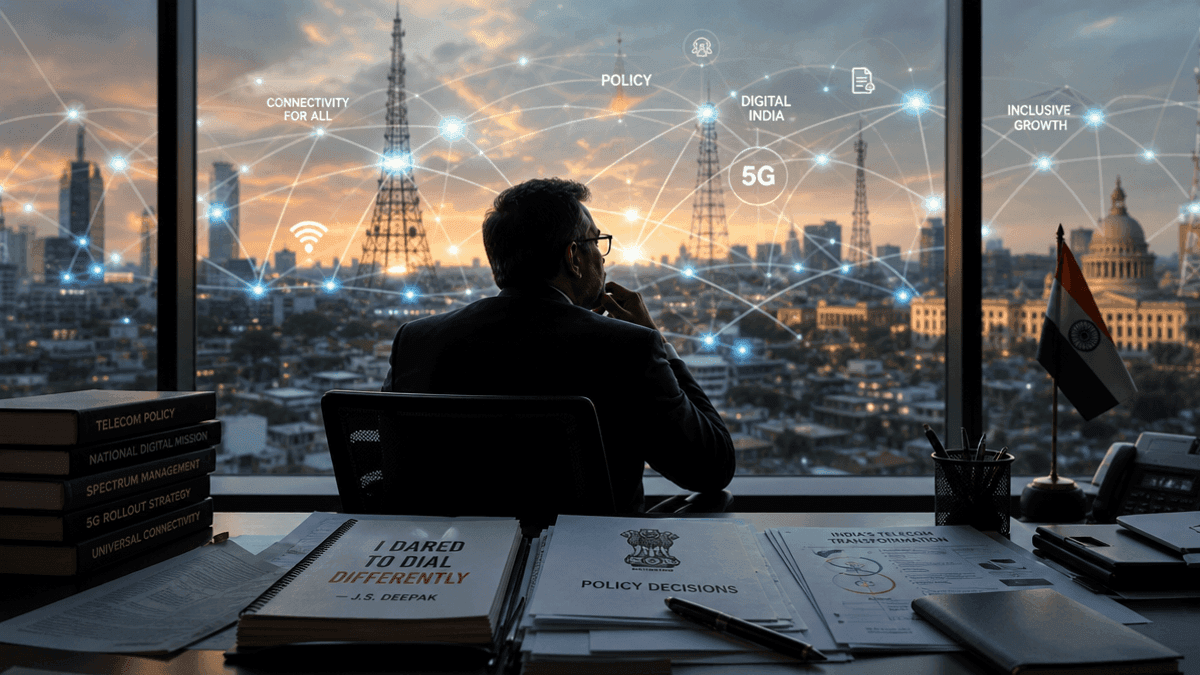
Explore J.S. Deepak’s memoir on 38 years of IAS policymaking, revealing telecom auction strategies and bureaucratic dissent. A must-read for policy enthusiasts.
Veteran Indian Administrative Service officer J.S. Deepak has released his memoir, “I Dared to Dial Differently: An Insider’s Account of the IAS,” offering a revealing look into Indian government and policymaking.
Deepak, a 1982-batch IAS officer, served for 38 years across diverse sectors including personnel, industry, health, education, telecom, and trade. His career included significant roles as Secretary for telecom and IT, and India’s Ambassador to the WTO in Geneva.
Decisions and Dissent in Telecom
The memoir highlights Deepak’s direct involvement in critical policy decisions. He played a role in designing the 3G auction, which successfully generated substantial revenue for the government.
The 3G auction design generated Rs 1.06 lakh crore. Deepak controversially claims the 2G spectrum loss was underestimated by the Comptroller and Auditor General (CAG), suggesting the actual loss exceeded Rs 2 lakh crore due to undervaluation of lower-frequency spectrum.
Another significant instance detailed is his dissent against a large procurement proposal for Bharat Sanchar Nigam Limited (BSNL). He argued this Rs 36,000-crore procurement would result in an Rs 8,600 crore overpayment.
This stance was later supported by a Financial Express investigation, leading to the tender’s eventual scrapping. Deepak’s account distinguishes itself from typical bureaucratic narratives through its use of humor and self-awareness.
Strategic Policy Outlook
Beyond specific policy battles, Deepak’s book outlines a broader policy worldview for India. He advocates for a more assertive and strategic approach in international trade negotiations.
He believes India must leverage its negotiating position more effectively at the World Trade Organization (WTO). The country should pursue Free Trade Agreements (FTAs) that guarantee genuine market access and investment.
To compete with China, India needs to build scale, enhance skills, and develop robust manufacturing ecosystems rather than relying solely on protectionist measures. The memoir also includes candid portrayals of ministers like Suresh Prabhu and Anand Sharma.
It diversifies its content with engaging digressions into topics such as Kayastha community history, cuisine, and wine pairing, adding a unique personal touch. While the book provides valuable historical and administrative insights, some detailed narrations could have been condensed.
Ultimately, the memoir is celebrated for its engaging personality and unvarnished view of governance, offering a ringside perspective on how the country is run without bitterness.