FICCI: India Seeks Better Market Access from Japan
By Business Desk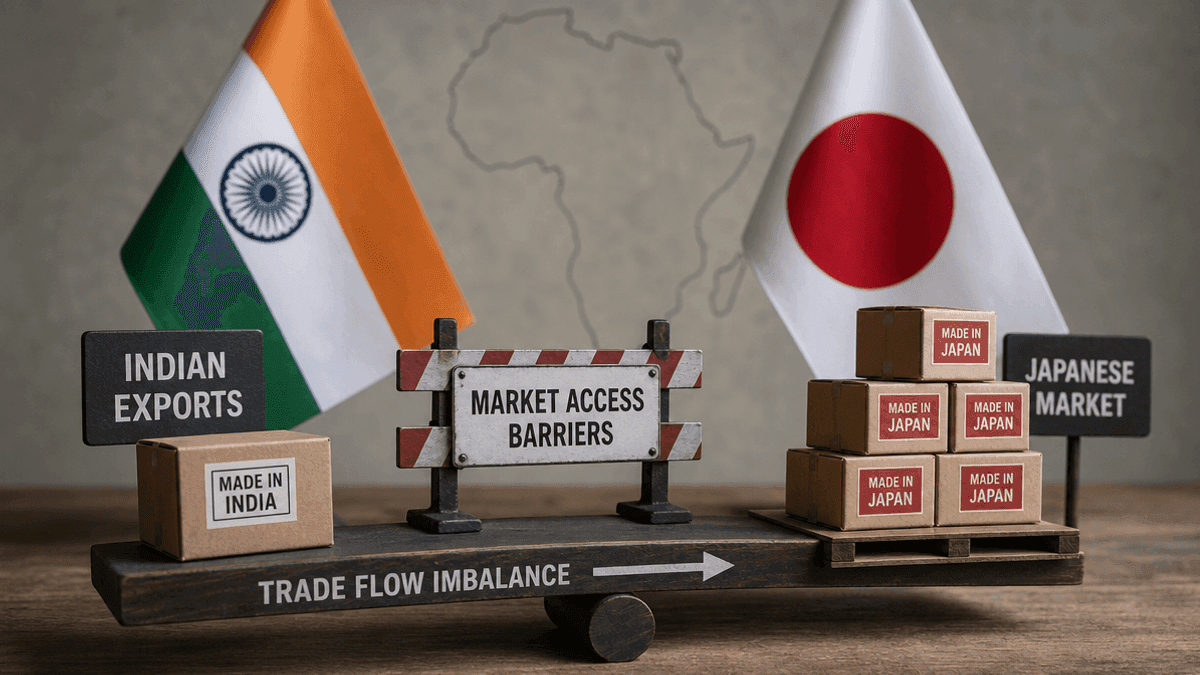
FICCI President Anant Goenka urges Japan to address India’s widening trade deficit by improving market access and recognizing Indian certifications, especially for pharma exports.
FICCI President Anant Goenka recently voiced concerns regarding India’s expanding trade deficit with Japan. He strongly advocated for Tokyo to enhance market access and formally recognize Indian certifications, particularly benefiting pharmaceutical exporters.
Indian businesses face considerable hurdles in penetrating the Japanese market, primarily due to stringent certification and complex regulatory requirements. These barriers specifically prevent Indian pharmaceutical companies from registering their products, limiting their presence.
Trade between the two nations has largely remained one-sided, with Indian enterprises struggling against Japan’s exacting quality standards and a prevalent cultural preference for domestic products. Resolving these certification and regulatory issues is crucial for achieving a more balanced bilateral trade relationship.
Key Trade Figures Highlight Disparity
Bilateral trade grew by a notable **9.18 percent**, reaching USD 27.47 billion in the 2025-26 fiscal year. During this period, Indian exports amounted to **USD 6.03 billion**, while imports from Japan were substantially higher at **USD 21.43 billion**.
This disparity resulted in a widening trade deficit, which escalated to **USD 15.4 billion** in the last fiscal year. This figure represents a significant increase from the **USD 12.66 billion** deficit recorded in the preceding year, 2024-25.
India-Japan Collaboration Opportunities in Africa
Beyond direct bilateral trade, substantial opportunities exist for India and Japan to collaborate within the African continent. This strategic partnership could leverage India’s established relationships and Japan’s robust research and development capabilities.
Potential collaboration areas in Africa span several high-tech sectors. These include **high-tech manufacturing**, artificial intelligence, and **data centers**. Further opportunities exist in shipbuilding, **critical minerals**, steel, and semiconductors.
A key focus for this joint investment and expanded trade lies particularly in **critical minerals**. This approach aims to combine their respective strengths for mutual economic growth and regional development.