Early Retirement in India: Is Rs 85 Lakh Enough?
By ThePip Desk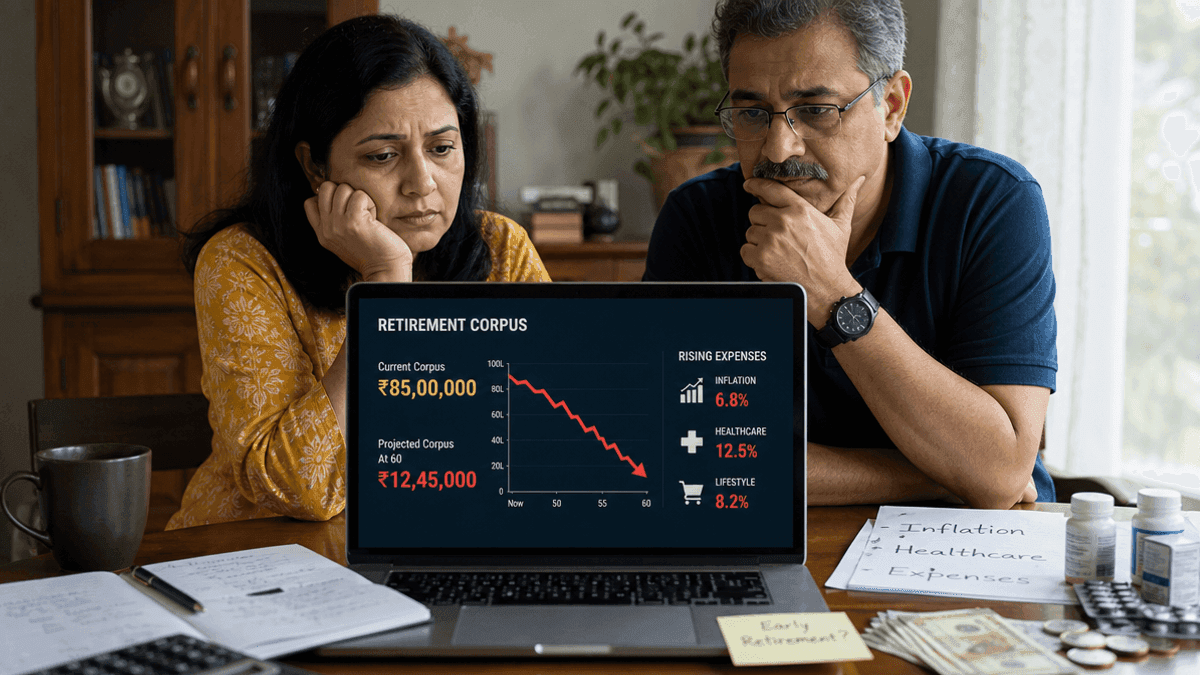
Retiring early in India with Rs 85 lakh faces a reality check. Discover the risks of inflation and healthcare costs impacting your financial future.
Thinking about early retirement in India with a corpus of Rs 85 lakh? A recent analysis suggests this might be far more challenging than you expect, facing significant risks like inflation and rising healthcare costs.
Whalesbook examined a case study of a 43-year-old couple planning to retire with exactly this amount. They intended to rely on rental income from two properties to cover their monthly expenses, which totalled Rs 42,000.
Your Key Numbers to Consider
Here are the figures from their plan:
Corpus: Rs 85 lakh
Age of couple: 43 years old
Monthly expenses targeted: Rs 42,000
The Silent Threat of Inflation
One major risk to any fixed income plan is inflation, which quietly erodes your money’s purchasing power over time. What Rs 42,000 buys today will likely be much less in ten or twenty years, making a fixed income stream challenging to maintain.
Rental Income Isn’t Always Steady
Relying solely on real estate income for your retirement can also be a tricky trap. Properties are not always easy to liquidate quickly, and they come with several ongoing costs and potential income gaps.
Real estate isn’t perfectly liquid.
You’ll incur maintenance costs and taxes.
Properties can experience periods of vacancy, impacting your income predictability.
Rising Healthcare: A Major Hurdle
Perhaps the biggest financial shock for retirees in India is the rapid increase in medical costs. Healthcare expenses are climbing faster than general inflation, and many retirement plans fail to adequately budget for major health events in later life, which can quickly deplete a smaller savings pool.
Smart Steps for Your Retirement Fund
Financial experts consistently advise diversifying your investments to provide flexibility against market volatility and economic shifts. Spreading your money across various asset classes is a key strategy for protecting your future.
Consider equity, debt, and liquid instruments.
Always maintain a separate emergency fund.
True early retirement planning means looking beyond just current monthly expenses. You need to factor in inflation-adjusted cash flow, potential lifestyle changes, long-term care needs, and the impact of taxes to build a sustainable plan.