Tata Sons IPO: Mandatory Stock Listing by September 2025
By Business Desk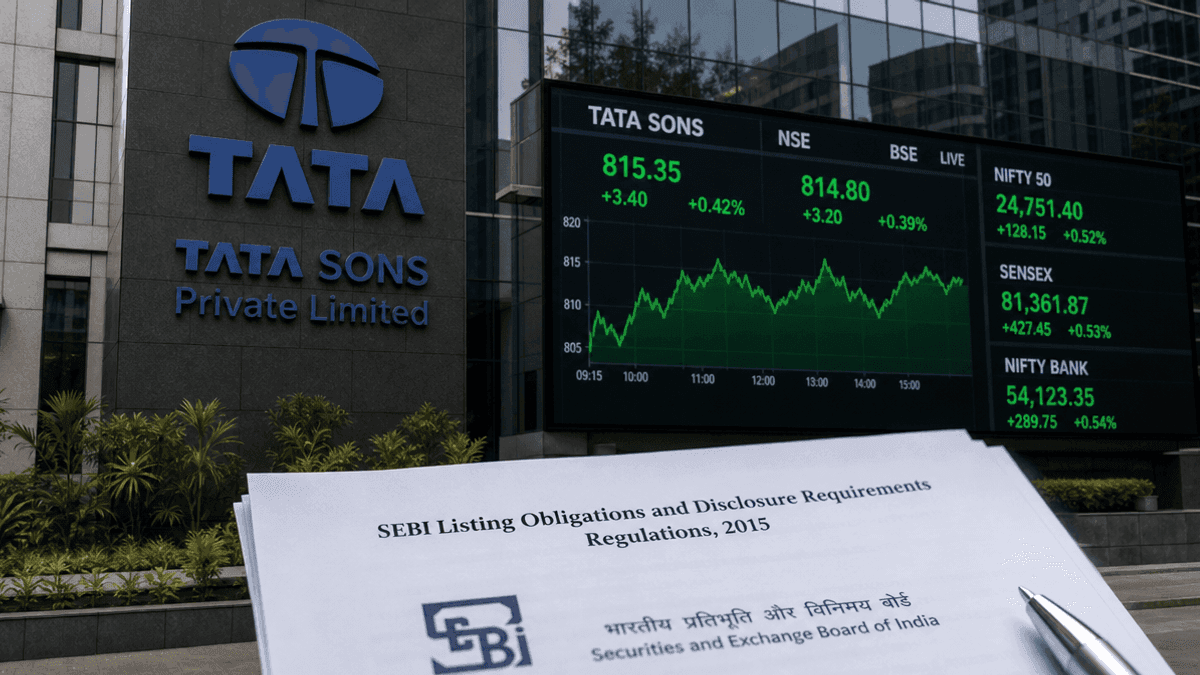
Tata Sons faces a mandatory public stock market listing by September 2025 after being classified as an Upper Layer NBFC by the Reserve Bank of India.
The Reserve Bank of India has classified Tata Sons as an Upper Layer Non-Banking Financial Company, triggering a regulatory requirement for the company to list its shares on public stock exchanges by September 2025. This decision arrives because Tata Sons serves as the principal investment holding company for the Tata Group.
Regulatory Mechanics and Listing Requirements
The mandatory public offering introduces structural shifts for the principal investment holding company. Compliance with scale-based regulations requires navigating specific operational updates.
Key details of the regulatory classification include:
- Designated as an Upper Layer Non-Banking Financial Company by the Reserve Bank of India.
- Mandated public stock exchange listing deadline set for September 2025.
- Serves as the principal investment holding company for the Tata Group.
Shareholder Impact and Governance Standards
For existing shareholders, the mandatory listing introduces several changes regarding valuation and transparency. The process establishes formal mechanisms for price discovery.
Operational shifts resulting from the classification include:
- Provision of a mechanism for price discovery to assess market valuation.
- Enhancement of transparency and corporate governance standards via strict disclosure norms.
- Requirement to comply with SEBI’s rigorous disclosure norms.
Challenges and Structural Restructuring
While the public offering creates liquidity for investors, the transition introduces distinct operational hurdles. Balancing diverse shareholder interests requires complex internal adjustments.
The restructuring process involves:
- Increased regulatory scrutiny following the official classification.
- The need to balance the interests of public shareholders with the strategic objectives of the Tata Trusts, which hold a majority stake.
- Complex valuation exercises and potential restructuring to comply with scale-based regulations.