RBI Ruling Forces Tata Sons Into Major Structure Shift
By Business Desk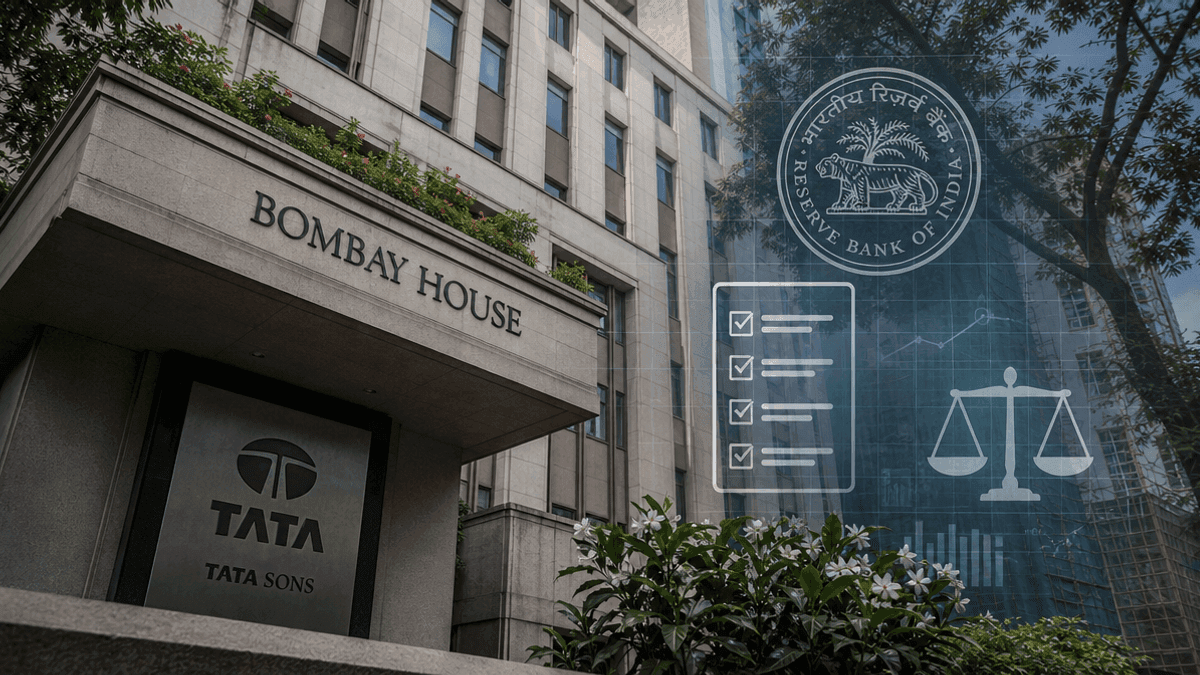
Discover how the RBI’s upper-layer NBFC designation forces Tata Sons into major leadership, governance, and structural shifts. Read the full analysis.
The Regulatory Shift
The Reserve Bank of India has designated Tata Sons as an upper-layer non-banking financial company. This ruling triggers significant operational and leadership uncertainty for the Tata Group.
The classification carries several mandatory requirements for the conglomerate:
Stricter compliance demands are now enforced by regulators.
Higher capital requirements must be met under the new rules.
Enhanced governance standards apply to the entire holding structure.
Navigating Corporate Restructuring
The regulatory decision complicates leadership transitions and strategic planning for the firm. The company must navigate complex financial regulations that did not previously apply to its operations.
Analysts suggest the group faces specific potential changes:
A major corporate restructuring may become necessary to comply with the criteria.
Divestment of certain assets could be required under the guidelines.
A change in the holding company model remains a possibility to meet stringent mandates.
This situation highlights the growing regulatory scrutiny over large holding companies in India. These entities now face heightened challenges in balancing corporate autonomy with mandatory financial oversight.