RBI Rate Hike Likely: MPC Minutes Signal Policy Shift
By ThePip Desk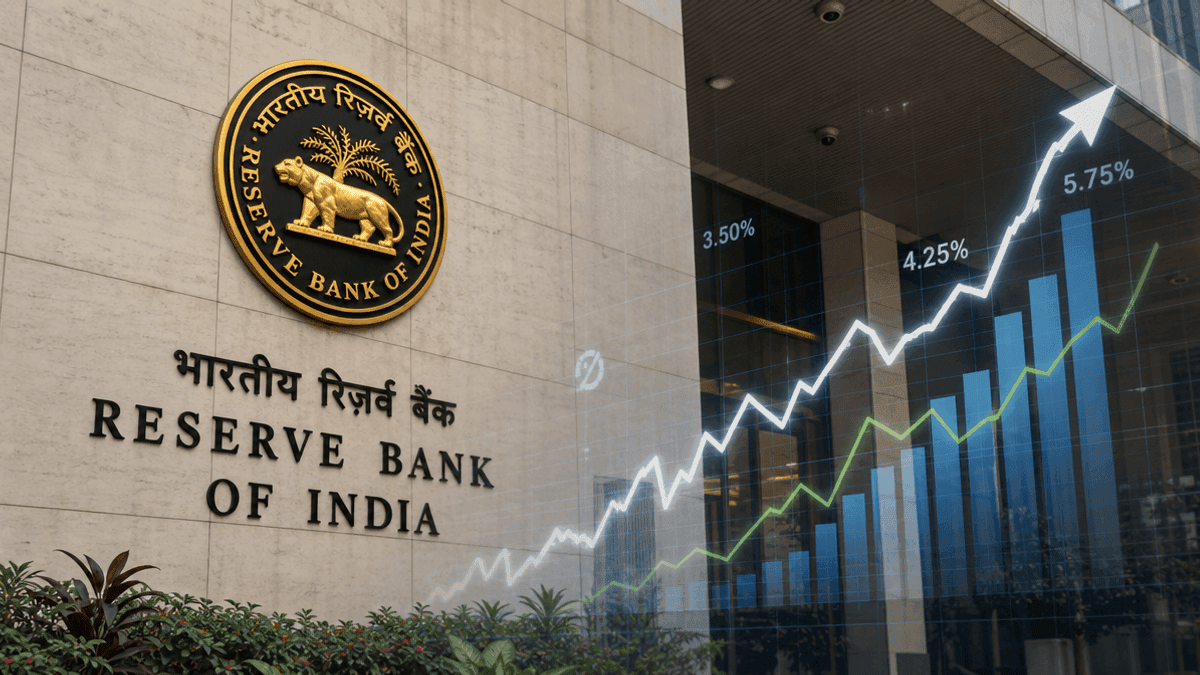
RBI’s MPC minutes suggest a potential rate hike in October or December due to normalizing inflation. India’s economy shows mixed growth and rising price pressures.
An Axis Bank report suggests the Reserve Bank of India’s Monetary Policy Committee (MPC) minutes point to an increased likelihood of a rate hike in October. December remains the most probable timing for such a policy recalibration, as the MPC emphasized the necessity of adjusting policy rates due to stabilizing inflation.
India’s Economic Landscape
India’s economy presents a mixed picture of growth and inflationary pressures. Core-sector industrial production experienced a notable increase, driven by key sectors.
This surge included iron ore, electricity, and cement production, contributing to the overall expansion.
The HSBC flash Purchasing Managers’ Index (PMI) also registered an improvement, primarily due to stronger activity within the services sector. Despite these positive indicators, inflationary pressures are observed to be rising across the economy.
India’s core-sector industrial production saw a 5.4% year-on-year increase.
Urban unemployment slightly increased, as the participation of women in the labor force outpaced the creation of new jobs. Conversely, rural unemployment declined, influenced by seasonal factors and improved agricultural sowing.
Outward direct investment rose sharply, predominantly fueled by equity outflows from the country.
Global Economic Indicators and Central Bank Actions
Internationally, central banks are actively responding to persistent inflation. Minutes from the US Federal Reserve indicated that several officials would support a rate hike if inflation does not cool down, a sentiment that initially alleviated immediate market fears.
In the Eurozone, inflation was confirmed, with core and services inflation pushed higher by various underlying factors. Germany’s ZEW sentiment improved, reflecting a more optimistic economic outlook.
Japan’s Consumer Price Index (CPI) inflation rose as anticipated, primarily driven by increases in energy and raw material costs. This development is strengthening expectations for a potential rate hike by the Bank of Japan.
The S&P Global flash PMI in the US reached a 52-month high, led by services activity.
Germany’s S&P Global flash PMI climbed to a nine-month high, signaling robust economic performance.
China’s economy showed signs of slowing, with retail sales decreasing and industrial production weakening in traditional sectors. Fixed-asset investment contracted more deeply, and prevailing deflationary conditions support expectations for an appreciation of the Chinese Yuan (CNY).
Market Reactions and Domestic Liquidity
Global financial markets reacted to these developments with varied movements. Developed-market yields initially fell but failed to sustain the trend, attributed to recovering crude prices and skepticism surrounding the US buyback strategy.
The US dollar experienced a sharp decline, influenced by concerns over fiscal dominance. Precious metals recorded gains, while industrial metals displayed a mixed performance across the board.
Oil prices remained elevated, largely due to the ongoing lack of progress in West Asia. In India, the spot Indian Rupee (INR) remained capped, and domestic rates moved higher, pressured by global crude oil prices and rupee movements.
Domestic liquidity in India remained easy, necessitating continued absorption by the Reserve Bank of India through variable-rate reverse repo (VRRR) operations. Markets will now closely monitor upcoming key data releases from India, the US, Eurozone, UK, China, and Japan for further direction and policy cues.