India’s UPI Reforms: Fees, US Pressure, and Digital Payments
By ThePip Desk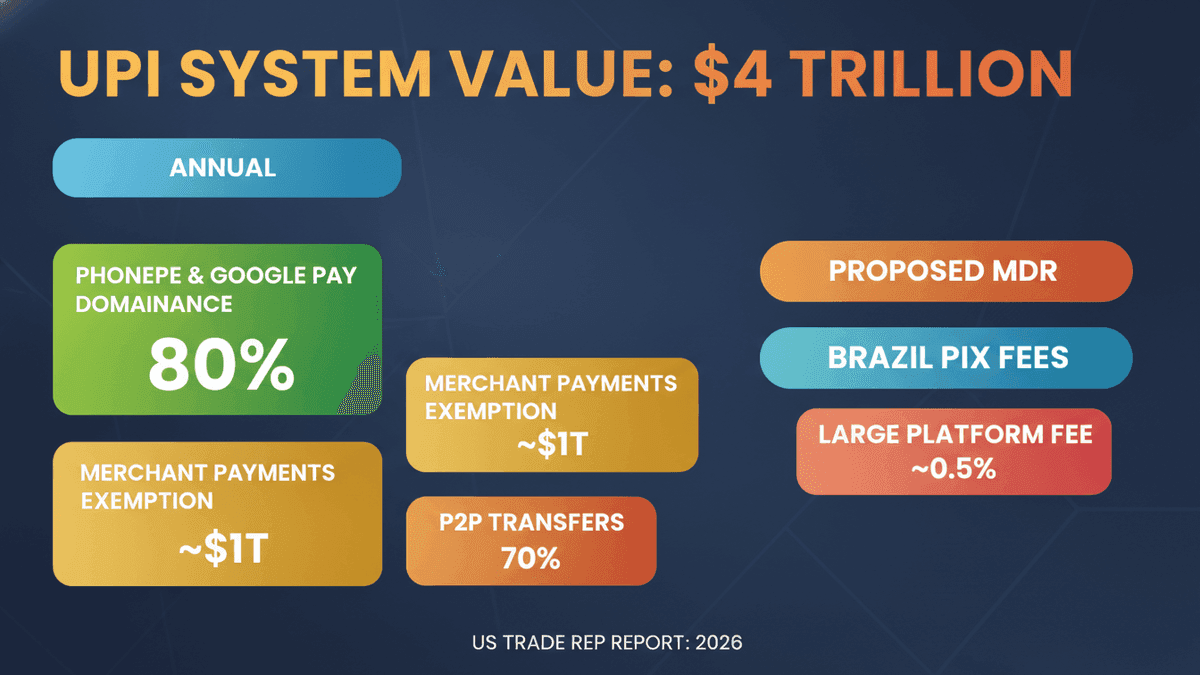
India’s $4T UPI system may introduce fees on commercial transactions amid US scrutiny, aiming for sustainability while keeping P2P free.
India’s Unified Payments Interface (UPI) system, a decade-old digital payments backbone, is facing significant reform proposals aimed at ensuring its long-term sustainability. These changes, which could introduce fees for certain commercial transactions, come amidst scrutiny from the United States regarding a level playing field for American payment networks. The UPI platform currently processes an industry valued at $4 trillion annually.
The system, while facilitating instant bank-to-bank transfers via phone numbers or QR codes, currently yields zero profits for its intermediaries despite immense transaction volumes. PhonePe (Walmart Inc.) and Google Pay (Alphabet Inc.) collectively dominate 80% of these transactions. Government subsidies have temporarily covered these operational costs, but this is not a viable long-term strategy.
Key Metrics & Proposals
- UPI industry value: $4 trillion annually.
- Market dominance: PhonePe and Google Pay handle 80% of transactions.
- Merchant payments previously banned from fees (2020): 30% of annual value, over $1 trillion.
- Proposed merchant discount rate (MDR): 0.3% to 0.5% on transactions exceeding ₹2,000 ($21).
- Brazil’s Pix system merchant fees: 0.22% to 0.33%.
The proposed reforms have drawn criticism from India’s opposition, who argue they are anti-consumer and a concession to US interests, particularly benefiting Visa Inc. and Mastercard Inc. This perception is fueled by the US Trade Representative’s 2026 report, which noted concerns about American electronic service suppliers facing an unlevel playing field within UPI. RuPay cards, part of the UPI ecosystem, currently enjoy wider acceptance than Visa and Mastercard in India.
The impending fee changes specifically target debit transfers, not credit cards. Approximately 30% of annual merchant payments, totaling over $1 trillion, were legally prohibited from incurring fees in 2020. Person-to-person transfers, which constitute 70% of the total transaction value, are slated to remain free for consumers.
Intermediaries, including major players like Walmart and Google, find it unsustainable to process billions of monthly transactions without revenue. They incur significant costs for infrastructure, compliance, cybersecurity, and covering fraud losses. Aditya Gupta of Novio suggests even modest fees on smaller payments to large businesses could contribute to sustainability, citing examples like food delivery platforms.
Brazil’s Pix system offers a comparable model, where individual transfers remain free, but intermediaries can charge low, market-based fees ranging from 0.22% to 0.33% to merchants. India aims to secure parliamentary approval for legal changes that avoid burdening consumers or small businesses. The ultimate goal is to allow large commercial platforms to pay a fee, potentially 0.5%, to generate essential revenue for system maintenance.
Washington has been advised against siding with traditional card networks, as such a stance could impede genuine reform efforts. The focus remains on establishing a sustainable financial model for UPI while navigating international pressures and domestic concerns about consumer impact.