2026 Global Stocks: Japan Surges 27.9%, India Dips 6.7%
By Market Desk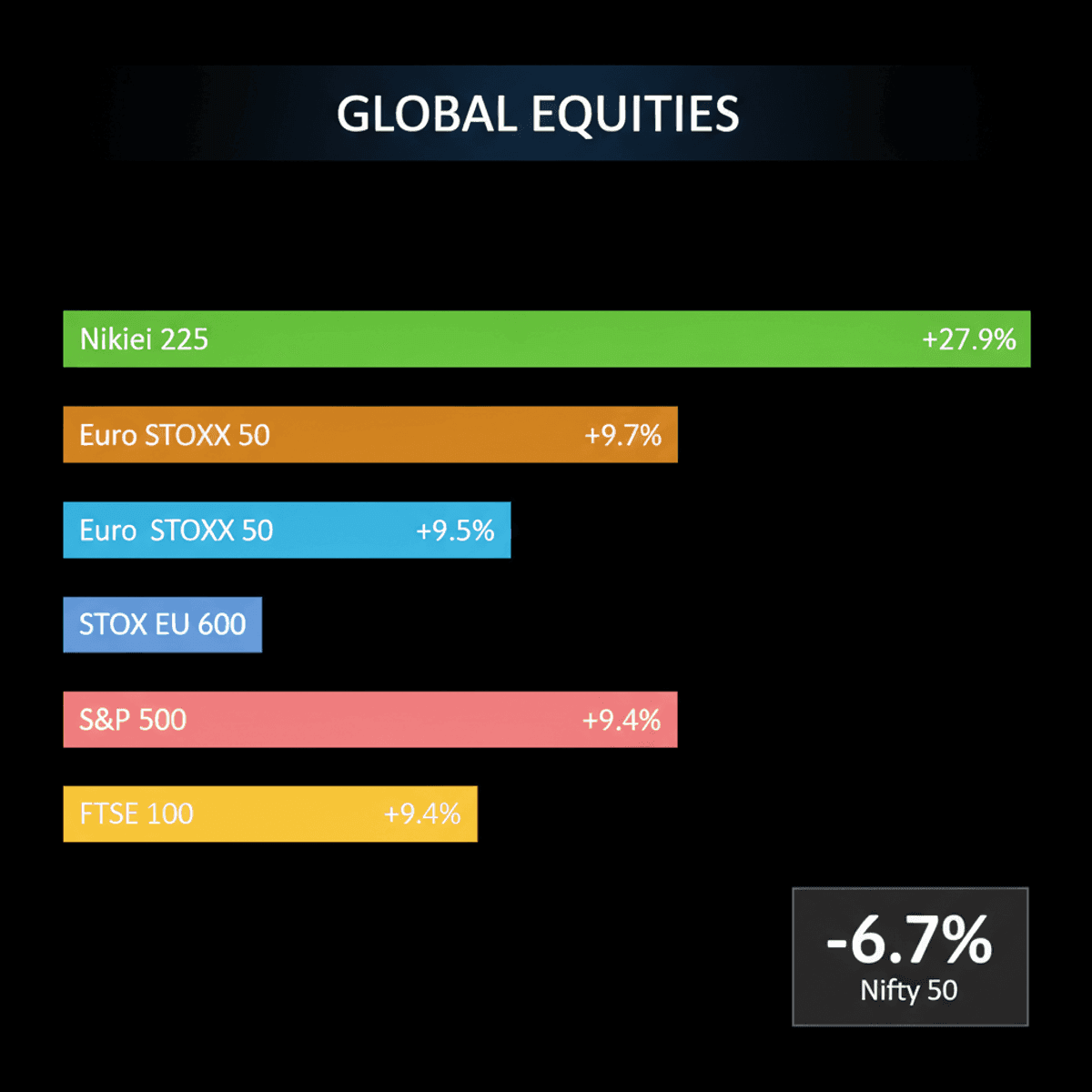
Explore 2026 global equity performance: Japan’s Nikkei 225 soars 27.9% while India’s Nifty 50 declines 6.7%. See US, Europe, China, and HK market updates.
International stock markets presented a highly divergent landscape through July 31, 2026, with Japan’s Nikkei 225 surging while India’s Nifty 50 faced significant declines.
Global equity performance varied significantly across regions in 2026, influenced by distinct growth trajectories, inflationary pressures, and policy environments. Currency fluctuations also emerged as a critical factor for international holdings.
Key Regional Performances
- U.S. S&P 500: +9.4% return through July 31, 2026.
- European Equities (STOXX Europe 600): Gains of approximately 9.5%.
- Euro STOXX 50: Advanced by approximately 9.7%.
- UK’s FTSE 100: Rose by 9.4%.
- China’s CSI 300: Declined by 0.9% through July.
- Hong Kong’s Hang Seng Index: Modest +1% gain.
- India’s Nifty 50: Fell by 6.7%.
- Japan’s Nikkei 225: Surged 27.9%.
Drivers Behind Market Moves
The U.S. S&P 500’s robust performance was driven by strong corporate earnings and increased business investment in artificial intelligence. European markets, including the STOXX Europe 600 and Euro STOXX 50, benefited from a sector rotation towards banks, industrials, and cyclical stocks.
In stark contrast, China’s CSI 300 faced investor confidence issues due to real estate sector concerns and sluggish domestic demand. India’s Nifty 50 decline stemmed from foreign capital outflows, tech sector challenges, and inflationary pressures exacerbated by rising oil prices.
Japan’s Nikkei 225 emerged as a significant outperformer, propelled by AI and semiconductor-related stocks. This growth was further supported by ongoing governance and shareholder-focused reforms within the Japanese market.
Risks and Diversification Strategy
The varied returns underscore that international equities are not a single entity, encompassing diverse markets with unique sector compositions and policy landscapes. This regional divergence highlights the importance of strategic diversification for investors.
Key risks identified for the latter half of 2026 include renewed geopolitical shocks impacting energy prices and inflation. Sudden shifts in interest rate expectations and increased volatility from concentrated market leadership in AI and semiconductors also pose threats.
Investors should focus on understanding their existing holdings, aligning exposures with long-term goals and risk tolerance, and avoiding performance chasing. Strategic rebalancing can help mitigate reliance on any single market driver amidst these complex global dynamics.