ECB Hikes Rates to 2.50%: Impact on Rupee & RBI Policy
By ThePip Desk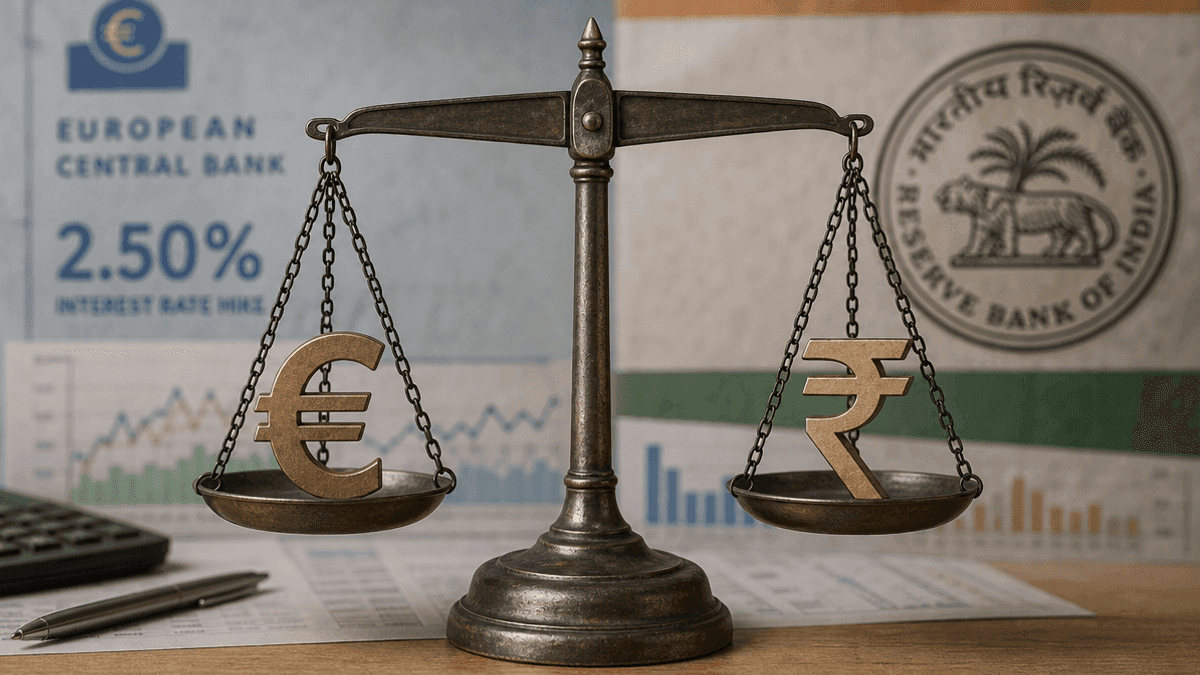
Discover how the ECB’s rate hike to 2.50% impacts the Indian rupee, trade balances, and the Reserve Bank of India’s monetary policy strategy.
The European Central Bank (ECB) has officially increased its interest rates to 2.50%. This decision reflects a wider global shift toward monetary tightening as central banks attempt to combat persistent inflation.
How Global Rate Hikes Affect India
When major central banks like the ECB raise their policy rates, the global movement of capital shifts significantly. Investors often move funds toward markets offering higher yields, which directly influences currency valuations.
The current adjustment impacts India through several key channels:
- The Indian rupee faces increased volatility as global capital flows recalibrate to the new rate environment.
- Exporters may benefit from a potentially weaker rupee, which increases the price competitiveness of Indian goods in international markets.
- Importers encounter higher costs because they must pay more for foreign currency to settle their obligations.
The Policy Balancing Act
The Reserve Bank of India (RBI) now faces a challenging environment as it manages domestic economic stability against these external pressures. Policymakers must carefully weigh several competing interests in their upcoming decisions.
These considerations include:
- Maintaining necessary interest rate differentials to provide support for the rupee.
- Managing domestic growth targets despite the tightening global liquidity.
- Addressing ongoing inflation concerns within the Indian economy.
Global policy shifts of this magnitude require a cautious and strategic approach from Indian authorities. The primary goal remains ensuring overall macroeconomic stability while navigating the complexities introduced by the European Central Bank’s latest monetary tightening.