Asian Markets Shift: Banks Gain as AI Rally Cools (July 2026)
By Market Desk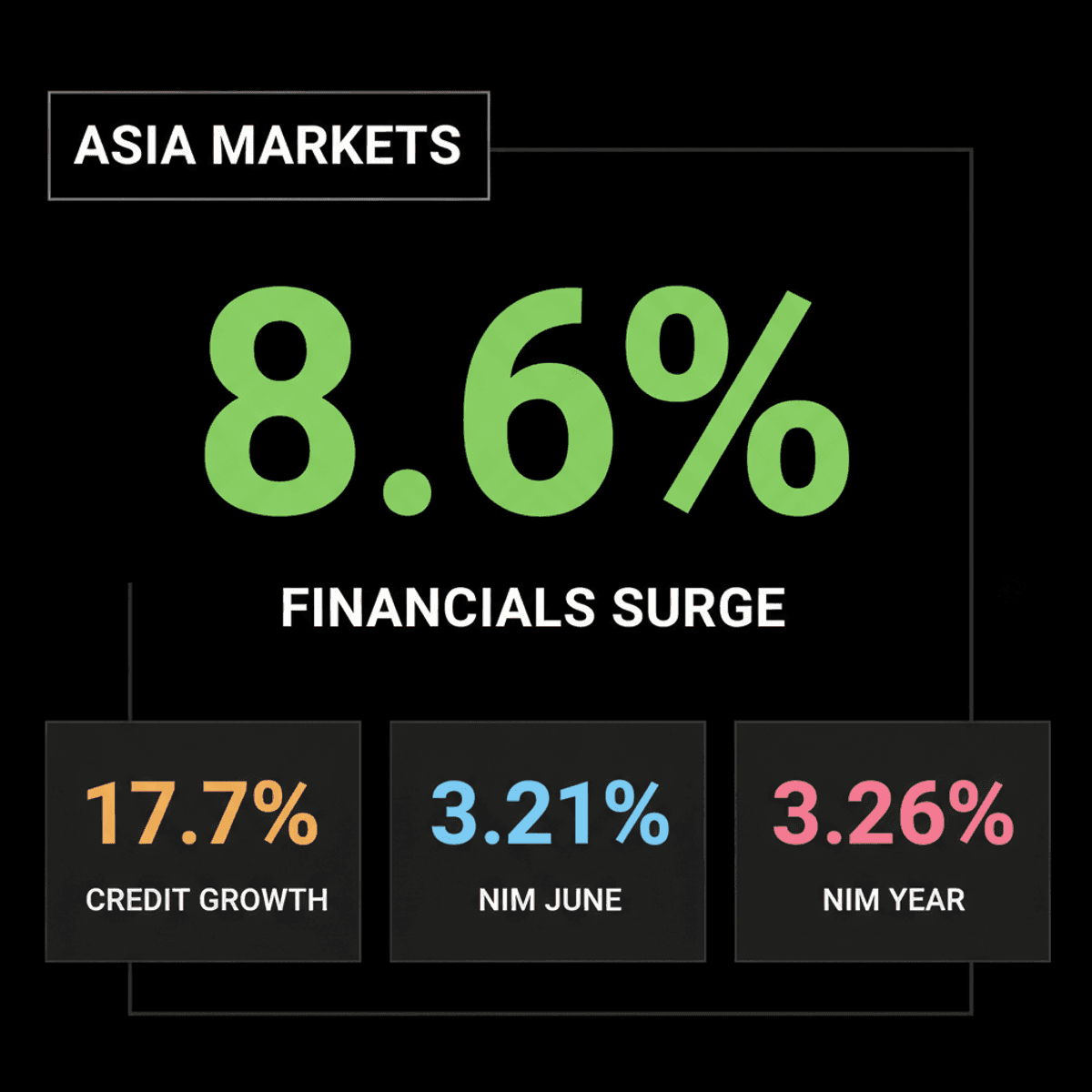
July 2026 saw Asian markets pivot from AI stocks to banks. Investors sought defensive positioning as tech volatility rose, boosting financial institutions.
Asian stock markets recorded a notable capital rotation in July 2026, as investors moved away from artificial intelligence and technology stocks, favoring financial institutions. This tactical shift marked a significant re-evaluation of sector preferences, driven by a desire for defensive positioning.
- The MSCI Asia Pacific Financials Index surged by 8.6% in July 2026.
- This represented its strongest monthly outperformance against technology benchmarks in decades.
The primary catalyst for this reallocation stemmed from persistent volatility in tech stocks, fueled by concerns over high capital expenditure and the uncertain translation of these investments into future profits. In contrast, the banking sector offered perceived stability, often sought during periods of elevated inflation or geopolitical uncertainty due to its resilience against macroeconomic shocks.
Regional Financial Strength Emerges
Across Asia, specific regional trends underscored this rotation. In Japan, the banking sector demonstrated robust outperformance relative to the broader market, propelled by strong loan demand. Expectations of a more hawkish policy stance from the Bank of Japan, aimed at supporting the yen, further bolstered this sentiment.
India’s financial institutions also garnered optimism, supported by substantial credit growth, particularly within corporate lending. This expansion highlights the underlying strength observed in the nation’s banking landscape.
- Indian bank credit expanded by approximately 17.7% year-over-year as of July 2026.
- The aggregate Net Interest Margin (NIM) for the Indian sector declined to 3.21% in June 2026 from 3.26% in the previous year.
Navigating Profitability Pressures
Despite the positive rotation and strong loan expansion, the banking sector faces distinct challenges, primarily concerning profitability. The industry is grappling with pressure on its Net Interest Margins (NIMs), a critical indicator of financial health.
Intense competition among banks to mobilize deposits is a key factor contributing to this NIM compression. Should banks fail to grow low-cost deposits at a pace commensurate with their loan book expansion, profitability could see further negative impacts.
Market participants will closely monitor the sustainability of loan growth into the second half of the fiscal year, especially given challenging year-over-year comparisons due to high base effects. Simultaneously, the AI sector’s trajectory will be observed to determine if significant capital deployments will ultimately yield clearer earnings growth or if valuation volatility will persist.