FCNR(B) Deposits Surpass $100B, Exceeding RBI Target
By ThePip Desk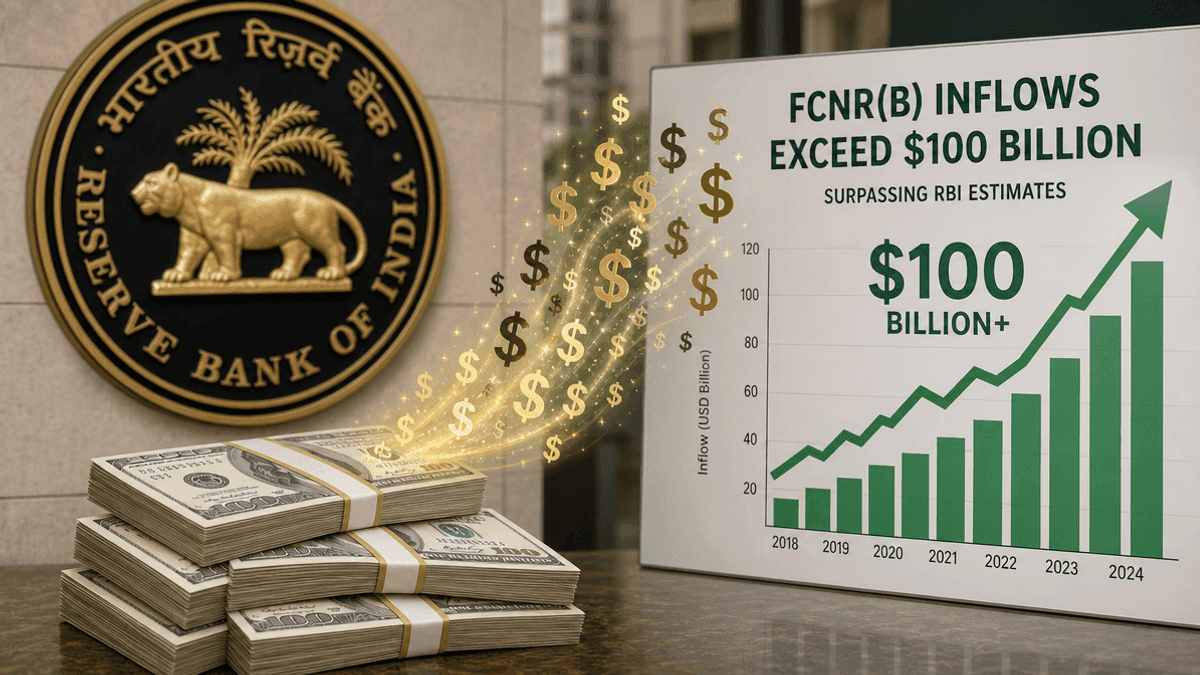
India’s FCNR(B) deposits hit over $100 billion by August 31, significantly surpassing the RBI’s $80 billion estimate, showcasing strong foreign currency inflows.
Capital inflows through the Foreign Currency Non-Resident (Bank), or FCNR(B), deposit scheme have surged past the $100-billion mark by the August 31 deadline.
This significant influx, detailed in a Financial Times report, comfortably exceeded the Reserve Bank of India’s (RBI’s) initial estimate of $80 billion across various routes.
Key Inflow Figures and Deadlines
- Total FCNR(B) inflows by August 31: >$100 billion
- RBI’s initial estimate for all routes: $80 billion
- FCNR(B) window closure: August 31
- Swap facility use for contracted deposits until: September 11
- ECB and OFCB windows remain open until: December 31, 2026
The RBI’s special swap facility also played a role, attracting funds via external commercial borrowings (ECBs) and overseas foreign currency borrowings (OFCBs).
This robust response prompted the RBI to close the FCNR(B) window a month earlier than its original September 30 deadline.
Mechanism of the Special Swap Facility
The swap arrangements provided by the RBI typically carry a maturity period ranging from three to five years.
Most of the funds raised under this facility were through deposits structured with a five-year maturity, offering stability.
Data up to August 21 showed the three routes — FCNR(B), OFCBs, and ECBs — had together attracted $72.85 billion.
- FCNR(B) deposits contributed $65.4 billion.
- OFCBs accounted for $4.86 billion.
- ECBs brought in $2.59 billion.
RBI’s Strategic Decision and Economic Impact
The early closure, anticipated by a Financial Express report on August 10, was driven by the stronger-than-expected response.
The scheme offered non-resident Indians attractive, tax-free returns on dollar-denominated deposits, making it highly appealing.
RBI Governor Sanjay Malhotra confirmed to the Financial Times that the early closure was a deliberate and calculated move.
He described the decision as “well-thought-out, calibrated, prudent and data-driven,” reflecting careful market assessment.
These large FCNR(B) inflows are projected to significantly bolster India’s balance of payments in the current financial year.
Estimates suggest a potential capital account surplus exceeding $65 billion, a reversal from deficits observed in the previous two financial years.
Malhotra also pointed out the increasing cost of managing additional dollar inflows, noting that the benefit from each swapped dollar diminishes as sterilization costs rise for the RBI over a longer period.