

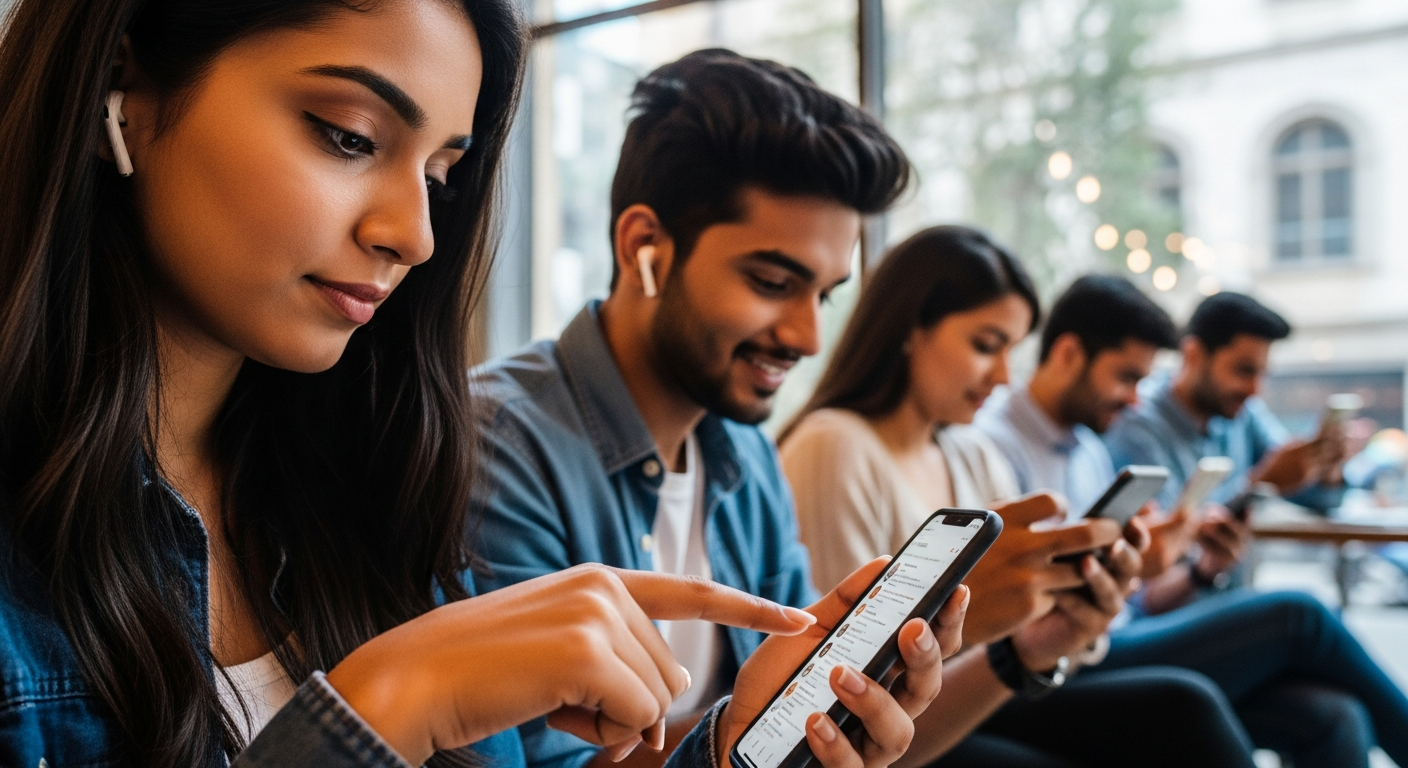







The glow of the phone. It’s a familiar feeling, isn’t it? But in India, that glow is different. It’s not just about passive scrolling; it’s about interaction, a constant tap, swipe, and share. The average Indian user spends a staggering 10 hours a week on social apps, according to a recent report by Inc42 Media. Ten hours.
Think about that for a moment. What does that kind of time commitment mean? It means a shift, a rewriting of the rules. The ‘swipe before type’ generation, as some are calling it, isn’t just consuming content; they are actively participating in shaping it. They’re part of the story, not just the audience.
This isn’t just about entertainment. It’s about community, connection, and in many cases, commerce. India’s digital landscape is exploding, with platforms like ShareChat and Moj gaining massive traction. These aren’t just Facebook clones; they are tailored to the local market, with content in multiple languages and features designed for the way Indians use their phones.
Consider the city of Bengaluru, a hub for tech innovation. Here, the digital divide is still real, but smartphones are ubiquitous. They are tools for communication, entertainment, and increasingly, financial transactions. The apps reflect this. They are built for speed, for ease of use, for the realities of limited data and intermittent connectivity. This is not the curated, polished world of some Western social media; it’s raw, immediate, and utterly captivating.
“We’re seeing a fundamental shift in how people engage with information,” says Priya Sharma, a digital marketing analyst based in Mumbai. “It’s not about reading long articles anymore; it’s about short videos, quick updates, and constant interaction. It’s about being present.”
The implications are vast. For businesses, it means rethinking how they reach consumers. For creators, it means adapting to new formats and platforms. For all of us, it means understanding that the rules of attention are being rewritten, one swipe at a time. This isn’t just a trend; it’s a fundamental change in how a billion people experience the world.