India Targets Deep Fakes, Plans New Law on Fake Info
By Sivam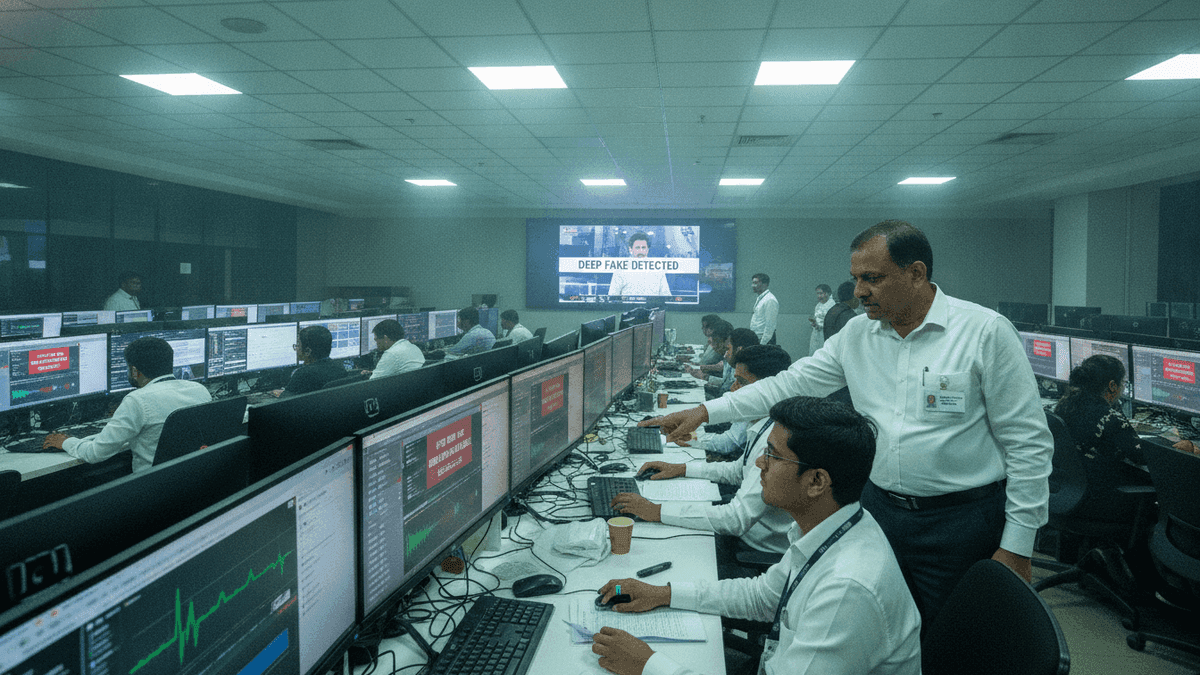
India’s IT Minister confirms social media takedowns focus solely on deep fakes, not genuine content. A new law against fake information is planned, with industry collaboration.
India’s Union Minister for Electronics and IT, Ashwini Vaishnaw, confirmed on Tuesday that government actions to remove social media posts are exclusively targeting deep fake content. He firmly rejected accusations of broader censorship, stating there is no clampdown on genuine content creation, and emphasized the necessity for a new comprehensive law to tackle fake and false information, an initiative that will involve close collaboration with the industry.
The minister directly addressed and unequivocally debunked recent claims regarding the removal of various online videos, including those originating from YouTube-based channels. Notably, allegations had surfaced from Abhijeet Dipke, leader of the online movement entity Cockroach Janata Party, who stated that a video supporting a victim of a wrong assessment by CBSE was reportedly removed at the government’s behest.
Targeted Action Against Deep Fakes
Vaishnaw clarified that such government-initiated removals are strictly limited to content that has been definitively identified as deep fake material. “Wherever these fake videos are, it is a duty, it is a responsibility for us, for the government to make sure that if any deep fake video is propagating false, actually false news, then it has to be removed,” Vaishnaw told PTI, firmly reiterating the government’s unwavering commitment to maintaining a truthful and reliable online environment for its citizens.
He further stressed that authentic protest videos, which represent legitimate forms of public expression, are explicitly not subject to government-mandated removal. The minister articulated the fundamental and indispensable role of trust within society and its institutions, asserting that this crucial trust must be continually strengthened. This involves ensuring the public’s unwavering belief in the authenticity of what they encounter online, thereby enabling them to accurately distinguish between genuine information and sophisticated deep fake fabrications through the application of advanced technological methods.
Vaishnaw also noted that while the overall volume of content creation is vast and continuously expanding, the proportion of deep fake content that is genuinely harmful to the fabric of society represents only a minimal fraction of the total. The government’s strategic approach, he explained, focuses on precise and targeted interventions against this specific harmful fraction to diligently safeguard the digital ecosystem without impeding legitimate public discourse or creative expression.
Impending Legislation on Misinformation
In a significant policy development, Vaishnaw indicated that the government is actively pursuing the formulation and introduction of a new, comprehensive law specifically designed to combat fake and false information. This crucial legislative endeavor is slated to be developed in close consultation and collaborative partnership with key industry stakeholders, thereby reflecting a cooperative and inclusive approach to digital governance and policy-making.
Discussing the ongoing amendments to the existing Information Technology (IT) rules, the minister highlighted the overarching imperative to remove all forms of fake news from online platforms, irrespective of its original source or creator. “The question is very simple. Whether fake news should be allowed to stay on social media or should not? Who generates the fake news was never a point of conversation. If fake news is generated by a newspaper or by any other person, if it is fake news, it must be taken out,” Vaishnaw stated emphatically, underscoring a content-agnostic and uncompromising approach to addressing misinformation.
The proposed IT rules amendment aims to significantly expand the Ministry of Information and Broadcasting’s existing oversight mechanisms, which include its critical powers for content blocking and takedown. This expanded regulatory scope would encompass a broader range of users who post or share news and current affairs content online, even if they are not officially registered as publishers, thereby ensuring a more comprehensive and effective application of measures against the proliferation of misinformation across all digital platforms.