India Plans New AI Law Amidst Innovation and Deepfake Concerns
By Sivam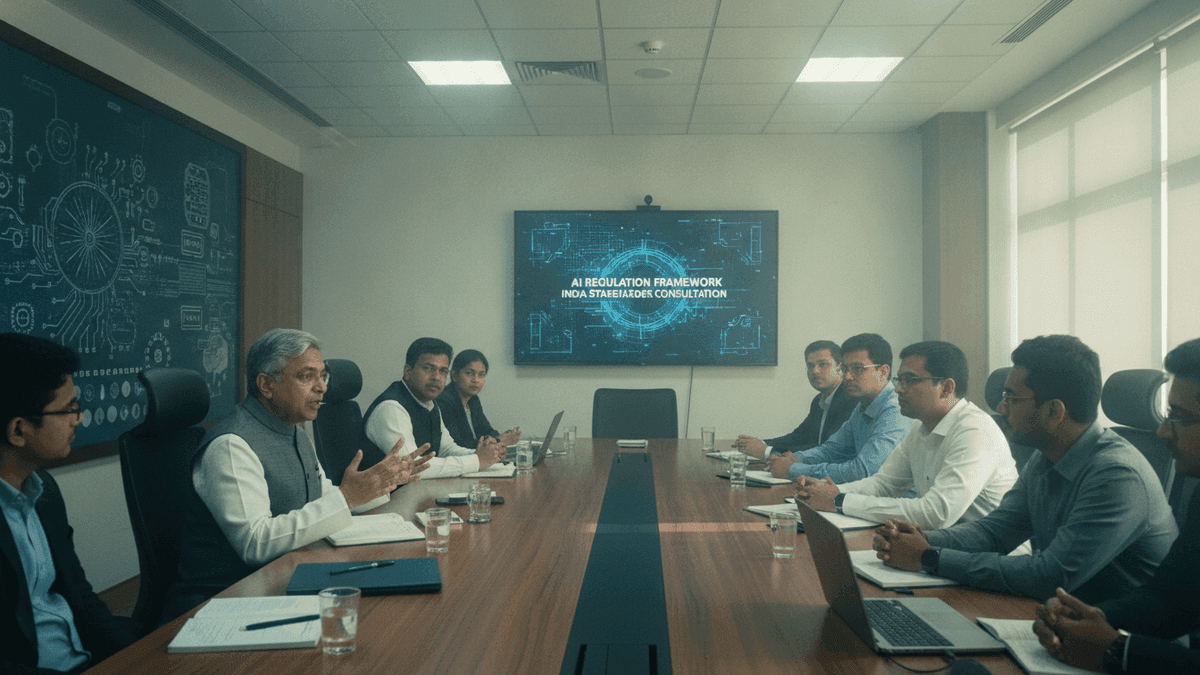
India’s IT Minister suggests a new AI law is needed as the current IT Act is insufficient. The government aims to balance innovation with regulation, addressing deepfake risks.
India Eyes New Legal Framework for AI Regulation
India is contemplating the introduction of a new legal framework to regulate artificial intelligence, as Union Minister Ashwini Vaishnaw stated that the existing Information Technology (IT) Act, enacted in 2000, is no longer adequate for the rapidly evolving AI landscape. The minister’s comments highlight a growing recognition within the Indian government that AI presents unique challenges requiring a tailored legislative response.
During an interview with the Press Trust of India (PTI) on Tuesday, Vaishnaw, who holds the portfolio for IT and electronics, confirmed that extensive discussions are actively ongoing with industry stakeholders. He articulated the government’s dual objective: to foster an environment conducive to technological innovation while simultaneously implementing robust regulations to safeguard citizens from potential harms.
Navigating AI’s Complexities and Global Debates
When questioned about India’s approach to AI regulation—whether through a dedicated new law or amendments to the existing IT Act—Minister Vaishnaw underscored the intricate nature of the subject. He stated, “It’s a very complex topic. Certain things have been done under the IT Act framework, but I do think that there is a requirement for a new law because the world of AI is very different from the world when the IT Act was enacted in 2000.” This indicates a leaning towards a standalone legal structure rather than incremental changes.
This internal deliberation in India mirrors a broader global debate among nations regarding AI safety and governance. Policymakers worldwide are actively grappling with the multifaceted challenges introduced by generative AI, which include the widespread proliferation of deepfakes, the rapid spread of misinformation, and various other forms of online harms.
India has already taken proactive steps to tighten its IT rules, specifically targeting the burgeoning issue of AI-generated deepfakes. These measures reflect a firm commitment to addressing the immediate risks posed by synthetic content while a more comprehensive legal framework is considered.
Stricter Obligations and Disclosure Norms
In February of this year, the government significantly enhanced its regulatory oversight by introducing stricter obligations for online platforms. Under these new mandates, social media companies such as X and Instagram are now required to take down any AI-generated or synthetic content, including deepfakes, within a stringent three-hour window if flagged by a competent authority or judicial body.
Further solidifying its regulatory posture, the government formally notified amendments to the Information Technology (Intermediary Guidelines and Digital Media Ethics Code) Rules, 2021. These amendments provide crucial definitions for “audio, visual or audio-visual information” and “synthetically-generated information,” encompassing content that is either created or altered by AI to appear real or authentic.
The revised rules meticulously clarify that routine editing, improvements aimed at accessibility, and legitimate educational or design work conducted in good faith are explicitly excluded from the definition of synthetically generated content. This distinction helps to prevent overreach while focusing on malicious or misleading AI applications.
Looking ahead, the Centre has also put forth proposals for even stricter disclosure norms concerning AI-generated content. These proposed tweaks to the IT rules would necessitate the inclusion of clear and continuous labels, prominently identifying synthetically generated information, which must remain visible throughout the entire duration of its visual display. This aims to ensure transparency and inform users about the nature of the content they are consuming.
The government’s ongoing engagement with the industry and its multi-pronged approach underscore India’s commitment to developing a robust and forward-looking regulatory ecosystem for artificial intelligence. This strategy seeks to effectively navigate the dynamic interplay between technological advancement and comprehensive oversight, ensuring both innovation and public safety in the evolving digital era.