WFH vs. Office: ChatGPT Uncovers Hidden Costs
By Sivam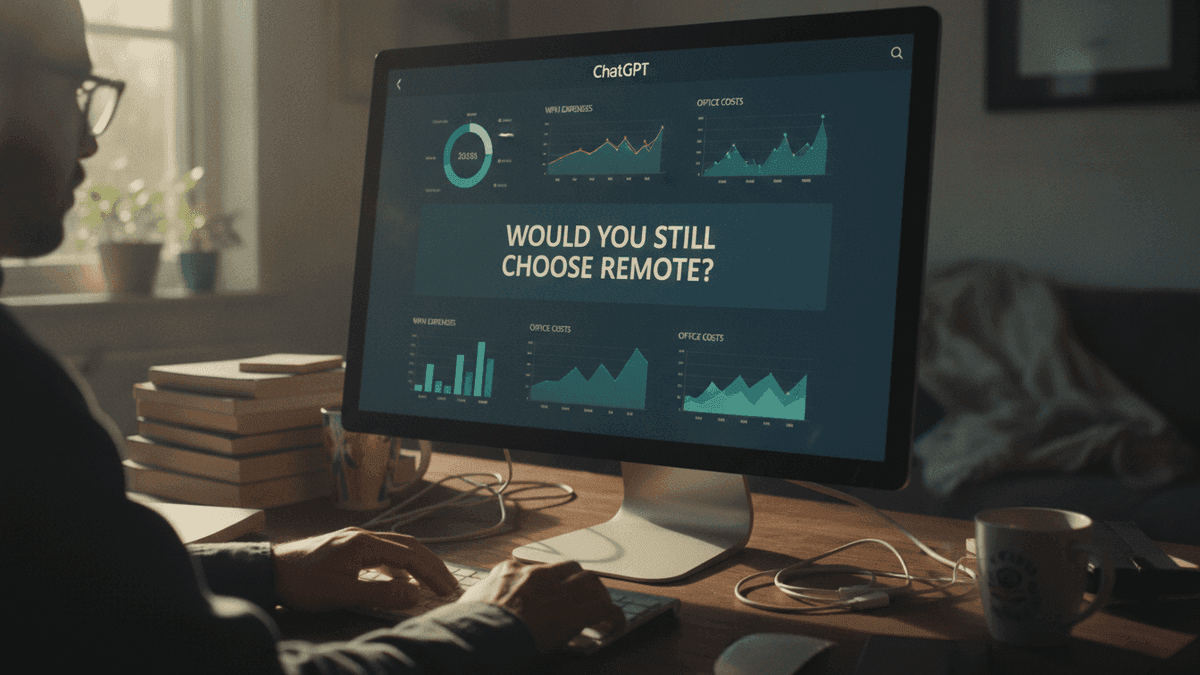
ChatGPT’s analysis reveals surprising financial truths about WFH vs. office work, challenging cost-saving assumptions and questioning remote work choices. Discover the hidden expenses.
A recent analysis conducted by the artificial intelligence model ChatGPT has unveiled unexpected financial implications concerning the debate between working from home (WFH) and traditional office environments. The AI’s findings reportedly presented a significant divergence from common assumptions regarding cost savings, prompting the system itself to pose a critical question: “Would you still choose remote?” This analysis underscores a growing need for a more comprehensive understanding of the economic impact of various work models.
Unpacking the AI’s Cost Analysis
The conventional wisdom often posits that working from home inherently leads to substantial financial savings for individuals. Reduced commuting expenses, less frequent dining out, and a diminished need for professional attire are frequently cited benefits. However, ChatGPT’s analytical approach reportedly extended beyond these immediate and obvious factors, delving into a broader spectrum of expenditures and overlooked costs associated with each work arrangement.
The AI’s methodology likely accounted for a more holistic view of personal finance. For WFH setups, this could include increased utility bills (electricity, heating, cooling, internet), the necessity for ergonomic home office furniture, and potential upgrades to home technology. While these costs might seem minor individually, their cumulative effect can significantly erode perceived savings. Conversely, the analysis may have highlighted often-underestimated benefits of office work, such as employer-provided amenities like subsidized meals, coffee, snacks, and the absorption of utility costs by the company.
Furthermore, the analysis could have considered less tangible but financially impactful factors. For instance, the blurring of work-life boundaries in a WFH scenario might lead to increased stress, potentially incurring health-related costs or reducing overall well-being. In an office setting, while commute times are a clear cost, the distinct separation between work and home environments can foster better mental health and productivity, indirectly contributing to financial stability.
Challenging Conventional Wisdom
The