India’s World Cup Expansion: Opportunity or Distraction?
By ThePip Desk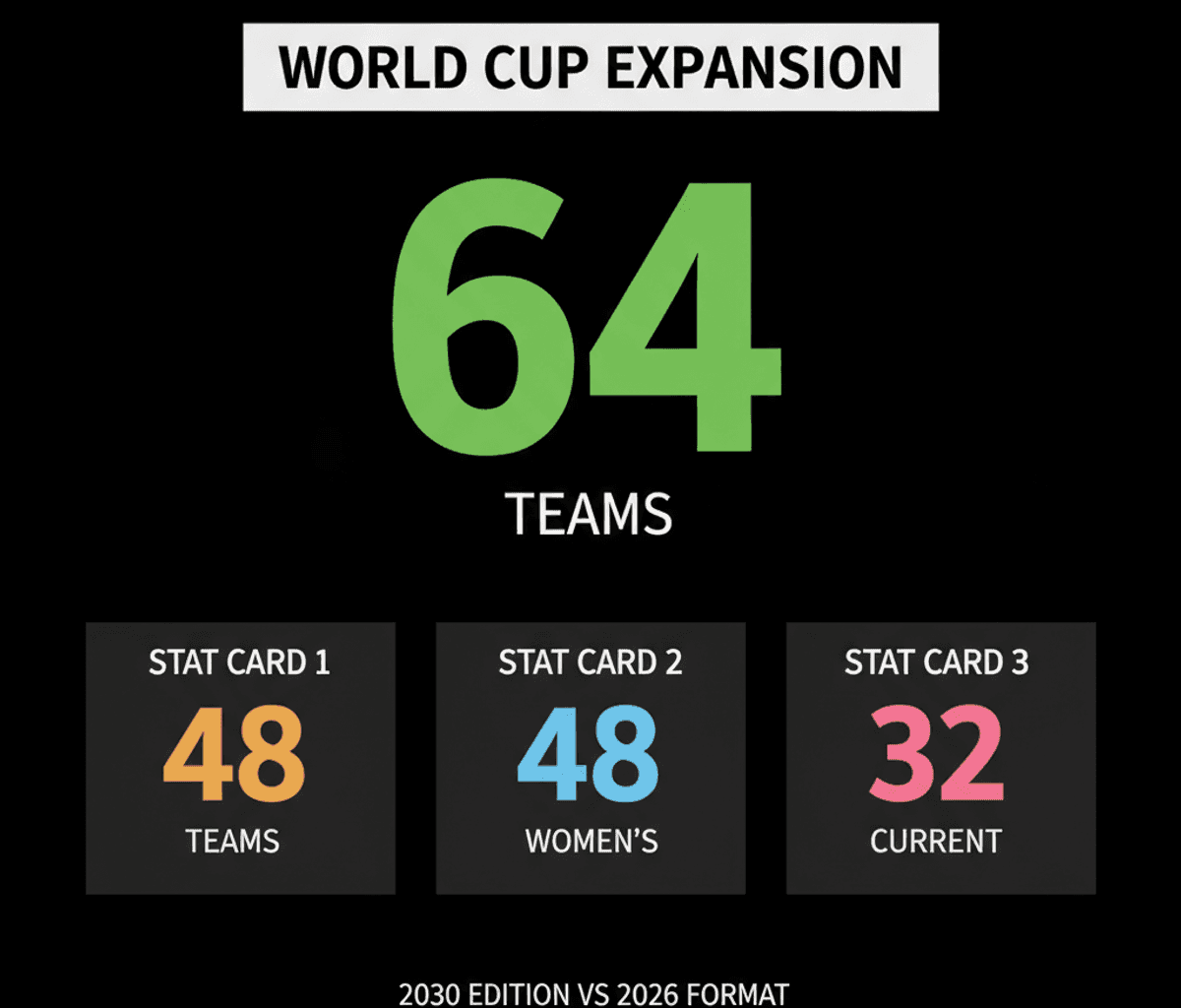
FIFA’s World Cup expansion offers India a qualification chance, but sustainable success requires strong grassroots development and strategic investment. Explore the dilemma.
The structural expansion of global football tournaments, specifically the FIFA World Cup, offers emerging nations like India a potential pathway to enhanced participation, yet this opportunity inherently demands a concurrent, rigorous commitment to foundational domestic development.
This perspective posits that while increased qualification slots may lower the immediate barrier to entry, sustainable long-term success for a nation like India necessitates a strategic emphasis on strengthening grassroots initiatives. The argument further highlights the distinct, potentially accelerated trajectory for the Indian women’s national team, contrasting with the men’s team’s challenges. Ultimately, the debate between short-term strategic boosts, such as integrating Overseas Citizens of India players, and the paramount need for deep-seated domestic program investment defines the core strategic dilemma.
The Shifting Landscape of Global Football Access
The potential expansion of the FIFA World Cup to 64 teams for its 2030 edition, up from the 48-team format slated for 2026, represents a significant structural alteration to the global football ecosystem. This proposal, initially tabled by CONMEBOL last April though not yet ratified by FIFA, reshapes the qualification calculus for aspiring nations. Indian football icon Bhaichung Bhutia noted that this expansion inherently improves India’s statistical chances of qualification. However, he cautioned that such an increase in participant numbers does not guarantee a spot and could, paradoxically, dilute the overall quality of the tournament’s play.
First Principles: Supply, Demand, and Qualification
At its core, tournament qualification operates on principles of supply and demand. An increase in the supply of available slots, without a proportional surge in the number of highly competitive national teams, fundamentally alters the probability distribution for qualification. For nations like India, historically on the periphery of World Cup participation, this structural shift presents a tangible, if not absolute, easing of the access barrier. The mechanism is straightforward: more slots mean less intense competition per available position, theoretically benefiting teams from developing football regions.
Strategic Imperatives: Foundational Growth vs. Expedited Access
Despite the allure of increased access, Bhutia’s analysis underscores a critical strategic imperative: genuine, sustainable football development must remain rooted in foundational growth. He consistently emphasized the necessity for India to fortify its domestic football system, particularly through robust grassroots development and consistent qualification for youth-level tournaments, specifically the U-17 and U-20 World Cups. This approach reflects a long-term investment strategy, building a pipeline of talent from the ground up rather than solely relying on a statistical easing of global qualification criteria.
A similar structural opportunity is emerging within women’s football. The 2031 Women’s World Cup is anticipated to expand from 32 teams to 48, creating a more accessible pathway. Bhutia believes the Indian women’s national team is better positioned to qualify for their World Cup sooner than their male counterparts. Capitalizing on this requires increased interest and investment, advocating for an expansion of the Indian Women’s League (IWL), the establishment of various age-group leagues, and comprehensive grassroots programs designed to professionalize the sport for female athletes.
The Counter-Thesis: Short-Term Gains and OCI/PIO Players
Alongside the long-term development strategy, the discussion often turns to immediate enhancements. Bhutia acknowledged the potential for short-term gains through the integration of high-quality Overseas Citizens of India (OCI) and Persons of Indian Origin (PIO) players into the national team. This represents a tactical acquisition strategy, leveraging external talent pools to boost performance. However, he reiterated that while such measures could offer immediate benefits, they should not overshadow the paramount importance of sustained, indigenous development for the sport’s enduring growth within the country. The dilemma lies in balancing quick wins with the strategic imperative of organic, deep-seated capability building.
What This Means: Balancing Structural Shifts with Internal Investment
For any nation navigating the evolving landscape of global sports, the lesson is clear: external structural changes, such as tournament expansions, offer new opportunities but are not a substitute for internal investment. The increased probability of qualification, while enticing, must be viewed as an additive factor to a robust, self-sustaining development framework. Overreliance on external factors without strengthening the internal supply chain of talent and infrastructure risks creating a superficial, rather than a deep, competitive advantage.
Perspective: The Enduring Value of First Principles
The trajectory of India’s football aspirations, against the backdrop of an expanding global stage, highlights a fundamental principle: sustainable competitive advantage in any domain ultimately derives from foundational strength. While the FIFA World Cup’s proposed expansion creates a larger funnel, the capacity to consistently produce and elevate talent from within remains the most durable determinant of long-term success. This is not merely about football; it is a structural lesson in growth, applicable across various sectors, where external market shifts demand a strategic response rooted in core capabilities.
One Thing to Consider Today
When evaluating the impact of external market expansions or policy shifts on an organization or sector, it is crucial to differentiate between a structural easing of access and the fundamental need for internal capability building. A larger market, while beneficial, does not negate the imperative to invest in core competencies and talent pipelines; rather, it often amplifies the returns on such foundational efforts.