Samajwadi Party Detentions: India’s Protest Dynamics
By ThePip Desk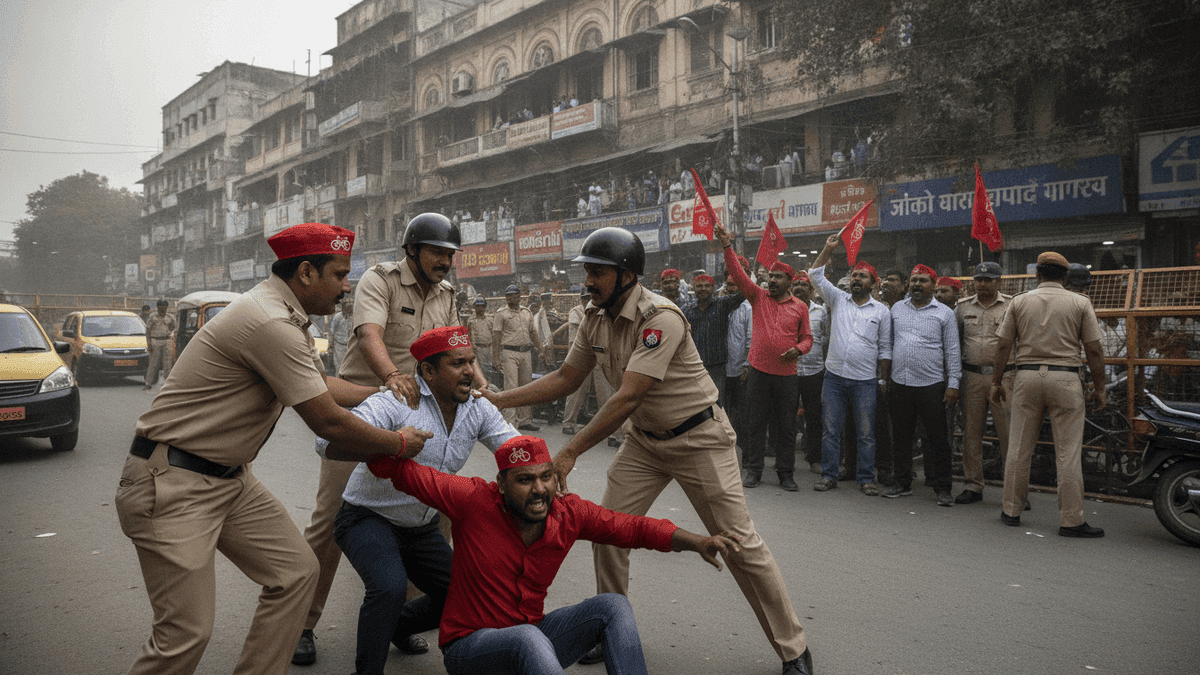
Detention of Samajwadi Party leader Akhilesh Yadav sparks protests and further detentions, highlighting India’s political protest mechanisms and cadre response.
The recent detention of Samajwadi Party leader Akhilesh Yadav in India triggered immediate and significant protests from party workers. This sequence of events, while specific in its immediate context, illustrates a fundamental mechanism within political systems: the direct correlation between leadership action and cadre response, a pattern frequently observed in dynamic political landscapes.
In the wake of Yadav’s detention, numerous Samajwadi Party members were also subsequently detained. This outcome is not an anomaly but rather a predictable consequence in scenarios where political organizations mobilize rapidly in response to perceived infringements on their leadership. The state’s response, in turn, often involves measures to contain such public demonstrations, reflecting established protocols for managing dissent.
While the specifics of this incident are localized to a particular political entity and geographical region, the underlying structural pattern remains consistent. The detention of a key political figure acts as a potent catalyst for collective action from their support base, invariably leading to a reactive stance from governing authorities. Understanding these inherent cause-and-effect relationships is crucial for any comprehensive analysis of broader political stability, public engagement, and the operational dynamics of political power within a democratic framework.
This incident, therefore, serves as a micro-illustration of macro-political mechanics, underscoring how individual actions, even those of a single leader, can ripple through an organizational structure and elicit predictable responses from both internal party members and external state apparatuses. Such observations are critical for those seeking to understand the foundational elements driving political events beyond their superficial headlines.