India’s Military Restructuring: 3 Theatre Commands Plan
By ThePip Desk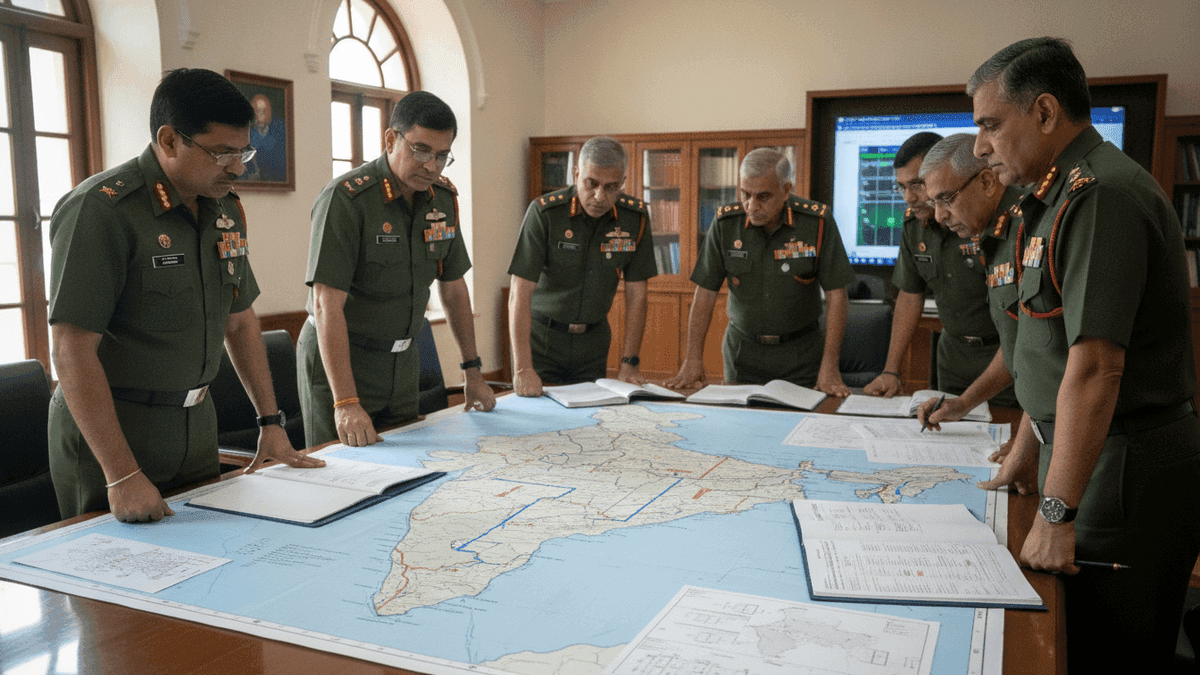
Explore India’s strategic military restructuring into three integrated theatre commands, a pivotal move redefining defense hierarchy and operational synergy.
India’s defense establishment is grappling with a profound organizational redesign, moving towards integrated theatre commands, a strategic shift that raises complex questions about command hierarchy and force projection. The blueprint for this ambitious restructuring, developed by General Anil Chauhan (Retd.), the nation’s second Chief of Defence Staff (CDS), is currently under government review, with the present CDS, General Raja Subramani, actively steering these crucial discussions.
At the core of the proposal lies the division of India’s vast defense landscape into three primary commands: a “peninsula” command, slated for naval leadership, and two others, designated “west” and “north” (with an “east” alternative under consideration), intended to be led by the air force and army respectively. This shift from a service-specific command structure to an integrated theatre model aims to enhance jointness and operational synergy across the armed forces, reflecting a strategic imperative to streamline decision-making and resource allocation in a complex geopolitical environment.
The Complexities of Command Ranks and Authority
A significant point of contention revolves around the rank of the prospective theatre commanders. The debate centers on whether these critical roles will be filled by three-star or four-star officers. Historically, India has maintained a limited number of four-star generals, a convention that ensures a clear hierarchy and prevents dilution of top leadership authority. Proponents for appointing more four-star officers argue that such a move would grant the theatre commanders, and potentially a new Chief of Joint Staff (CJS) position, the necessary autonomy, preventing their subordination to existing service chiefs and ensuring their independent operational command.
The potential creation of a Chief of Joint Staff (CJS) position introduces another layer of structural complexity. If a CJS is established to oversee the three theatre commands, the fundamental role of the Chief of Defence Staff (CDS) would undergo a significant redefinition. Discussions suggest the CDS’s focus might pivot towards coordinating administrative functions, replenishment, and procurement, alongside fostering inter-service jointness. This would allow the three individual service chiefs to concentrate primarily on force building, maintenance, and service-specific doctrines. Clarity is also sought on whether leadership for nascent domains like cyber, space, and rocket forces, currently under CDS deliberation, would fall under the CDS or the proposed CJS, and if the CJS role would rotate among the services, mirroring the CDS’s rotational nature.
Reconfiguring Existing Structures and Geographical Boundaries
The proposed restructuring also necessitates a re-evaluation of the existing 17 commands, which include seven for the army, three for the navy, seven for the air force, and the tri-service Andamans Command, all currently headed by three-star officers. A critical question is whether these existing commands will persist or if theatre commanders will directly engage with army corps and equivalent formations. The latter scenario could lead to a substantial reduction in the number of three-star officers across the services, triggering a ripple effect through career progression and organizational power dynamics.
While the operational remit of the peninsula command appears well-defined, the precise composition and geographical boundaries for the