India’s Civic Contract: Democracy Under Strain
By ThePip Desk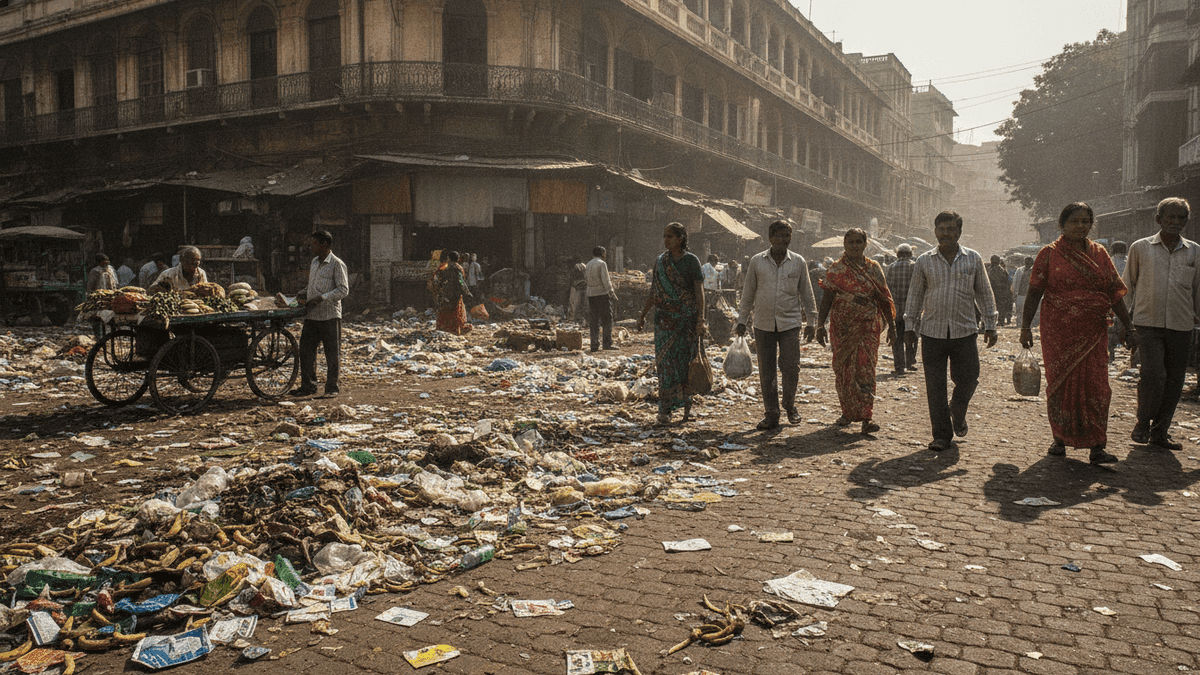
Explore India’s democratic resilience, examining how civic behavior and intellectual divides challenge its foundational principles. An analytical deep dive.
India’s democratic identity, robustly established over decades, faces a complex interplay of internal societal dynamics and evolving political narratives. This structural tension is perhaps best encapsulated by the sentiment articulated by Ira Pande: a simultaneous pride and unease about being Indian, stemming from a visible disconnect between national ideals and everyday civic conduct.
Pande’s observations serve as symptomatic data points of a broader breakdown in collective civic responsibility. Instances such as reckless driving, widespread public littering, public urination, loud mobile phone conversations in shared spaces, and even the theft of public property like railway linen, collectively represent micro-level failures. These individual actions, when aggregated, highlight a structural challenge to the implicit civic contract that underpins a functional society.
Such behaviors signal a concerning erosion of mutual respect and adherence to shared norms, which are foundational for any governance structure. The health of a democratic system is not solely reliant on its institutions but also on the civic engagement and conduct of its citizens, where individual actions inevitably reflect upon the collective societal fabric.
The Indigenous Roots and Evolving Democratic Framework
Delving into the historical framework, a prominent academic’s lecture underscored India’s organic evolution into a democracy, asserting that its democratic impulses are rooted in an indigenous history of harmonious coexistence, predating Western influence. This perspective highlights the foundational contributions of figures like Ambedkar, Gandhi, and Nehru, who were instrumental in solidifying these inherent democratic institutions.
However, this historical continuity is juxtaposed with contemporary concerns. The academic expressed apprehension over the current government’s aggressive promotion of Hindutva. This is viewed not merely as a political shift but as a potential structural departure from the inclusive vision championed by Gandhi, introducing a thematic tension within India’s established democratic framework.
The Structural Chasm in Intellectual Discourse
Further compounding these dynamics is a growing structural chasm: the increasing divide between the English-speaking intellectual class and the general populace. Serious intellectual discourse, predominantly conducted in English, inadvertently limits its accessibility and reach across the diverse linguistic landscape of India.
This linguistic and cultural segregation often prioritizes data-driven analysis over direct engagement with India’s vast rural areas, inadvertently undermining broader democratic participation. The importance of valuing mother tongues and the inherent wisdom of the common Indian is crucial for reinforcing the democratic system, a wisdom that has historically safeguarded India’s democracy through various electoral cycles.
Ultimately, the resilience of India’s democracy is not a static given but a continuous, dynamic process. It is deeply interwoven with the daily civic actions of its citizens, the inclusivity of its intellectual dialogue, and the fidelity to its foundational principles of coexistence and inclusivity. Addressing these structural challenges requires a conscious effort to bridge divides and uphold the civic contract at all levels of society.