Afghanistan Floods: 20 Dead, 100 Missing in Nuristan Tragedy
By ThePip Desk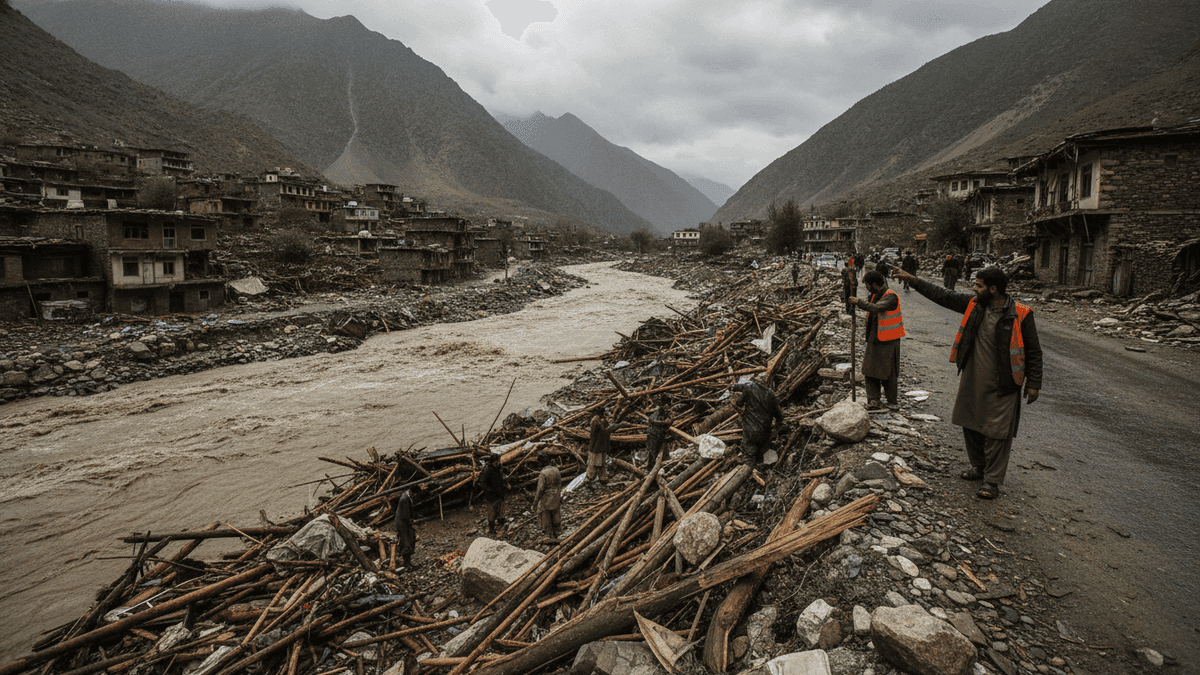
Devastating flash floods in Afghanistan’s Nuristan province have killed 20 and left over 100 missing. Deforestation exacerbates climate vulnerability.
THE PIP (TL;DR): Flash floods in Afghanistan’s Nuristan province have caused significant loss of life and widespread destruction, underscoring the region’s vulnerability to climate impacts.
At least 20 people died and over 100 are missing, including local officials, after destructive flash floods struck Nuristan on Monday. Experts link the disaster’s intensity to widespread deforestation, which reduces the land’s ability to absorb heavy rainfall. This tragedy serves as a stark reminder of the devastating human and infrastructure costs of climate change in vulnerable regions.
On Monday, Afghanistan’s northeastern province of Nuristan was hit by destructive flash floods, leading to a profound humanitarian crisis. The National Disaster Management Authority confirmed at least 20 fatalities and reported over 100 individuals missing, a count that includes the mayor of Parun, the provincial capital, and his security detail. Additionally, 80 people sustained injuries, and the floods caused extensive damage to residential areas, commercial centers, and vital public infrastructure across the region.
The intensity of this disaster is partly attributed by experts to widespread deforestation in Nuristan. This environmental degradation significantly diminishes the land’s natural capacity to stabilize soil and absorb heavy rainfall, thereby increasing the volume and speed of floodwaters during extreme weather events. Afghanistan itself is recognized as highly susceptible to the escalating impacts of climate change, making such events more frequent and severe.
While the immediate focus remains on crucial search and rescue operations, the challenging, rugged mountainous terrain and damaged road networks are severely hindering access to many isolated communities. The Afghan government anticipates significant long-term financial and infrastructure repercussions for Nuristan, with the full extent of the damage to local livelihoods and regional connectivity still under assessment.
This event, though geographically distant, underscores the global interconnectedness of climate change impacts. It serves as a stark reminder of how environmental degradation in one region can lead to devastating humanitarian crises, affecting communities and infrastructure on a massive scale.
ONE THING TO CONSIDER TODAY: Reflect on the broader implications of climate vulnerability and deforestation, and how these global challenges manifest in severe local impacts, prompting a moment of shared human concern.