Strategic Resource Security and Global Capital Access Drive Indian Growth
By Sivam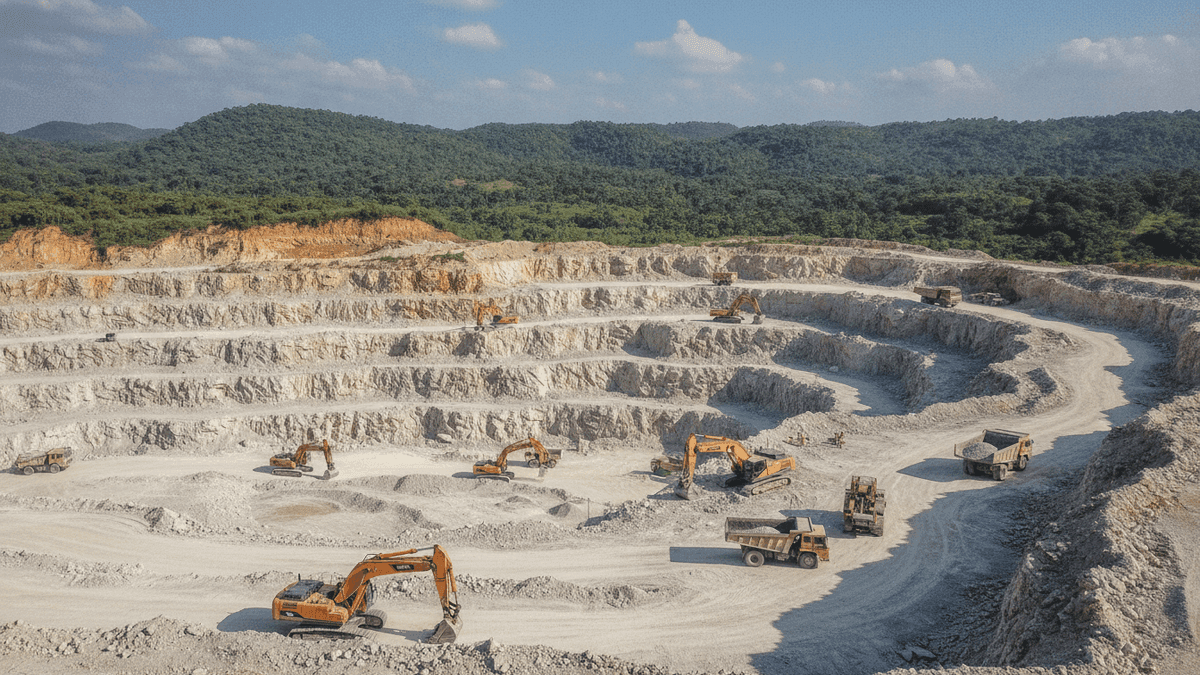
India’s industrial landscape sees two distinct yet structurally significant developments: Power Finance Corporation’s global debt raise and Star Cement’s key resource acquisition.
In a demonstration of India’s evolving capital markets and industrial resource strategies, two distinct but equally significant developments have emerged. Power Finance Corporation (PFC) successfully tapped international debt markets, while Star Cement secured a crucial limestone mining lease. These events, though disparate in nature, underscore fundamental mechanisms driving growth and operational stability within their respective sectors.
Power Finance Corporation, a key player in India’s infrastructure financing, successfully raised $300 million through the issuance of U.S. dollar-denominated notes. This move, executed under the company’s $8.00 billion Global Medium Term Note Programme, highlights a structural pattern of Indian entities leveraging global capital pools. The notes carry a tenor of 5 years, maturing on June 30, 2031, and offer a coupon of 5.32% per annum, payable semi-annually. This access to diversified, dollar-denominated funding streams is critical for managing capital costs and mitigating domestic liquidity pressures for large-scale infrastructure projects.
From a first-principles perspective, such international issuances reflect a deliberate strategy to broaden the investor base and potentially secure more favourable terms than solely relying on domestic avenues. The fixed coupon and defined tenor provide predictability in financing costs, a crucial element for long-term project planning in the energy sector where PFC operates. These direct, unconditional, and unsecured obligations demonstrate confidence from international investors in India’s public sector undertakings.
Resource Security: A Structural Advantage
Concurrently, Star Cement was declared the ‘Preferred Bidder’ for a significant limestone mining lease in the Boro Lakhindong (West Block) of District Dima Hasao, Assam. This acquisition, secured through e-auctions conducted by the Government of Assam, spans 123 hectares and holds an estimated limestone resource of 207.822 million tonnes. For a company engaged in the manufacturing and selling of Cement Clinker & Cement, this represents a profound structural advantage.
The mechanism of securing captive raw material resources, particularly in a commodity-driven sector like cement, directly impacts operational stability and cost efficiency. A guaranteed supply of 207.822 million tonnes of limestone over the lease period significantly reduces reliance on volatile open market purchases, thereby insulating against price fluctuations and supply chain disruptions. This backward integration strategy offers a competitive moat by providing long-term visibility on input costs, a critical factor for maintaining margin structures in a capital-intensive industry.
These two developments, one in capital markets and the other in resource acquisition, illustrate distinct but equally powerful strategies for structural resilience. PFC’s international debt raise optimizes its cost of capital for national development, while Star Cement’s mining lease solidifies its foundational input, enhancing long-term operational predictability. Both actions reflect a strategic understanding of market mechanisms that underpin sustained economic activity in India.