India’s Pharma Dependence on China: A Structural Analysis
By Sivam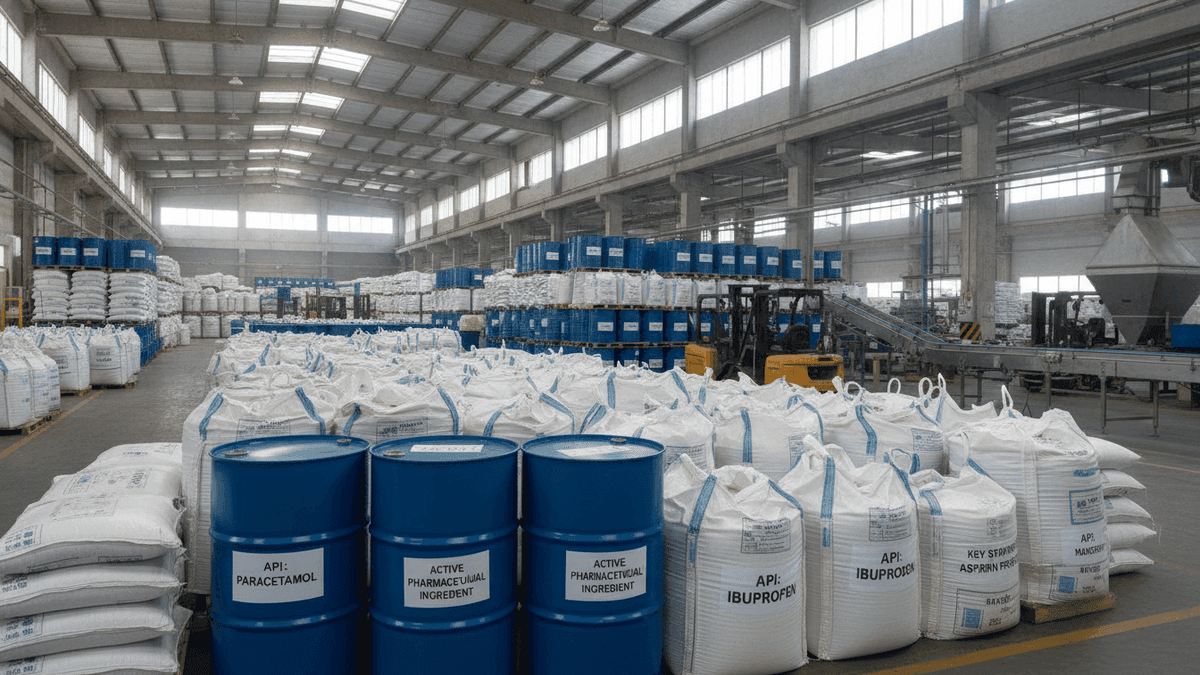
NITI Aayog report highlights India’s 65% reliance on China for pharma raw materials, driven by cost and environmental compliance challenges.
India’s pharmaceutical industry continues to grapple with a profound structural dependency on China for a significant portion of its critical raw materials. The eighth edition of the Trade Watch Quarterly report by NITI Aayog reveals that approximately 65 per cent of Active Pharmaceutical Ingredients (APIs) and key starting materials, which are essential for drug manufacturing, are imported from China.
This persistent reliance extends beyond a simple sourcing decision; it reflects deeper economic and systemic patterns within the Indian pharmaceutical landscape. NITI Aayog identifies two primary structural impediments contributing to this dependency. Firstly, domestic pharmaceutical companies face significantly increased manufacturing and research costs, a direct consequence of India’s increasingly stringent environmental compliance norms. These regulatory mandates, while vital for public health and environmental stewardship, directly impact the cost competitiveness of local API production compared to international alternatives.
Secondly, the report highlights a pervasive weakness within the innovation and commercialisation ecosystem. This underdeveloped framework creates a climate of uncertainty for potential innovators, thereby discouraging the substantial, long-term investments required to establish and scale robust, self-sufficient API manufacturing capabilities. Without a supportive environment for research, development, and a clear, efficient path to market, domestic players find it inherently challenging to compete with the economies of scale and established infrastructure prevalent in global supply chains, particularly those centered in China.
The Structural Imperative of Supply Chain Location
From a first-principles perspective, the location of critical supply chain nodes, such as API manufacturing, is determined by an optimal confluence of cost efficiency, regulatory environment, and technological advancement. In this context, India’s current framework, as elucidated by NITI Aayog, appears to present disincentives for domestic production across these crucial dimensions. The structural imperative dictates that industries will gravitate towards regions offering the most favorable conditions for production, and for APIs, China has historically fulfilled this role due to its scale and integrated supply chain.
This high degree of reliance on a singular geographical source for such essential inputs introduces inherent vulnerabilities into the entire pharmaceutical supply chain. Geopolitical shifts, trade policy changes, or even localized disruptions within the primary supplying nation could severely impact the availability and pricing of these foundational materials. Such a scenario could, in turn, jeopardize India’s capacity to consistently produce and supply essential medicines, posing a risk to national health security.
One Thing To Consider Today
When assessing the resilience and strategic independence of national industrial sectors, it is crucial to move beyond superficial production metrics and instead analyze the underlying structural economics of their supply chains. A deep-seated dependency, exemplified by India’s pharmaceutical API sourcing, is not amenable to quick fixes or short-term policy interventions. It necessitates a comprehensive, long-term strategy that systematically addresses cost structures, regulatory frameworks, and fosters a robust, homegrown innovation ecosystem capable of attracting sustained investment.