Varanasi Elevated Corridor: India’s Urban Infrastructure Boost
By ThePip Desk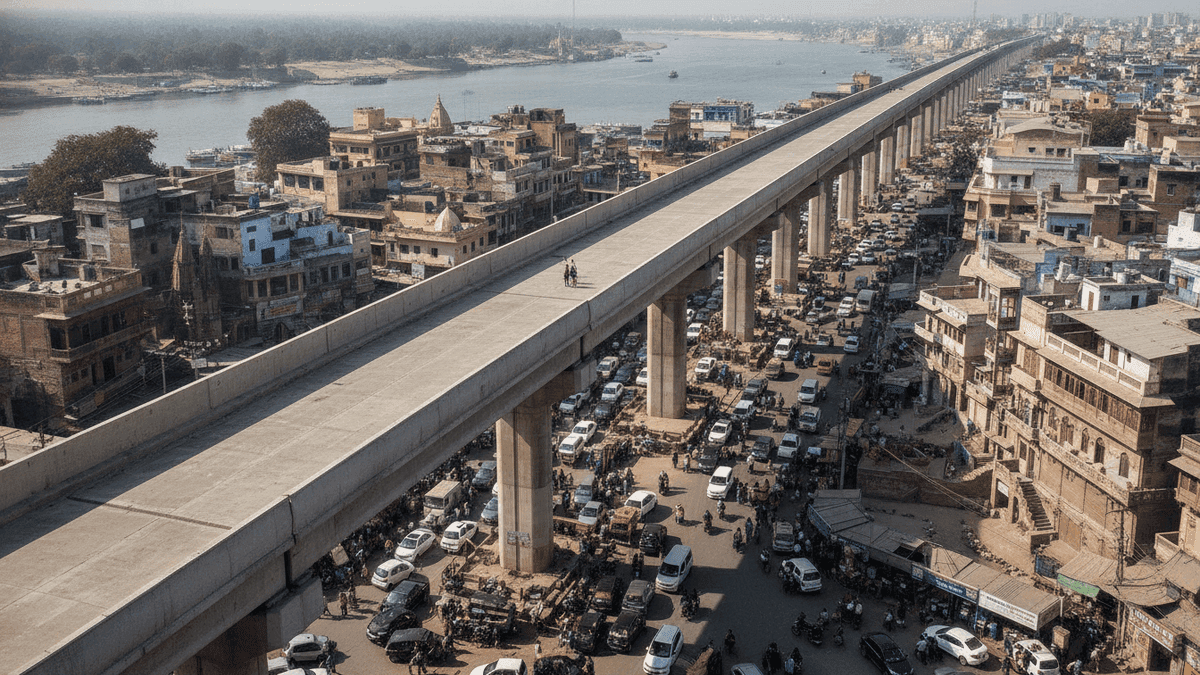
India’s Union Cabinet approves ₹14,447 crore for Varanasi’s Ganga River elevated corridor, a strategic move to enhance urban mobility and economic growth.
The Union Cabinet has sanctioned a substantial ₹14,447-crore elevated corridor project, slated to run along the Ganga River in Varanasi. This significant investment is not merely about constructing a new road; it represents a strategic deployment of capital aimed at fundamentally restructuring urban mobility and economic flow within one of India’s most historically vibrant, yet densely populated, cities.
From a first-principles perspective, large-scale infrastructure projects like this corridor address critical bottlenecks that impede economic velocity. Varanasi, a pivotal pilgrimage and cultural hub, grapples with severe traffic congestion. This congestion acts as a tax on local commerce, tourism, and daily life, reducing efficiency and accessibility. The corridor’s explicit goals—to alleviate traffic, enhance urban connectivity, and bolster infrastructure—are direct responses to these structural challenges.
The Framework of Connectivity and Development
This initiative aligns with a broader framework where government investment in core infrastructure serves as a catalyst for multifaceted urban development. Improved road networks reduce transit times, which can lower logistics costs for businesses and enhance the visitor experience for tourists. Such projects often create a positive feedback loop: better connectivity attracts further investment, stimulates local economies, and improves the quality of life for residents.
The scale of the ₹14,447-crore allocation underscores the Union Cabinet’s commitment to addressing the foundational issues of urban sprawl and outdated infrastructure. By focusing on a high-impact intervention along a critical natural artery like the Ganga River, the project aims to unlock latent economic potential. This is a classic example of using targeted infrastructure spending to create capacity and facilitate future growth, moving beyond incremental improvements to achieve a structural shift in urban functionality.
While the immediate impact will be on local traffic patterns, the durable takeaway from such an investment is its role in shaping the long-term economic trajectory of Varanasi. It positions the city for enhanced integration into national economic networks and strengthens its appeal as a destination, thereby reinforcing the structural underpinnings of regional prosperity.