Subdued Monsoon Threatens Indian Agriculture: Kharif Crops at Risk
By ThePip Desk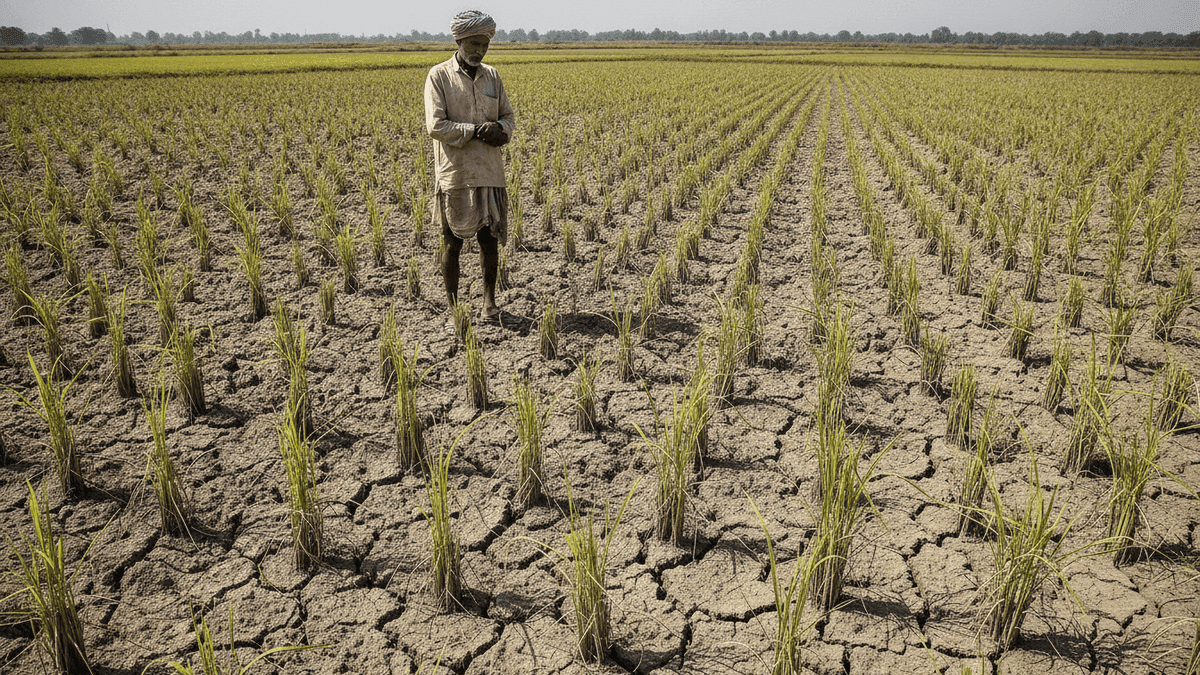
India’s southwest monsoon remains subdued, posing a significant challenge for kharif crops. Unfavorable atmospheric conditions and lack of Bay of Bengal low-pressure systems are key factors.
The India Meteorological Department (IMD) has issued a forecast indicating a subdued southwest monsoon across extensive parts of the country for at least another week. This development presents a structural challenge for India’s rain-dependent agricultural sector, particularly following an earlier phase of rapid monsoon progression.
The underlying mechanism for this current dry spell stems from unfavorable atmospheric conditions. Specifically, the IMD attributes the weak rainfall phase to the absence of low-pressure systems forming over the Bay of Bengal. These systems are meteorological prerequisites, crucial for driving the widespread monsoon rains that typically nourish central and northwest India.
This period of diminished rainfall coincides with July, a pivotal month for the cultivation of kharif crops. Key agricultural staples such as paddy, soybean, cotton, and pulses are critically dependent on consistent and adequate rainfall distribution during this window. The current forecast therefore directly impacts the foundational inputs for a significant portion of the nation’s food production.
While a majority of regions are anticipated to experience below-normal precipitation, the meteorological pattern is not uniform. Northeastern states, along with sections of the eastern Indo-Gangetic plains, Sub-Himalayan West Bengal, Sikkim, Bihar, and eastern Uttar Pradesh, are projected to receive moderate to heavy showers. Isolated instances of heavy to very heavy rainfall, accompanied by gusty winds, are specifically forecast for these areas through the upcoming weekend.
The immediate implication of this subdued monsoon phase is a heightened vulnerability for agricultural output in regions lacking consistent irrigation. Understanding the atmospheric drivers behind such patterns is essential for appreciating the systemic risks inherent in India’s agrarian economy, underscoring the enduring reliance on these complex natural cycles.